
Pursue Your Masters in Sustainability Management in Canada: Top Programs and Career Prospects
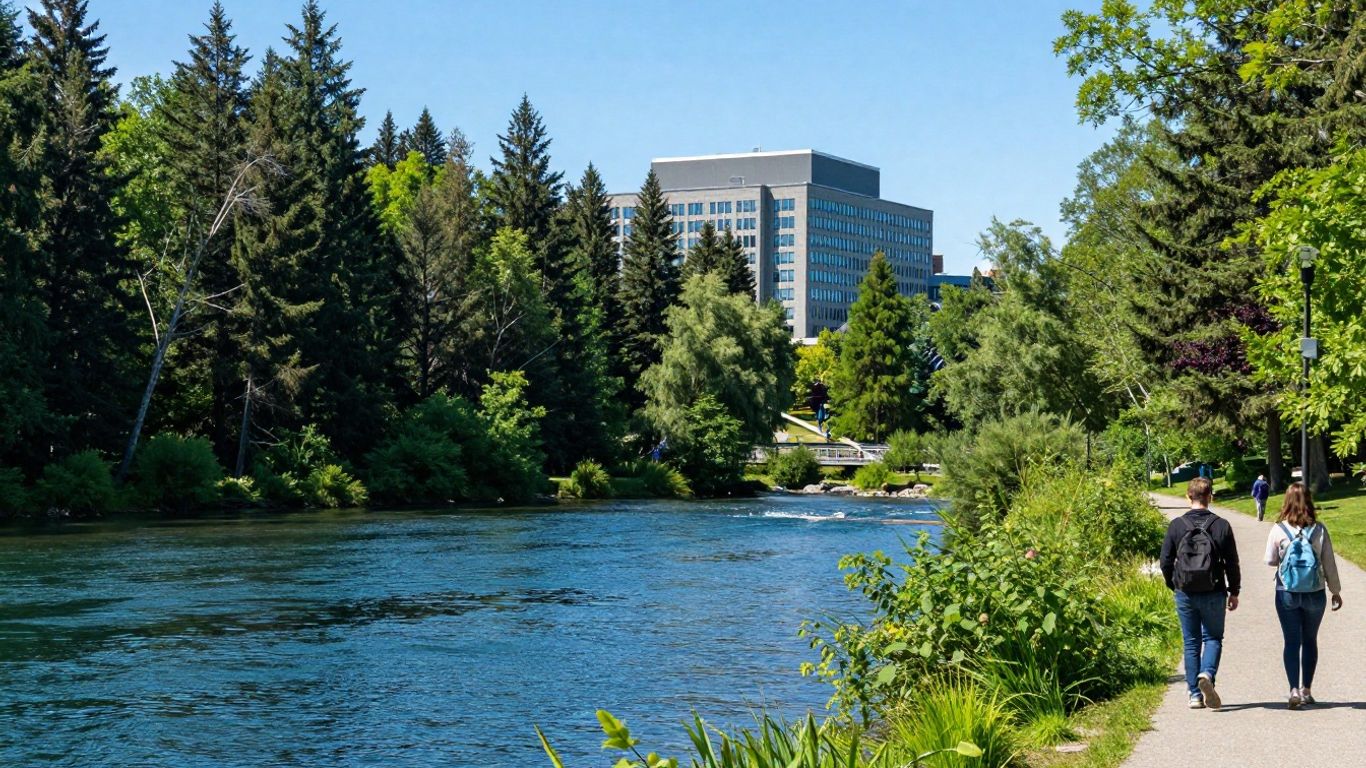
Thinking about getting a master's degree in sustainability management in Canada? It's a smart move, with lots of programs popping up and good job prospects. Canada is a great place to study this field, offering diverse environments and a commitment to green initiatives. This guide will walk you through what you need to know, from program types to career paths, helping you figure out if this is the right step for you.
Key Takeaways
- Canada offers various master's programs in sustainability management, each with different structures like coursework, thesis, or co-op options.
- Core courses often cover sustainability science foundations, research methods, and practical problem-solving, with electives allowing specialization.
- Co-op programs provide valuable work experience, preparing students for the job market through professional development and work placements.
- Graduates can pursue roles in environmental consulting, government agencies, non-profits, and private corporations focused on sustainability.
- Application processes typically involve a statement of intent, CV, academic references, transcripts, and proof of English proficiency, with a specific application fee.
Master of Sustainability Degree Pathways
Thinking about getting a Master of Sustainability in Canada? It's a smart move, and you've got a few different ways to go about it, depending on what you want to do after you graduate. These programs are set up to give you solid skills and knowledge to actually make a difference in sustainability.
Most programs let you pick a path that fits your career goals. You'll usually find three main options:
- Coursework-Focused: This is typically the quickest route, often taking about 12 months. It involves taking core classes and electives, and you'll wrap up with a major research paper. It's great if you want to get into the workforce relatively fast.
- Major Research Paper (MRP) & Co-op: This pathway usually takes around 16 months. You'll do coursework, then spend a term gaining practical experience through a co-op placement, and finish with a substantial research paper. This option really helps you build a resume with real-world experience.
- Thesis-Based: This is the longest option, often taking 24 months. It's heavily focused on in-depth research, culminating in a full thesis. This path is ideal if you're considering further academic pursuits, like a PhD, or want to become a specialist researcher.
Most programs offer funding and are supervised by faculty, especially the thesis and MRP options. This means you're not just learning; you're actively contributing to the field. The application deadline for Fall 2026 is usually around February 1st, so keep an eye on that if you're planning ahead.
Sustainability Courses
When you're looking at a Master of Sustainability program, the courses are really where the rubber meets the road. These aren't just lectures; they're designed to give you a solid grasp of how sustainability works in the real world. You'll typically find a mix of core classes that build a strong foundation and then electives that let you zero in on what interests you most.
Core courses often cover the big picture stuff. Think about topics like the foundational concepts of sustainability science and society, understanding the complex links between natural and social systems. You'll also likely dive into research methods, learning how to actually investigate environmental issues using both numbers and qualitative approaches. Problem-solving is another big one, where you'll tackle real-world challenges through case studies and project work. And don't forget seminars where you get to present your own research and discuss ideas with classmates and professionals in the field.
Here's a look at some common course types you might encounter:
- Foundations of Sustainability Science and Society: Covers the basics of sustainability, how nature and people interact, and how to meet current needs without messing things up for the future.
- Methods for Environmental Inquiry: Explores different ways to research sustainability, using both quantitative and qualitative tools.
- Problem Solving in the Environment: Focuses on practical approaches to sustainability issues, often using case studies.
- Transdisciplinary Seminar: A space for presenting research, engaging with guest academics, and networking with professionals.
Beyond the core, electives let you specialize. You might find courses on climate change adaptation, water resource management, or landscape ecology. These courses often use an interdisciplinary approach, pulling in insights from various fields to give you a well-rounded perspective. The goal is to equip you with the knowledge and skills to make a tangible difference. For instance, a course on climate change adaptation might explore scenarios, resilience, and planning steps, giving you practical tools for addressing a major global challenge. You might also explore reporting frameworks like CDP reporting to understand how organizations communicate their environmental impact.
Co-op Courses
So, you're thinking about a Master's in Sustainability Management and wondering about the practical side of things? That's where co-op courses come in. They're basically designed to give you a real taste of working in the field before you even graduate. It's not just about getting a degree; it's about getting job-ready.
Most programs will have a dedicated co-op preparation course. Think of it as your crash course in professional development. You'll learn how to actually find a co-op job, polish up your resume, and get ready for interviews. This course is often a must-do before you can even start looking for placements. It covers everything from workplace etiquette to understanding your responsibilities during your work term.
Then comes the actual work placement. This is usually a full-time gig, lasting a few months, where you'll be working with an approved employer. It's your chance to apply what you've been learning in class to real-world sustainability challenges. You'll have to meet certain requirements, like completing a work term report and getting a good evaluation from your employer, to pass.
Here’s a general idea of what a co-op work term might look like:
- Duration: Typically 4 months (full-time).
- Hours: Around 35-40 hours per week.
- Deliverables: Learning objectives, site visits, a final report, and employer evaluation.
These placements aren't just busy work; they're structured learning experiences. You're expected to achieve specific learning goals and demonstrate your ability to contribute to the organization's sustainability efforts. It's a big step towards building your professional network and gaining that all-important hands-on experience.
Research Project Courses
So, you're looking at a Master's in Sustainability Management and wondering about the big research projects? This is where you really get to sink your teeth into a topic that interests you. Most programs will have a couple of options for this, usually a thesis or a major research paper.
- Thesis (SSAS 5F90): This is the big one. It's a deep dive into a specific area of sustainability science and society. You'll be doing sustained, independent work, and the goal is to produce original research. Think of it as your chance to contribute something new to the field. It's a pretty substantial undertaking, so be prepared for a lot of focused effort.
- Major Research Paper (MRP) (SSAS 5F91): This is also a significant research project, but it might be a bit more focused than a full thesis. It still requires independent research and critical thinking, showing you can really analyze a sustainability issue. It's a great way to demonstrate your research chops without necessarily going for the full thesis route.
These projects are your opportunity to apply everything you've learned. You'll be working closely with faculty, honing your analytical skills, and really developing your ability to tackle complex environmental and social challenges. It’s not just about writing a paper; it’s about the process of discovery and presenting your findings clearly and effectively.
The research project is often the capstone of your Master's program. It's where you synthesize your knowledge and demonstrate your capacity for independent, scholarly work in sustainability. It's a chance to explore a niche area in detail and develop a unique perspective.
Elective Courses
Beyond the core curriculum, your Master of Sustainability program lets you tailor your studies with elective courses. These are a great chance to really dig into specific areas that catch your interest or align with your future career goals. Think of them as your personal sustainability toolkit, letting you pick the tools you need most.
Most programs allow you to choose electives from within the sustainability department, but often you can take a course or two from other graduate programs too. This cross-disciplinary approach can be super insightful, showing you how sustainability connects to fields like economics, policy, or even engineering. It's all about broadening your perspective.
Here are some examples of the kinds of topics you might find in elective offerings:
- Water Resource Management: Looking at how we value and manage water, with case studies from Canada and around the world.
- Climate Change Adaptation: Exploring how communities and ecosystems can adjust to a changing climate, focusing on resilience and transformation.
- Landscape Ecology: Using tools like GIS to understand how global changes affect ecosystems and species across different areas.
- Conservation Ecology: Discussing current trends in protecting biodiversity, from strategies to policy implications.
- Directed Study: For those with a specific research idea, this lets you work one-on-one with a professor on a focused topic.
The flexibility of electives means you can really shape your Master's experience. Whether you're drawn to the biophysical side of environmental issues or the social and economic dimensions, there's likely an elective that fits. It’s your chance to become a specialist in a niche area or get a well-rounded view of sustainability challenges.
Some programs might also have specific requirements for electives, like needing a certain number from the department or allowing only a limited number of undergraduate courses for graduate credit. Always check the program details for your specific university, but generally, electives are your playground to explore the vast world of sustainability.
Common Employment Destinations
So, you've finished your Master's in Sustainability Management, and now you're wondering where you can actually work? It's a pretty broad field, which is good news because it means lots of different places need people with your skills.
You'll find opportunities across various sectors, from government and non-profits to private companies. Think about roles like an Environmental Specialist, where you might help a company reduce its carbon footprint or manage waste more effectively. Or maybe you'd prefer to be a Policy Analyst for a government agency, shaping regulations that protect natural resources.
Here are some common places graduates land:
- Non-profit Organizations: Working as a Project Leader or Stewardship Coordinator, focusing on conservation efforts or community environmental programs.
- Government Agencies: Roles like Environmental Policy Analyst or Sustainability Coordinator, influencing public policy and managing environmental initiatives at local, regional, or federal levels.
- Private Corporations: Many companies now have dedicated sustainability departments. You could be an Environmental Consultant, helping businesses meet compliance standards, or a Sustainability Manager, integrating green practices into their operations.
- Educational Institutions: Developing and running environmental education programs for universities or other learning centers.
- International Development Organizations: Focusing on environmental challenges in a global context, perhaps in areas like sustainable agriculture or water resource management.
The demand for professionals who can bridge the gap between environmental science and practical business or policy solutions is growing. Your ability to analyze complex issues and propose workable strategies makes you a sought-after candidate.
It's not just about the big, obvious jobs either. Your skills are transferable to fields like urban planning, renewable energy development, and even sustainable food systems. Basically, anywhere that needs someone to think critically about environmental impact and find better ways of doing things is a potential workplace.
Popular Further Education Opportunities
So, you've finished your Master's in Sustainability Management and you're thinking, "What's next?" It's a great question! Many graduates don't just stop at a Master's; they often look to build on that knowledge. It's pretty common to see folks continue their academic journey, especially if they're aiming for specialized research or high-level policy roles.
Pursuing a PhD in related fields is a frequent next step. This could be in Environmental Science, where you'd really dig into the scientific underpinnings of environmental issues, or perhaps a PhD in Geography or Planning, focusing on the spatial aspects of sustainability and urban development. Some even go for a PhD in Forestry, especially if their Master's work touched on natural resource management.
Here are some common paths people take:
- Master's or PhD in Environmental Science: For those who want to become leading researchers or dive deep into specific scientific challenges.
- Master's or PhD in Geography and Planning: Ideal for careers in urban sustainability, land use, and policy development.
- Master's in Forestry: If your passion lies in managing and conserving forest ecosystems.
- Post-Graduate Diplomas in Environmental Management: These can offer a more focused, shorter-term specialization after a Master's, preparing you for specific management roles.
It's not just about more degrees, though. Sometimes, a specialized diploma can be just the ticket to pivot into a particular area of sustainability management. Think of it as a targeted skill-up.
The decision to pursue further education often hinges on career aspirations. If you see yourself leading research initiatives, developing complex environmental policies, or teaching at the university level, advanced degrees are usually the way to go. For those aiming for hands-on management or consulting roles, a Master's might be sufficient, but continuous learning through workshops and certifications is still key.
Examples of Fields That Fit Environmental Studies Skills
So, you've got this Master's in Sustainability Management, or maybe you're deep into Environmental Studies. What's next? Turns out, those skills you've been building are super adaptable. You're not just pigeonholed into one tiny niche.
Think about it: you've learned to look at problems from all sides – the science, the policy, the social impact, the economics. That's a pretty powerful toolkit.
Here are some areas where those skills really shine:
- Environmental Consulting: Helping businesses and governments figure out how to meet regulations, reduce their impact, or plan for the future. It's all about problem-solving and offering practical advice.
- Research and Development (Private & Public): Whether it's for a company looking for greener tech or a government agency studying a new environmental challenge, your analytical skills are key.
- Government Roles: Local, regional, provincial, or federal – there are tons of positions for policy analysts, program managers, or environmental officers. You can really make a difference here.
- Sustainability Management: This is a broad one, covering everything from waste reduction and recycling programs to corporate social responsibility initiatives.
- Transportation and Infrastructure Planning: Thinking about how we build and move around in a way that's less damaging to the planet. Your systems-thinking approach is perfect for this.
- Food and Agriculture: Looking at sustainable farming practices, food security, and the environmental footprint of what we eat.
It's not just about knowing the science; it's about understanding the systems and how to make positive changes.
The ability to connect dots between different fields – science, economics, social behavior – is what makes environmental studies grads so sought after. You can see the bigger picture and figure out how to tackle complex issues without getting lost in the weeds.
Skills of Environmental Studies Grads
So, you're thinking about a career in sustainability, huh? That's awesome. And if you've been looking into Environmental Studies programs, you're probably wondering what kind of skills you'll actually come away with. It's not just about knowing the difference between a carbon footprint and a carbon tax, though that's part of it. Graduates from these programs develop a really broad toolkit.
They learn to look at environmental issues from all sorts of angles. Think about it: a problem like water pollution isn't just a science issue. It's also about economics, policy, and how people are affected. Environmental Studies grads get trained to pull together information from different fields – science, social science, even the humanities – to get the full picture. This interdisciplinary approach is super important for tackling complex challenges.
Here's a quick rundown of what you can expect to gain:
- Information Integration: You'll get good at finding, understanding, and using information from various sources, even if they seem unrelated at first.
- Project Management: Learning how to plan, monitor, and evaluate projects is a big one. This is useful in pretty much any job.
- Policy Awareness: You'll understand how environmental policies work and how to consider them when making decisions.
- Communication: Being able to talk and write clearly about environmental topics, whether they're local or global, is key.
- Teamwork: You'll likely do a lot of group work, learning to collaborate on research and problem-solving.
- Data Skills: Expect to get comfortable with using data, including statistical methods and how to represent it.
- Assessment Tools: You'll learn how to evaluate environmental plans and projects to see if they'll actually work.
It's this mix of analytical thinking, practical skills, and a wide-ranging perspective that makes Environmental Studies graduates so adaptable. They're not just specialists; they're problem-solvers ready for a lot of different roles.
These skills are highly sought after, not just by environmental organizations, but by businesses and government agencies too. You'll find that your ability to analyze complex situations and communicate your findings effectively is a real asset. If you're interested in a program that offers this kind of interdisciplinary education, you might want to check out a Masters of Arts in Sustainability Studies. It's a field that's only going to grow, and having these skills puts you in a great position.
Environmental Studies At UTSC
The University of Toronto Scarborough (UTSC) offers a unique approach to Environmental Studies, recognizing that tackling environmental issues requires more than just scientific knowledge. It's about understanding the social, economic, and policy dimensions too. This program aims to equip you with the ability to critically assess information from various fields and apply it to real-world environmental challenges. You'll work with partners from government, industry, and non-profits, which is a great way to get hands-on experience.
The program emphasizes an interdisciplinary perspective, meaning you'll learn to connect the dots between natural sciences, social sciences, and humanities. This holistic view is what employers are looking for. You'll develop skills in assessing environmental policies, communicating complex issues clearly, and working effectively in teams. Plus, you'll learn how to use data and assessment tools to evaluate environmental plans and projects.
Here are some of the skills you can expect to develop:
- Integrating information from diverse fields
- Applying project management techniques
- Considering policy in decision-making
- Communicating environmental issues effectively
- Engaging in team-based problem-solving
- Using statistical and data representation tools
UTSC also provides various avenues for students to gain practical experience and explore career paths. These include opportunities like extern job shadowing, in-the-field projects, and departmental events. It's all about building connections and getting a feel for what a career in environmental fields might look like. For those interested in a more research-focused path, programs like the Master of Environmental Science (MEnvSc) are available, offering a blend of practical experience and skill development in environmental science.
The interdisciplinary nature of Environmental Studies at UTSC is a significant advantage. It prepares graduates not just for specific roles, but for adaptable careers where they can address complex, evolving environmental problems with a well-rounded perspective.
What Is Environmental Studies?
So, what exactly is Environmental Studies? It's not just about hugging trees, though that's part of it for some. Think of it as a way to look at how we humans interact with, well, everything around us. It's a field that pulls from all sorts of different areas – science, sure, but also things like sociology, economics, and even politics. The goal is to get a handle on the big environmental issues we're facing, like climate change or pollution, by looking at them from all sides.
It's about understanding the whole picture, not just one piece.
Environmental Studies programs often focus on real-world problems. You'll learn to analyze issues, figure out what's causing them, and then brainstorm ways to fix them. This often involves looking at how environmental problems affect people, communities, and economies, and how different solutions might play out. It’s a pretty practical approach, aiming to equip you with the skills to actually make a difference.
Here’s a quick look at what you might study:
- Foundations of Sustainability Science and Society: This is where you get the basics, looking at how natural and social systems connect and how we can meet our needs without messing things up for the future.
- Methods for Environmental Inquiry: You'll learn the tools and techniques researchers use to study environmental issues, using both numbers and words.
- Problem Solving in the Environment: This is the hands-on part, tackling real environmental challenges with case studies and project management.
It's a field that really encourages you to think critically and connect different ideas. If you're curious about how the world works and want to be part of finding solutions, Environmental Studies might be right up your alley.
Application Requirements
Getting into a Master of Sustainability program in Canada involves a few key steps. First off, you'll generally need a bachelor's degree, and they usually look for a solid academic record, often a minimum of a B average or around 75% in your last two years of undergraduate study. This shows you can handle the academic rigor ahead.
Beyond the degree, you'll need to gather a bunch of documents. This typically includes:
- A Written Statement of Intent: This is your chance to explain why you want this degree, how it fits with your future goals, and what specific areas of sustainability you're interested in. Make it personal and clear.
- Curriculum Vitae (CV): A detailed rundown of your education, work experience, any research you've done, and awards. Think of it as your academic and professional resume.
- Transcripts: Official records from all the post-secondary schools you've attended. If you did your undergrad at the same university you're applying to, you might be exempt from sending those specific transcripts.
- Academic References: Usually two letters from professors or people who can speak to your academic abilities and potential for graduate-level work. They need to know you well enough to write a meaningful recommendation.
- Proof of English Proficiency: If English isn't your first language or your previous schooling wasn't in English, you'll need to provide scores from tests like TOEFL or IELTS. The minimum scores can vary, so check the specific program's admission criteria for details.
- List of Potential Supervisors: Some programs ask you to identify a few professors you'd be interested in working with. It's a good idea to look at faculty research areas beforehand.
Applying to graduate school can feel like a lot, but breaking it down into these requirements makes it manageable. Focus on presenting your strengths and genuine interest in sustainability.
Finally, there's the application fee. This is usually a non-refundable amount paid when you submit your online application. It varies by institution, so be sure to check the exact amount for the program you're targeting.
Application Fee
When you're ready to submit your application for a Master of Sustainability program, you'll need to account for the application fee. This is a standard part of the process at most universities. The fee is typically non-refundable, meaning you pay it regardless of whether your application is successful. It's important to check the specific amount for the program you're interested in, as it can vary. For instance, some programs might charge around $110 CAD, while others, like the one at the University of Ottawa, could be closer to $127.81 CAD.
This fee covers the administrative costs associated with processing your application, reviewing your documents, and considering your candidacy. You'll usually pay this fee online as part of the submission process, often via credit card. Make sure to have your payment information ready when you finalize your application.
- Check the exact fee: Always verify the current application fee on the university's graduate admissions website.
- Payment methods: Confirm accepted payment methods (e.g., Visa, Mastercard).
- Multiple programs: If applying to more than one program, you'll likely need to pay the fee for each one separately.
Keep in mind that this fee is separate from any tuition costs or other university fees you might encounter later on. It's purely for the application itself.
Potential Supervisors
When you're applying for a Master's in Sustainability Management, figuring out who you want to work with is a big deal. These professors, or potential supervisors, are the ones who will guide your research and thesis. It's not just about picking someone whose name sounds good; you really need to look into their work.
Think about what areas of sustainability really get you excited. Are you into renewable energy policy, urban planning, or maybe conservation biology? Each professor usually has a specific focus. You can usually find this information on the university's department website. They'll list their research interests, recent publications, and sometimes even projects they're currently involved in.
Here's a quick rundown of how to approach this:
- Check Faculty Profiles: Go through the list of faculty members in the sustainability or environmental studies department. Look for professors whose research aligns with your own interests.
- Read Their Work: Don't just glance at their profile. Try to read a few of their recent papers or project descriptions. This gives you a much better sense of their approach and the kind of questions they're asking.
- Consider Their Availability: Some professors might be on sabbatical or have a full roster of students already. Universities often indicate if a professor is accepting new graduate students.
- Reach Out (Optional but Recommended): If you're really interested in a specific professor's work, it can be a good idea to send them a polite email. Briefly introduce yourself, mention why you're interested in their research, and ask if they are taking on new students for the upcoming academic year. Keep it short and professional.
Most programs will ask you to list your top three choices for supervisors on your application. Making an informed choice here can really set the stage for a successful graduate experience. It's about finding a good fit for both your academic journey and your future career goals.
Academic References
When you're applying for a Master's program in Sustainability Management, you'll definitely need to line up a couple of academic references. These aren't just random people; they should be scholars who know your academic work well and can speak to your potential for graduate-level study and research. Think professors who've taught you in relevant courses or supervised your undergraduate thesis. They need to attest to your ability to handle advanced academic work.
It's a good idea to give your referees plenty of notice, at least a month if possible. Provide them with your CV, a draft of your statement of intent, and details about the program you're applying to. This helps them write a more specific and compelling letter for you. They'll usually submit these directly to the university, often through an online portal.
Here's a quick rundown of what they typically need to cover:
- Your academic performance and potential.
- Your research capabilities or aptitude.
- Your suitability for graduate studies in sustainability.
- Any specific skills or qualities relevant to the program.
Remember, these references are a significant part of your application. Choosing the right people and giving them the information they need can make a real difference. You can find more details on reference requirements on the university's graduate admissions page, and they often suggest using a specific citation style like APA for any sources you might include in your own application materials APA style.
The goal of these references is to give the admissions committee a third-party perspective on your academic strengths and your readiness for the challenges of a Master's degree. It's about showing you're not just interested, but also capable of succeeding in a rigorous academic environment.
Transcripts
When you apply for a Master of Sustainability Management program, you'll need to submit transcripts from all the post-secondary schools you've attended. This is pretty standard stuff for graduate applications. They want to see your academic history, basically. If you did your undergrad at the same university you're applying to for your master's, you might be off the hook for sending in those specific transcripts, but always double-check the program's requirements. For all other institutions, you'll need to request official copies. These documents show your grades, the courses you took, and when you completed your degrees. It's a way for the admissions committee to get a clear picture of your academic background and how it aligns with their program. Make sure you give yourself enough time to get these, as sometimes it can take a while for universities to process and send them out. You can usually find instructions on how to order them directly from the registrar's office of each institution you attended. Sometimes, you might need these official documents for things like post-graduation work permits too, so it's good to have them organized.
Proof Of English Proficiency
If your previous education wasn't conducted in English, you'll need to show you're proficient in the language. Most Canadian universities have specific requirements for this.
Typically, this involves taking a standardized test. The most common ones are the TOEFL (Test of English as a Foreign Language) and the IELTS (International English Language Testing System). Each program will list its minimum score requirements, and sometimes they even specify minimum scores for each section of the test.
Here's a general idea of what you might see:
- TOEFL iBT: Often a minimum score of 80-100, with no section below 19-20.
- IELTS Academic: Usually a minimum overall band score of 6.5-7.0, with no band below 6.0.
Some institutions might also accept other tests or have alternative ways to assess your English skills, like an interview or a writing sample. It's always best to check the specific program's admission page for the exact details. Don't assume one program's requirements are the same as another's!
Failing to meet the English proficiency requirements is a common reason for applications to be rejected, so make sure you address this early on if it applies to you. Plan ahead to give yourself enough time to take the test and get your scores sent.
Written Statement Of Intent
Your statement of intent is your chance to really show the admissions committee who you are beyond just grades and test scores. Think of it as a formal essay, but with your personality shining through. You'll want to explain why you're drawn to this specific Master of Sustainability program and how it fits into your bigger picture, both academically and career-wise. What sparked your interest in sustainability? What experiences have you had that relate to this field? Be specific about your research interests within sustainability science and how they align with the program's focus. It's also a good place to mention any relevant work experience or volunteer activities.
This is where you connect your past experiences and future goals to the program.
When writing, remember to keep it concise, aiming for no more than two pages. You'll also need to cite any references you use, just like in a research paper. This shows you've done your homework and can present information formally.
Here's a breakdown of what to include:
- Motivation: Clearly articulate why you want to pursue a Master of Sustainability.
- Academic & Professional Background: Highlight relevant coursework, projects, or work experience.
- Research Interests: Specify areas within sustainability science you're keen to explore.
- Career Aspirations: Outline your short-term and long-term career goals and how the program will help you achieve them.
- Program Pathway: Indicate whether you're interested in the Major Research Paper with Co-op Pathway, the Thesis Pathway, or the Course-based Pathway. This helps the program understand your learning preferences.
Think of this statement as a narrative. It should tell a compelling story about your journey towards sustainability and why this particular program is the next logical step for you. Show your passion and your preparedness.
Don't forget to mention your preferred pathway, whether it's the Major Research Paper with Co-op Pathway, the Thesis Pathway, or the Course-based Pathway. This gives the admissions team a clearer picture of your academic intentions. For those looking at global environmental regulations, understanding frameworks like the CSRD in the EU can be a good starting point for research ideas.
Curriculum Vitae
When you're applying for a Master's in Sustainability Management, your Curriculum Vitae (CV) is a big deal. It's not just a resume; it's a more detailed look at your academic and professional journey. Think of it as your personal highlight reel, showing off everything relevant to your pursuit of graduate studies in sustainability.
Your CV should really lay out your educational background, including degrees, institutions, and dates. Don't forget to list any employment history, especially if it relates to environmental work, research, or management. Teaching experience and any research activities you've been involved in are also super important. If you've snagged any awards or scholarships, definitely include those – they show recognition for your efforts. And if you have any publications, even if they're just conference papers or smaller articles, list them out. It all adds up to paint a picture of your commitment and capabilities.
Here’s a quick rundown of what to include:
- Education: Degrees, majors, minors, institutions, graduation dates, and GPA (if strong).
- Work Experience: Relevant jobs, internships, volunteer roles, including responsibilities and achievements.
- Research Experience: Projects, assistantships, publications, presentations.
- Awards and Honors: Scholarships, grants, academic distinctions.
- Skills: Languages, technical skills (like software or lab techniques), and any other relevant abilities.
- Professional Affiliations: Memberships in relevant organizations.
The goal is to present a clear, organized, and compelling narrative of your qualifications. It helps the admissions committee see how your past experiences have prepared you for advanced study and how you might contribute to their program. Make sure it's up-to-date and error-free; a polished CV shows you pay attention to detail, which is pretty key in sustainability work. For instance, accurately calculating a company's carbon footprint requires meticulous attention to detail, a skill that a well-prepared CV can subtly demonstrate Calculating a company's carbon footprint.
Think of your CV as a living document. It should be updated regularly as you gain new experiences, skills, and achievements. This ensures that when you apply for programs or jobs, you have the most current and comprehensive representation of your professional and academic life ready to go.
Career Cruising
So, you're thinking about a career in sustainability, huh? That's awesome. But where do you even start looking for jobs? Well, there's this tool called Career Cruising that can really help you figure things out. It's like a digital guide to all sorts of jobs, giving you the lowdown on what people actually do, what kind of schooling you might need, and even what the day-to-day work is like. It's a fantastic resource for exploring different paths within environmental studies.
Think of it as your personal career exploration hub. You can look up specific job titles, see what skills are in demand, and get a feel for the job market. It's not just about finding a job, though; it's about finding the right job for you. You can check out salary ranges, see what kind of education is typically required, and even find out about related careers you might not have considered.
Here’s a quick rundown of how you might use it:
- Research Job Titles: Type in keywords like 'sustainability coordinator' or 'environmental analyst' to see what pops up.
- Explore Industries: Look into sectors like renewable energy, conservation, or corporate sustainability.
- Identify Skill Gaps: See what qualifications employers are looking for and compare them to your own.
- Discover Related Fields: Sometimes, a job title might lead you to an entirely new area you hadn't thought of.
It’s a good idea to use Career Cruising alongside other resources. For instance, understanding how companies report on their environmental impact, like through SEBI BRSR guidelines, can give you insights into the kinds of roles that support these efforts. The more information you gather, the better equipped you'll be to make informed decisions about your future.
O*Net
When you're trying to figure out what comes next after your Master's in Sustainability Management, it's easy to feel a bit lost. That's where resources like O*Net come in handy. Think of it as a massive database, mostly for U.S. jobs, that breaks down different careers.
It's a great place to explore:
- What specific tasks are involved in a job.
- What skills and knowledge you'll actually need.
- The typical education and training required.
- Salary expectations and job outlook.
O*Net can help you connect the dots between what you're learning and the kinds of roles available. For instance, if you're interested in environmental consulting, you can look up that job family and see the detailed requirements. It's a solid tool for getting a realistic picture of the job market and understanding how your environmental studies skills fit into various job families.
While O*Net is a U.S.-based resource, the insights it provides into job descriptions, required competencies, and career pathways are broadly applicable. It offers a structured way to understand the landscape of environmental and sustainability-related professions, helping you identify roles that align with your academic background and career aspirations.
Information Interviews
So, you're thinking about a Master's in Sustainability Management and wondering how to get a real feel for the career path? Talking to people already in the field is a smart move. It's called an information interview, and it's way different from a job interview. You're not asking for a job; you're asking for advice and insights.
Think of it like this: you're a detective trying to gather clues about what a career in sustainability actually looks like day-to-day. You get to ask all the questions you've been wondering about, like what a typical workday involves, what challenges they face, and what they love most about their job. It's a chance to get the inside scoop directly from professionals.
Here’s a simple way to approach it:
- Identify people: Look for professionals in roles or organizations that interest you. LinkedIn can be a good starting point, or you might find contacts through university alumni networks.
- Reach out politely: Send a brief, professional email or message explaining who you are and that you're exploring career options. Ask if they'd be willing to chat for 15-20 minutes about their experience.
- Prepare your questions: Have a list of thoughtful questions ready. Focus on their career journey, their current role, and advice they might have for someone starting out.
- Listen and take notes: Be engaged and attentive. This is your chance to learn.
- Follow up: Send a thank-you note afterward. It's a small gesture that goes a long way.
This is a fantastic way to build your network and get a clearer picture of potential career directions. It can help you refine your interests and even uncover opportunities you hadn't considered before. Many people are happy to share their experiences, especially if you approach them respectfully and show genuine interest in their work. You can find more tips on preparing for these conversations here.
Remember, the goal isn't to impress them with your knowledge, but to learn from theirs. Be curious, be respectful, and be open to what you might discover. It's a low-pressure way to gain high-value information about the sustainability sector.
Working On-Campus
Looking for a way to gain experience and earn some money while you're studying for your Master's in Sustainability Management? Working on campus can be a fantastic option. Many universities offer positions that align with student schedules and can even provide relevant skills for your future career.
Think about roles in campus sustainability offices, research labs, or administrative departments. These jobs often understand that you're a student first, so they're usually flexible with exam periods and class times. Plus, you're already on-site, cutting down on commute time.
Here are a few ways working on campus can help:
- Gain practical skills: You might be involved in data collection, event planning, or even assisting with research projects. These are all things that look good on a resume.
- Build your network: You'll meet professors, staff, and other students who might become valuable contacts down the line.
- Understand university operations: Working behind the scenes can give you a unique perspective on how academic institutions function.
Many universities have dedicated job boards or portals, often called CLN or similar, where these on-campus opportunities are posted. Keep an eye on these regularly, especially at the beginning of semesters, as that's often when positions open up.
It's a great way to get your foot in the door and start building a professional profile without having to venture too far from your studies. Plus, earning a paycheck while you learn? That's a win-win.
Internships
Getting some real-world experience while you're still in school can make a huge difference when you start looking for a job after graduation. Internships are a fantastic way to do just that. They give you a chance to see what a particular job or industry is really like, beyond just reading about it.
Think of internships as a trial run. You get to test out your skills, learn new ones, and figure out if a career path is actually a good fit for you. Plus, you'll be building connections with people who are already working in the field. These connections can be super helpful down the line.
Many Master's programs in Sustainability Management offer specific internship components, often called co-op placements. These are usually structured to give you a solid block of time, like a full semester or even longer, to work with an approved employer. You'll be expected to meet certain goals and complete reports, but the experience you gain is pretty much invaluable.
Here's what you can typically expect from a structured internship program:
- Work Placement: A dedicated period of full-time work (often 35-40 hours a week for 12-16 weeks) with a company or organization.
- Skill Development: Opportunities to apply classroom knowledge to real-world sustainability challenges.
- Networking: Building professional relationships with colleagues and supervisors.
- Career Exploration: Gaining clarity on your career interests and future goals.
- Deliverables: Completing tasks, projects, and reports as agreed upon with your employer and academic institution.
Even if your program doesn't have a formal internship built-in, there are still ways to find these opportunities. Keep an eye on university career portals, professional association websites, and even general job boards. Sometimes, you can even arrange an internship yourself if you find an organization that aligns with your interests.
Don't underestimate the power of practical experience. It's not just about adding a line to your resume; it's about developing confidence, understanding workplace dynamics, and making yourself a much more attractive candidate to future employers. It shows you're ready to hit the ground running.
Volunteering
Getting some hands-on experience is a big deal when you're looking at a Master's in Sustainability Management. Volunteering is a fantastic way to do just that, and it doesn't always require a huge time commitment. You can find opportunities that align with your specific interests, whether that's local conservation efforts, community gardens, or helping out with environmental education programs. It's a chance to test the waters, see what you really enjoy, and build up your resume.
Think about what you want to get out of it. Are you looking to gain specific skills, like event planning or data collection? Or maybe you want to network with people already working in the field? Volunteering can open doors you didn't even know existed.
Here are a few ideas for where to look:
- Local Environmental Non-profits: Many organizations need help with everything from trail maintenance to administrative tasks. This is a great way to see the day-to-day operations of an environmental group.
- Community Projects: Look for initiatives focused on urban farming, recycling drives, or community clean-ups. These often have a direct, visible impact.
- University or College Departments: Sometimes, departments related to environmental studies or sustainability will have volunteer opportunities for students, perhaps assisting with research or outreach. This can be a good way to get a feel for academic environments.
Don't underestimate the power of these experiences. They show initiative and a genuine passion for sustainability, which looks great to potential employers and graduate programs. Plus, you might discover a new career path or meet mentors who can guide you. It's a win-win, really. You can even find opportunities through resources like Charity Village to connect with various organizations.
Want to give back to your community? Volunteering is a great way to make a difference and meet new people. Whether you have a few hours a week or can commit more time, there are many ways to get involved. Find out how you can help and start making an impact today by visiting our website!
Wrapping Up Your Sustainability Journey in Canada
So, you're thinking about getting a Master's in Sustainability Management in Canada? That's a smart move. These programs are really setting people up for jobs that matter, helping organizations and communities become more eco-friendly. You'll learn a lot, gain practical skills, and meet people who are just as passionate as you are. Whether you're aiming for a non-profit, a government agency, or a private company, there are tons of opportunities out there. Canada's got some great options, and taking this step could really shape your future career in a positive way. It's a challenging path, for sure, but incredibly rewarding.
Frequently Asked Questions
What is a Master of Sustainability program?
A Master of Sustainability program teaches you how to solve big environmental problems. You'll learn about nature, how people affect it, and how to find solutions that work for both people and the planet. It's like being a detective for the Earth, figuring out what's wrong and how to fix it.
What kind of jobs can I get after studying sustainability?
You can do many cool jobs! You might lead projects for groups that help the environment, work for companies to make them more eco-friendly, or help the government create rules to protect nature. Basically, you can help make the world a better, greener place.
What are the main courses in a sustainability master's program?
You'll take classes about the basics of sustainability, how to study environmental issues using different methods, and how to solve real-world problems. There are also special classes like co-op prep, research projects, and electives you can choose from to focus on what interests you most.
What is a co-op program?
A co-op program is awesome because it lets you get real work experience while you're still studying. You'll have a job for a few months with a company or organization, which helps you learn new skills and make connections for your future career.
What's the difference between a thesis and a major research paper?
A thesis is a big, in-depth research project where you work closely with a professor and write a long paper about your findings. A major research paper is also a research project, but it's usually a bit shorter and might not involve working as closely with a professor as a thesis does.
How do I apply for a Master of Sustainability program?
You'll need to fill out an online application, pay a fee, and send in important documents like your past school records (transcripts), a letter explaining why you want to join the program (statement of intent), and a list of people who can recommend you (references). Sometimes, you might also need to prove you're good at English.