
The essential guide to project management sustainability

Key Takeaways
Adopting sustainable frameworks in project design ensures that execution and long-term operations balance environmental hygiene with economic resilience.
- A proactive sustainability mindset shifts project management from narrow resource execution to active lifecycle impact planning.
- Environmental impact evaluations and carbon tracking must be embedded directly into initial project workflows rather than added as a compliance afterthought.
- True project success balances immediate financial delivery with social equity, safety standards, and long-term community value.
- Overcoming executive buy-in and cultural resistance requires aligning green practices with risk mitigation and cost efficiency.
- Leveraging platform mechanics for real-time visibility enables project teams to secure audit-ready carbon and ESG metric reporting.
Defining sustainability in the project lifecycle
Integrating longevity into the basic blueprint of every phase helps teams look past rapid deployment to think about lasting consequences. When organizations realize that decisions made in the boardroom ripple out to touch surrounding communities and ecosystems, project management sustainability ceases to be an optional badge of honor and becomes a core operating standard. This require assessing how resources are bought, used, and eventual retired.
Environmental impact assessment within project planning
Modern project setups must begin by understanding their environmental footprint before physical operations launch. This planning stage entails analyzing resource consumption, identifying waste paths, and charting expected greenhouse gas emissions. Teams can utilize a structured Scope 1, 2, and 3 emissions guide to systematically trace both direct actions and indirect value-chain contributions, paving the way for targeted mitigation strategies that are integrated directly into the initial project schedule.
Integrating social equity into project governance
Governance models are incomplete without serious consideration of human rights, equitable labor practices, and community safety. Projects that ignore local socio-economic dynamics often struggle with public friction, delays, and reputational damage. By establishing diverse advisory panels and adopting transparent feedback mechanisms, project governance can actively distribute benefits and protect vulnerable stakeholder groups, proving that social responsibility is just as critical as technical milestones.
Economic long-term viability for project stakeholders
Financial planning for a project must look beyond the initial construction or implementation phase to calculate the extended operational life cycle. When teams fail to estimate maintenance, decommissioning, and eventual disposal costs, initial cost-benefit calculations fall apart. Stakeholders benefit when budgets account for high-quality sustainable infrastructure, as these strategic upfront investments lower operating expenses and prevent future compliance liabilities.
Strategies for integrating green practices
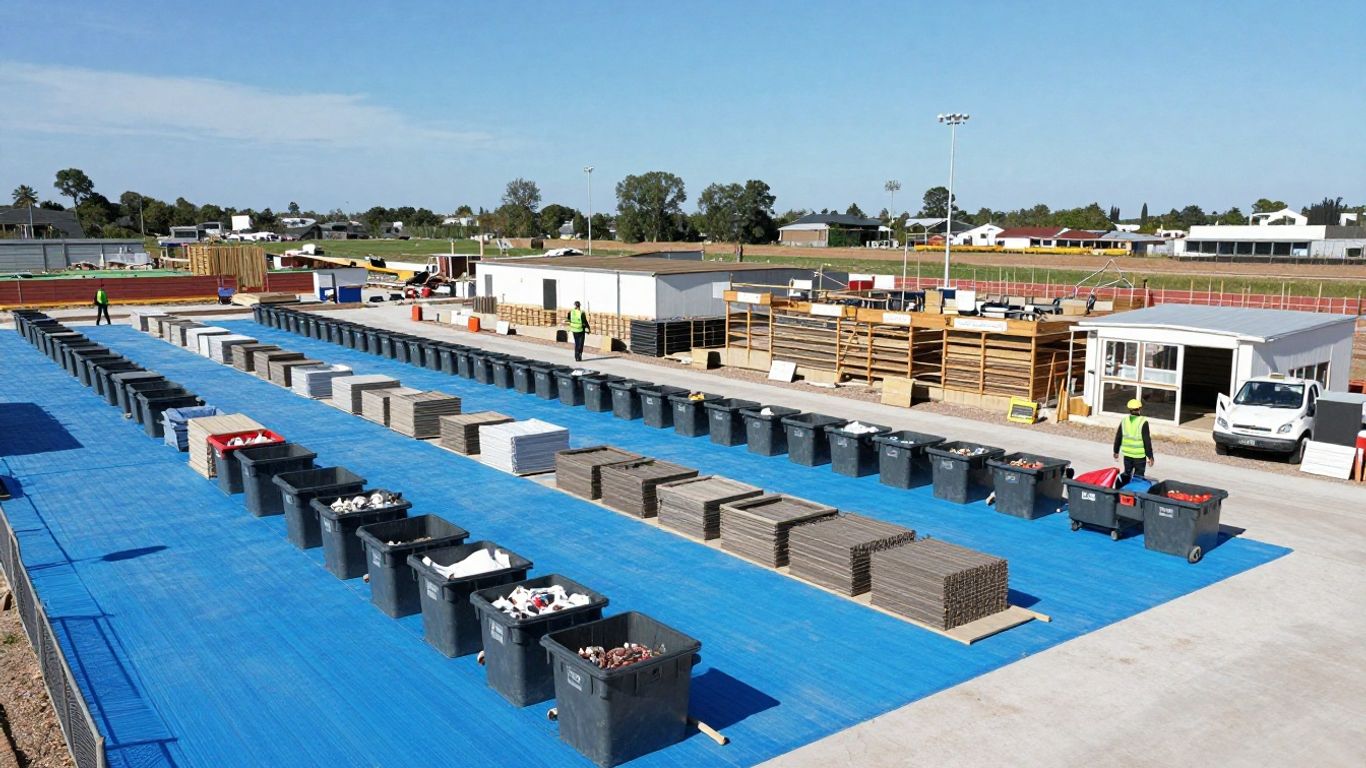
Transitioning from theory to actual physical application requires project teams to implement concrete measures on the ground. Green practices should not feel like an extra administrative chore; instead, they must be engineered directly into daily execution steps.
Resource optimization and waste reduction techniques
Minimizing waste starts with shifting from a consumption-based linear approach to a conscious circular model. Program managers can streamline physical resource requirements by opting for modular designs and keeping strict inventories to prevent over-ordering. This structured approach helps field managers and designers track exactly what enter the workspace, cutting both material overhead and disposal fees.
Sustainable procurement and supply chain management
Sourcing materials responsibly requires evaluating the lifecycle of every input, focusing on where items originate and how they are shipped. Procurement personnel can drive systemic changes by prioritizing suppliers that show verified environmental labels and hold robust carbon disclosures. Integrating these sourcing metrics into standard bidding templates ensures that green criteria are weighted heavily alongside traditional price vectors.
Implementing energy-efficient project workflows
Improving operational energy efficiency relies on choosing physical processes and digital architectures that conserve power. To show how workflow efficiency translates into tangible metrics, look at how projects structure their operational milestones:
Selecting localized supply terminals and leveraging cloud ecosystems to optimize computational loads are practical ways to ensure energy conservation. This shift not only decreases direct energy costs but also establishes a reliable blueprint for future ventures to duplicate, proving that efficiency is a natural byproduct of smart project design.
Measuring success with sustainable KPIs

Organizations cannot improve what they fail to measure, meaning success must be quantified using comprehensive key performance indicators. Moving beyond simple financial statements allows project managers to demonstrate the real, holistic value created for stakeholders.
Defining success beyond financial performance metrics
Traditional cost-and-schedule baselines fail to capture the broader environmental and social impacts of a project. To truly evaluate project management sustainability, managers must incorporate KPIs that measure resource circularity, water footprint, and employee well-being. This balanced evaluation shows how a project supports global sustainability goals rather than just short-term corporate accounting.
Methods for tracking project carbon footprints
Precision is paramount when calculating green credentials, demanding that tracking methodologies transition from rough estimates to real-time, automated data. The Breathe ESG platform makes this possible by enabling teams to collect, track, and manage complex climate indicators with ease. Teams that rely on manual logging are often overwhelmed by fragmented information, whereas centralized software can pull primary utility data and supplier figures automatically. Evaluating these metrics helps organizations fulfill tight global disclosure requirements and make rapid, data-backed adjustments during execution.
Reporting on social impact and stakeholder communication
Communicating social performance requires consistent updates regarding local labor, fair practices, and health metrics. Sharing these reports via global disclosure guidelines helps build durable trust among institutional investors and neighboring communities. This transparent communication proves that a project's physical presence yields long-term positive social change, securing a stronger social license to operate.
Overcoming organizational barriers
Adopting sustainable project governance is a complex process that often meets internal organizational resistance. Overcoming these barriers requires systemic internal advocacy, clear educational pathways, and concrete proof that green initiatives yield long-term financial stability.
Managing cultural resistance to sustainable change
Employees and project coordinators are often hesitant to adopt new procedures, assuming that sustainability measures will slow project progress. Overcoming this inertia requires consistent upskilling, open lines of dialogue, and inclusive planning. When team members participate in crafting sustainable workflows, they are far more likely to champion waste reduction and energy-dense practices on the ground.
Balancing short-term budget constraints with long-term value
Many organizations focus heavily on minimizing upfront project expenses, ignoring the higher operational costs associated with low-quality, unsustainable materials. To make a compelling business case, project managers should model the full lifetime value of sustainable alternatives, such as lower power utility bills and reduced waste management fees. Presenting these long-term returns changes the conversation from immediate costs to total asset maximization.
Developing executive buy-in for sustainable initiatives
Securing strong commitment from senior leadership requires aligning sustainability reports directly with corporate risk management strategies. C-suite executives are focused on market positioning, access to capital, and regulatory compliance. Using a structured ESG reporting solutions selection guide can help project teams present their findings in a format that mirrors corporate financial reporting, showing executives exactly how sustainable project management shields the organization from future compliance fines.
Tools and frameworks for sustainable management
Having the right tools is essential for translating high-level corporate commitments into daily project tasks. Selecting verified frameworks and software suites ensures that sustainability assessments remain orderly, reproducible, and verifiable.
Leveraging the P5 standard for impact assessment
Applying structured frameworks like the P5 standard allows project teams to examine their work through the lens of people, planet, profit, processes, and products. This detailed categorization helps team members isolate specific high-risk elements during project initiation. By identifying these points early, managers can proactively adjust execution plans, ensuring that no single project phase inadvertently degrades local environmental or social balances.
Using project management software for sustainability tracking
Standard spreadsheets are no longer sufficient for managing complex resource and emission metrics. Dedicated project software helps automate data collection and track progress against key milestones. Using the Breathe ESG software suite, organizations can easily monitor their operational efficiency, identify performance gaps, and output audit-ready reports that integrate seamlessly with corporate-level ESG targets. Transitioning process mapping into an integrated digital registry minimizes human error and reduces manual tracking burdens.
Applying life cycle assessment methodologies to outputs
Evaluating the environmental footprint of physical project outputs requires a rigorous life cycle assessment from raw extraction through to decommissioning. To implement this systematic approach, project organizations often adopt a structured sequence of analysis:
- Establish clear system boundaries to define what project materials and logistics phases will be analyzed.
- Collect primary inventory data regarding energy consumption and raw feedstock extraction for all project inputs.
- Run impact assessments using standard scientific metrics to convert physical volumes into actual carbon equivalents.
- Interpret results to identify high-emission hotspots and redesign future iterations for better reuse capability.
This methodical assessment ensures that teams do not shift environmental burdens from one lifecycle stage to another, keeping the focus on genuine long-term footprint reduction.
For project departments looking to establish long-term compliance, you can get in touch with carbon modeling advisers to streamline your reporting process. Embracing automated data structures helps organizations transition toward highly verified sustainable operations with minimal disruption to ongoing deliveries.
Get in Touch with Breathe ESG
Ready to bring enterprise-grade compliance and seamless ESG automation to your project portfolio? Contact our team at Breathe ESG today to schedule a personalized platform demonstration and learn how our AI-powered SaaS solutions can simplify your carbon tracking and regulatory reporting.
Conclusion
Project management sustainability is no longer a superficial marketing asset; it is an operational necessity that directly shapes resource utilization, community trust, and long-term financial health. By embedding environmental, social, and economic metrics directly into early planning, utilizing robust software tools, and overcoming cultural resistance, modern organizations can deliver projects that are optimized for both current performance and future resilience.
Frequently Asked Questions
What does sustainability mean in project management?
It refers to the practice of planning, executing, and evaluating project life cycles in a way that minimizes environmental harm, supports social equity, and ensures long-term economic viability. This approach balances traditional metrics like time and budget with broader ecological and community impacts.
How do project managers influence sustainability if they are not manufacturers?
Even without directly producing goods, project managers make critical decisions regarding material procurement, vendor selection, waste routing, and operational resource efficiency. These decisions directly shape the sustainability footprint of the final project output.
What are the main areas of sustainable project management?
The main areas are environmental, social, and economic sustainability. This three-pronged approach ensures that projects reduce resource consumption, foster fair labor and community safety, and remain economically viable over their entire life cycle.
How can organizations measure project sustainability?
Organizations can measure sustainability by tracking key performance indicators such as total greenhouse gas emissions, waste diversion rates, water consumption, and social impact indicators like community safety metrics and employee well-being indexes.
What are the biggest barriers to implementing green project management?
The most common barriers include internal cultural resistance from team members comfortable with traditional workflows, tight short-term budget limitations, and a lack of clear executive buy-in for long-term sustainable investments.
Why is carbon tracking becoming critical for project managers?
Increasing global regulatory mandates demand that companies provide transparent, audit-ready data regarding their carbon emissions. Tracking project-level carbon footprints ensures compliance, avoids costly fines, and helps identify localized operational inefficiencies.
What tools help track project sustainability metrics?
Project teams can utilize structured impact frameworks like the GPM P5 standard alongside modern, automated SaaS software to track emissions, manage supply chain transparency, and compile audit-ready ESG performance reports.