
Focus your strategy on the sustainability topics that matter most.
Bring stakeholder feedback, business priorities and sustainability topics into one defensible assessment.

“Our materiality assessment became much easier to defend. Every priority is backed by stakeholder evidence, making board discussions far more productive.”

Materiality gets harder when every perspective points somewhere different.

Customers, employees, investors and communities may value different issues, making priorities difficult to align.

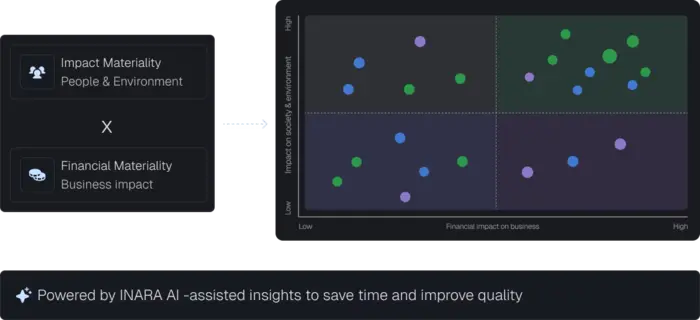
A topic may impact people or the environment without having the same financial relevance to the business.

Business priorities, stakeholder expectations and regulations evolve, so assessments need to stay current.
A structured workflow for credible materiality
From defining your scope to publishing priorities, bring stakeholders AI and evidence at every step.
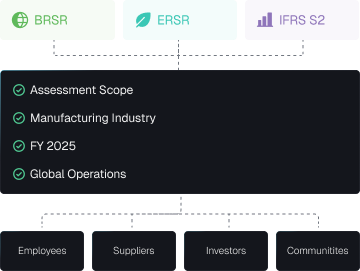
Set the scope, frameworks and stakeholder groups for your materiality assessment.
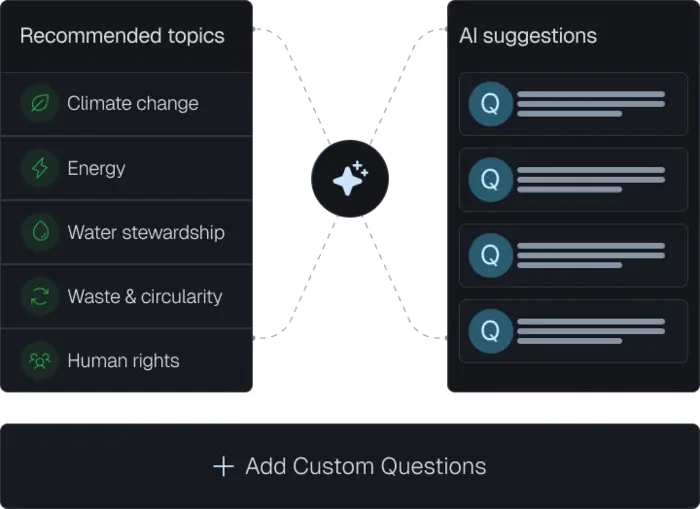
Start with recommended topics and questions, then customise them to your organisation.
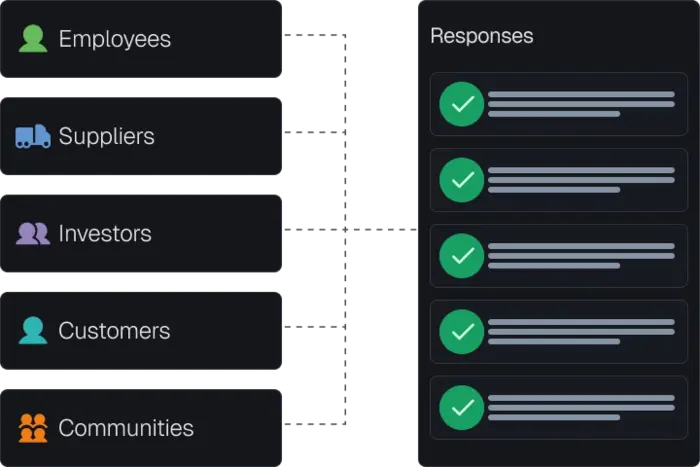
Send assessments to internal and external stakeholders and track responses in one place.
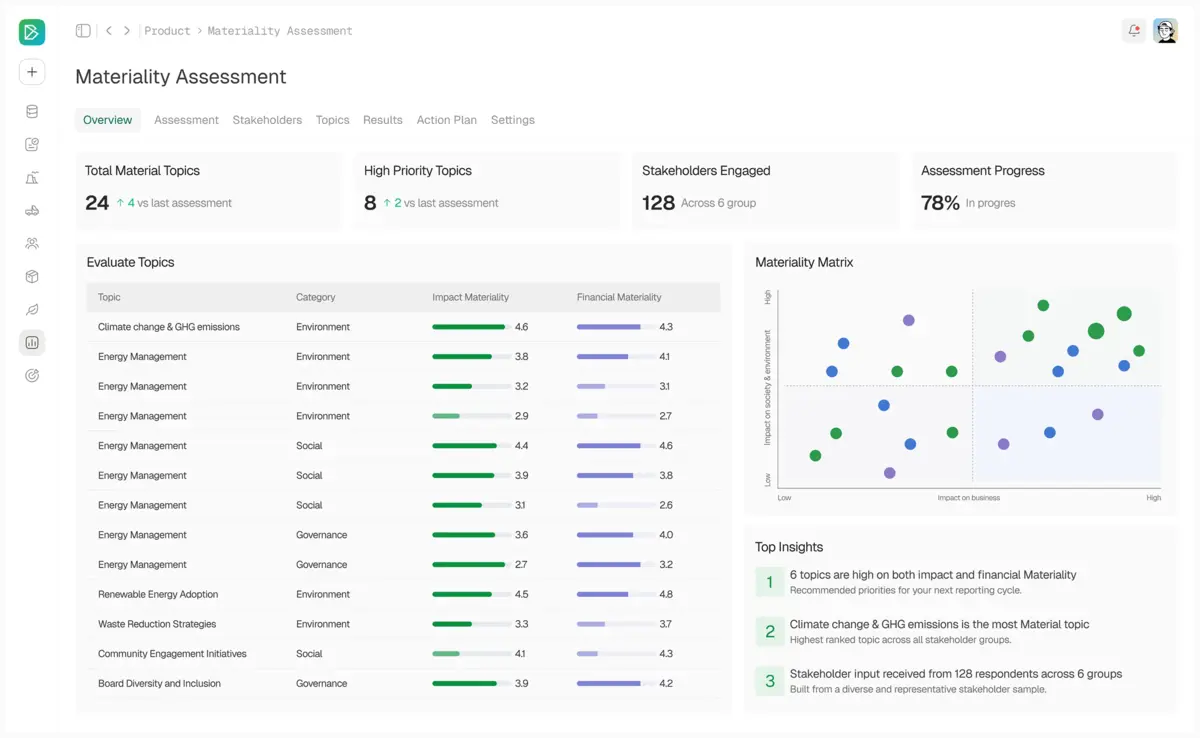
Evaluate each topic from both impact and financial perspectives to build your double materiality view.
Review the results, approve material topics and use them across strategy and reporting
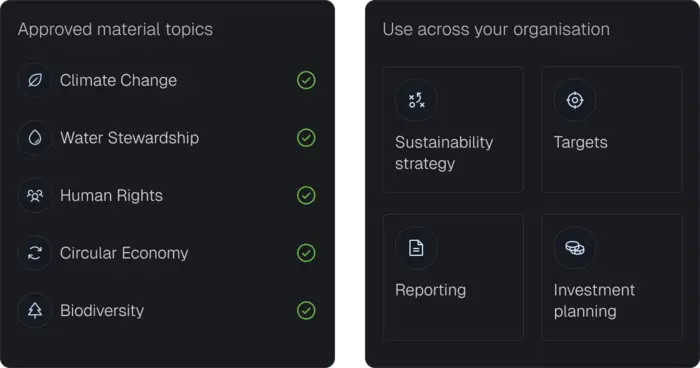
Make confident decisions around what matters most.
Turn diverse stakeholder perspectives into clear, defensible priorities that guide strategy, reporting and resource allocation.
Use stakeholders and business perspectives to separate real priorities from lower impact topics
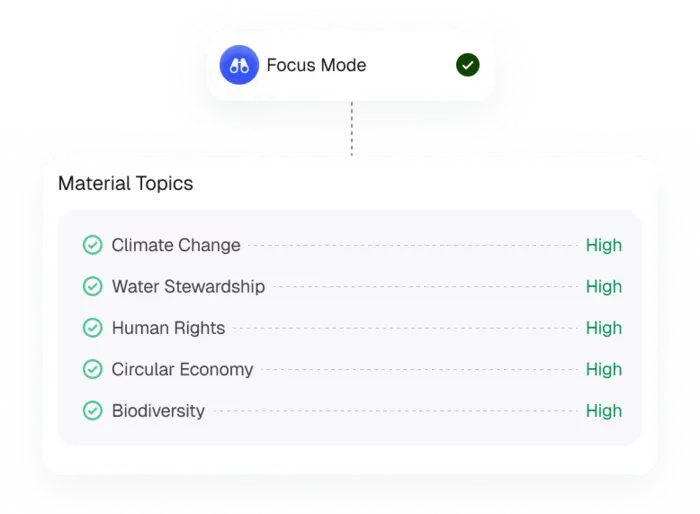
Maintain a clear, evidence based trail from stakeholder input to final approval
.png)
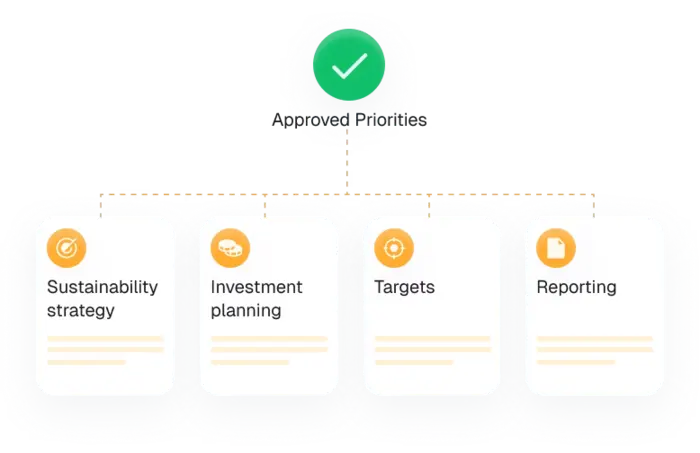
Use approved priorities across sustainability strategy, reporting, targets and investment planning
What changes after Breathe?
The software is only half the story. Here's what actually changes for the people using it every day.

With different businesses and stakeholder groups, sustainability priorities are not always the same. A structured materiality process helps bring those perspectives together and gives us a clearer basis for prioritisation.

Materiality is most useful when the reasoning behind each priority is clear. Bringing stakeholder inputs and business considerations into one process makes the assessment easier to review and explain.
Ready to identify what matters most?
Build evidence-based materiality assessments that align stakeholder expectations with business strategy.