
Exploring the Frontiers: Latest Research in the Journal of Sustainability and Management Research
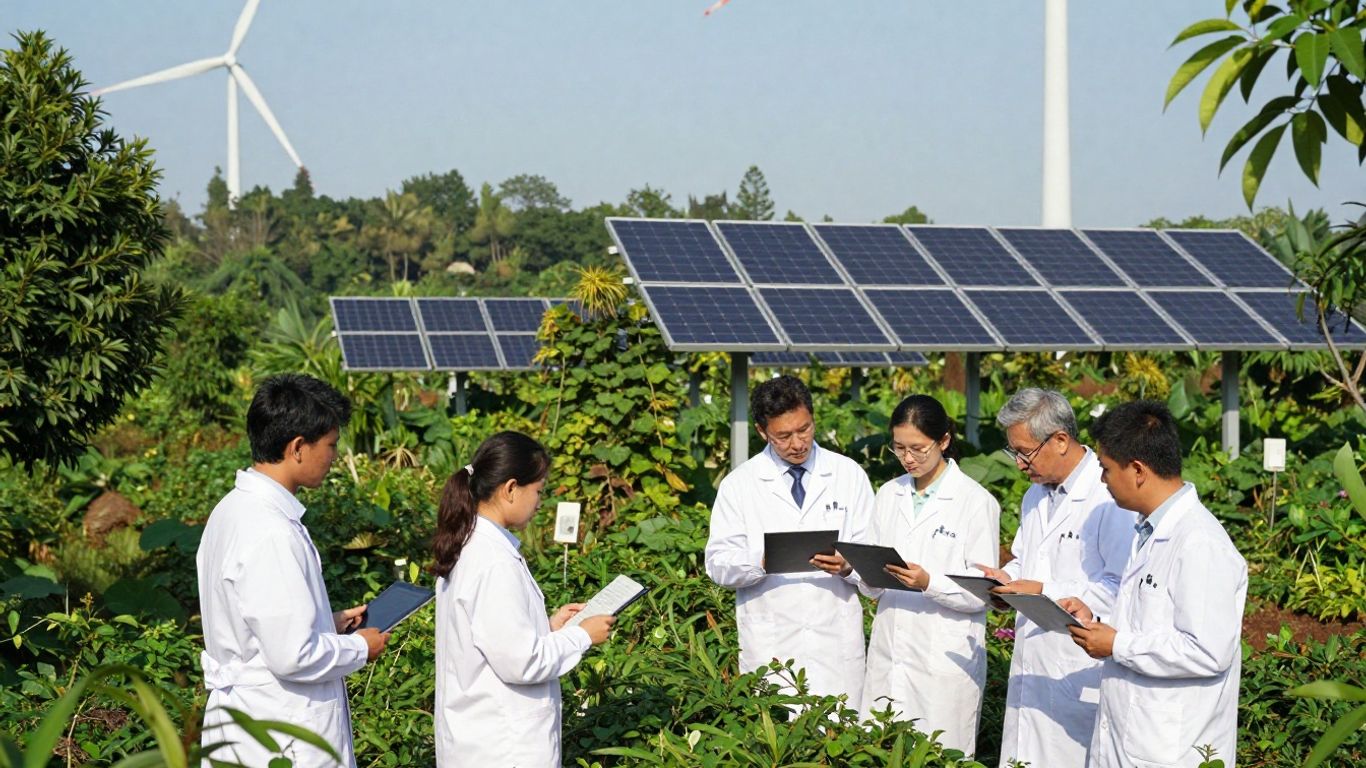
The Journal of Sustainability and Management Research is putting out some really interesting stuff lately. It feels like they're covering a lot of ground, from how we manage our natural resources to how businesses are trying to be more responsible. There's a big push to understand how things like climate change and poverty connect with business practices, and how we can actually measure progress. It's a lot to take in, but it's good to see this kind of research happening.
Key Takeaways
- Research is looking at better ways to manage resources like forests and land, especially in places facing difficulties.
- Businesses are exploring new models to confirm customer expectations and use ESG factors to help with development.
- Studies are examining complex global issues, like water and food systems in Africa, and how poverty is changing in the digital age.
- There's a focus on understanding why companies should be sustainable and defining core concepts like governance and systems thinking.
- Future research aims to figure out how to share benefits more fairly and improve how we measure ESG performance.
Advancements in Sustainable Resource Management
This section looks at how we're getting smarter about managing the stuff our planet provides. It's not just about using less, but using things in ways that make sense for the long haul.
Institutional Analysis of Agroforestry Practices
Agroforestry, the practice of blending trees with crops and/or livestock, is getting a closer look. Researchers are digging into how different organizations and communities set up rules and systems to make these practices work. It turns out that how land is owned and managed, along with local traditions, really matters. Effective institutions can make or break the success of agroforestry projects. We're seeing studies that compare how different governance structures, from government policies to local farmer groups, influence tree planting, soil health, and farmer income. It's complex, with many moving parts.
Navigating Land Reform Challenges
Land reform is a tricky business, and this research dives into the difficulties. It's not just about drawing new lines on a map; it's about fairness, access, and making sure people can actually use the land they're given. Studies are exploring how past reforms have played out, what went wrong, and what lessons can be learned. This includes looking at how land tenure security affects investment in sustainable farming and how to deal with conflicts that arise. It's a big deal for rural development and resource management.
Rethinking Local Economic Development
Forget the old models. This area is about finding new ways for local economies to thrive without trashing the environment. It’s about building resilience from the ground up. Think about supporting local businesses that use sustainable materials, creating jobs in renewable energy, or developing tourism that respects natural areas. The research here often highlights the importance of community involvement and tailoring strategies to what works in a specific place, rather than a one-size-fits-all approach. It's about creating value that stays local and benefits the people who live there.
Innovations in Sustainable Business Practices
It feels like just yesterday that companies were mostly focused on profits, and anything else was kind of an afterthought. But things have really shifted, haven't they? Today, businesses are increasingly seeing sustainability not just as a nice-to-have, but as a core part of how they operate. With all the attention on things like climate change and social fairness, companies are realizing they have a big role to play. Plus, investors are paying closer attention, using ESG (Environmental, Social, and Governance) data to make decisions. It's a fast-moving scene, and researchers are trying to keep up.
Extending Expectation Confirmation Models
This area of research looks at how customers feel about a company's sustainability efforts after they've interacted with it. Think about it: a company might say they're all about being green, but does the customer actually see that in their experience? Researchers are digging into how customer expectations are formed and whether they're met. It's not just about what a company claims to do, but what the customer perceives and experiences. This helps businesses understand how to actually deliver on their sustainability promises in a way that resonates with people.
ESG as a Driver for Development
ESG factors are becoming way more than just a checklist. They're actually shaping how companies grow and develop. This research explores how focusing on environmental protection, social responsibility, and good governance can lead to real business benefits. It's about moving beyond just avoiding problems to actively creating value. Companies that get this right often find they have better access to markets, can create more unique products, and manage risks more effectively. It's a shift from just being compliant to being a leader.
Circular Economy and Resource Conservation
We're hearing a lot about the circular economy these days, and for good reason. Instead of the old 'take-make-dispose' model, the idea is to keep resources in use for as long as possible. This means designing products that can be reused, repaired, or recycled. Research in this area looks at how businesses can actually make this work. It involves rethinking everything from product design to supply chains. The goal is to reduce waste, conserve natural resources, and create more efficient systems. It's a big change, but one that's becoming more and more important for long-term success.
Addressing Global Sustainability Challenges
Sustainability on a global scale has become everybody’s business—there’s just no avoiding it. Big issues like resource scarcity, climate impacts, and food insecurity don’t care about national borders. Now more than ever, the world notices when a system fails, whether that’s clean water running out or crops drying up in a heatwave. Let’s get into the details on how new research is nudging us to find solutions that cross sectors, bridge gaps, and involve everyone.
The Water-Energy-Food Nexus in Southern Africa
The connection between water, energy, and food is tricky. In Southern Africa, these elements are tangled together—changing one will usually shake up the others. Researchers have started mapping where the system breaks down first and what that means for millions of people.
- Too much water for farming can lower drinking water supplies downstream.
- Hydropower projects depend on steady rain, but droughts mean less electricity and less water for agriculture.
- New policies push for energy from renewables, but building these often requires land and water that could instead grow food.
When resources are stretched, conflicts can heat up fast—solving one problem can sometimes create another. This is why researchers argue for policies that connect all three sectors, not just one at a time.
Reconceptualizing Poverty in the Digital Age
Poverty’s not just about money anymore. Researchers are looking at digital exclusion—when people can’t get online or use digital tools, it keeps them locked out not just from jobs, but also from things like online healthcare and education.
Three important points the research highlights:
- Access to technology is often still unequal, both in cities and in rural areas.
- Digital skills are just as important as having devices—without know-how, access means little.
- Economic opportunities increasingly depend on being able to connect and participate online.
A strong conclusion from current studies is that reducing poverty means improving digital inclusion, not just economic handouts, so that people can fully participate in society now and in the future.
Socio-Ecological Sustainability in Frontier Areas
Frontier regions—places at the edge of major development, like rainforests or remote valleys—face their own sticky problems. Often, these areas look untouched, but pressures from mining, logging, or new farming push traditional ways aside.
Common concerns noted in the Journal’s recent research:
- New businesses can bring jobs but also disrupt long-held social and environmental balances.
- Traditional management of forests or fisheries is often more sustainable, but might get ignored in the rush for profits.
- When outsiders move in quickly, local governance (rules made by communities) gets weaker, which can lead to resource depletion.
In many cases, researchers suggest listening more to people who have lived in these areas for generations. Their systems may be informal, but they can offer practical, sustainable solutions that outside experts often miss.
Evolving Concepts in Sustainability Research
It feels like every few years, the way we talk about sustainability shifts, doesn't it? What was once a niche concern is now front and center for many businesses and researchers. This section looks at how the very ideas we use to discuss sustainability have changed over time.
The Business Case for Corporate Sustainability
For a long time, a big question was whether doing good for the planet and people actually helped a company's bottom line. Early research, going back to the 60s, often debated if focusing on anything other than shareholder profit was a good idea. You'd see papers arguing that sustainability efforts might even hurt financial performance. But things have really changed. Now, the focus is less on if sustainability matters for business and more on how it creates value. We're seeing more studies that look at how embedding sustainability into a company's core operations can actually lead to better results. It's a shift from 'should we do this?' to 'how can we do this best?' to understand current research trends.
Defining Key Concepts: Governance, Stakeholders, and Systems
To really move forward, we need to be on the same page about what we mean by certain terms. The Journal of Sustainability and Management Research has highlighted that concepts like governance, stakeholders, and social-ecological systems need clearer definitions. When researchers use these terms differently, it makes collaboration and building on each other's work much harder. Getting these definitions ironed out is key to opening up new avenues for research.
Integrating Social and Environmental Systems Thinking
This is a big one. For years, business sustainability and social-environmental sustainability were often studied separately. But the reality is, they're deeply connected. We're seeing a push to bring these two areas together. This means thinking about how business decisions impact social and environmental systems, and vice versa. It's about looking at the bigger picture and understanding these connections.
The conversation around sustainability in business has moved from a simple 'green' focus to a much broader consideration of environmental, social, and governance (ESG) factors. What was once about avoiding pollution is now about strategic integration and value creation across all aspects of a company's operations and its impact on the wider world.
Future Directions in the Journal of Sustainability and Management Research

The landscape of sustainability research is always shifting, and the Journal of Sustainability and Management Research is at the forefront of tracking these changes. As we look ahead, several key areas are emerging that will shape future scholarship and practice.
Research Questions for Equitable Value Distribution
One significant area of focus is how to ensure that the benefits of sustainability initiatives are shared fairly. This involves asking tough questions about who gains and who loses when new sustainable practices are implemented. We need to move beyond just measuring environmental impact and start looking at the social and economic implications for all stakeholders. This includes examining how value is created and distributed within supply chains, particularly in the context of global development. The goal is to foster systems where economic growth doesn't come at the expense of social equity or environmental health.
Improving ESG Performance Measurement
Environmental, Social, and Governance (ESG) metrics are becoming standard for businesses, but there's still a lot of work to do in refining how we measure them. Different frameworks exist, and they don't always align, making comparisons difficult. For instance, understanding the nuances between frameworks like the EU's CSRD and the global ISSB standards is becoming increasingly important for multinational corporations [99d4]. Future research needs to develop more robust, standardized, and transparent methods for assessing ESG performance. This will help companies track their progress more effectively and allow investors to make more informed decisions.
Synergies Between Social and Business Sustainability Scholarship
There's a growing recognition that social and business sustainability are not separate fields but are deeply interconnected. Businesses are increasingly seeing sustainability not just as a compliance issue but as a strategic advantage. This means that research needs to bridge the gap between academic disciplines, bringing together insights from management, sociology, economics, and environmental science. We need to explore how social factors influence business decisions related to sustainability and, conversely, how business practices impact social well-being and environmental outcomes. This interdisciplinary approach is vital for tackling complex global challenges.
Here are some key questions guiding this synergy:
- How can businesses effectively integrate social impact into their core strategies?
- What are the most effective ways to measure and report on the social aspects of sustainability?
- How can academic research better inform business practices for greater social and environmental good?
The increasing focus on sustainability by businesses and investors alike highlights a shift in how value is perceived. It's no longer just about financial returns; the long-term health of social and environmental systems is now a key consideration. This evolving perspective demands a more integrated approach to research and practice, moving away from siloed thinking towards holistic solutions.
Sustainable Materials and Processes

This section looks at the latest research on how we make and use stuff, aiming for a more sustainable future. It’s all about finding new ways to create materials and design processes that are kinder to the planet.
Alternative Materials Research
We're seeing a lot of work on finding alternatives to traditional materials that have a big environmental footprint. Think about things like using agricultural waste to make building materials or developing new biodegradable plastics. The goal is to reduce reliance on finite resources and cut down on pollution. Researchers are exploring how to make these new materials perform as well as, or even better than, the old ones, while also being easier to recycle or break down naturally. It’s a complex puzzle, but progress is being made.
Sustainable Chemical Process Design
Chemical processes are everywhere, from making medicines to producing plastics. The challenge is to make these processes cleaner. This involves using less energy, generating fewer harmful byproducts, and using renewable feedstocks. It’s not just about tweaking existing methods; it’s often about rethinking the entire approach. For example, using biocatalysts (like enzymes) instead of harsh chemical catalysts can make a big difference. The journal features studies that look at the whole lifecycle of a chemical process, from start to finish, to find the most efficient and eco-friendly routes. This is a key area for reducing industrial pollution.
Green Hydrogen Production and Storage
Hydrogen has a lot of potential as a clean energy source because it produces only water when burned. The tricky part is producing it sustainably and storing it safely. "Green hydrogen" is made using renewable energy, like solar or wind power, to split water molecules. This is a big step up from older methods that relied on fossil fuels. However, storing and transporting hydrogen is still a challenge. Research is looking into new materials and methods for efficient storage, like using metal hydrides or advanced tank designs. The development of this technology could really change how we power everything from vehicles to industries. You can find more on sustainable materials in journals like SusMat.
The shift towards sustainable materials and processes isn't just an environmental imperative; it's becoming an economic one too. Companies that innovate in this space are often finding new market opportunities and building stronger brand reputations. It requires a willingness to experiment and invest in new technologies, but the long-term benefits are becoming increasingly clear.
We're all about using earth-friendly stuff and smart ways to make things. This helps protect our planet for the future. Want to learn more about how we do this? Visit our website today!
Wrapping It Up
So, what does all this mean? Looking at the research coming out, it's clear that sustainability isn't just a buzzword anymore. It's woven into how businesses operate, from their strategy to how they talk to customers. We're seeing more studies that actually look at how companies can do good for the planet and people while still being profitable. The big takeaway is that folks studying the environment and folks studying business really need to talk more. There's a lot to learn from each other, especially when it comes to figuring out how to make sustainability a real part of how companies work, not just something they tack on. Hopefully, this research gets more people thinking and talking about how we can all do better.
Frequently Asked Questions
What is the main goal of the research in the Journal of Sustainability and Management Research?
This journal looks into new ideas and studies about how to manage our planet and resources better. It covers topics like making businesses more eco-friendly, finding new ways to use materials, and solving big world problems like water shortages and poverty.
How does the journal talk about managing resources like forests and farms?
It explores how people and groups work together on farming practices that are good for the environment, like agroforestry. It also looks at the difficulties in land reform and how to build stronger local economies that don't harm the planet.
What kind of new ideas are being studied for businesses to be more sustainable?
The journal discusses how companies can keep customers happy while also being good to the environment. It examines how being responsible with social and environmental issues (ESG) can help a company grow, and how using a 'circular economy' approach, where we reuse and recycle as much as possible, helps save resources.
Does the journal cover global issues like water and food?
Yes, it does! One area of research looks at how water, energy, and food are connected in places like Southern Africa. It also explores new ways to understand poverty in today's digital world and how to keep natural areas healthy and thriving.
What are some of the newer ideas about sustainability being researched?
Researchers are looking into why being sustainable is good for business in the long run. They are also trying to clearly define important terms like 'governance' (how things are run), 'stakeholders' (everyone involved), and 'systems thinking' (seeing how different parts work together). The goal is to better connect social and environmental ideas with how businesses operate.
What's next for sustainability research in this journal?
The journal is thinking about future research questions, like how to make sure everyone gets a fair share of the benefits from sustainable practices. It also wants to find better ways to measure how well companies are doing on ESG goals and how to connect the ideas from social and business sustainability research to solve real-world problems.