
Demystifying GHG Scope 1, 2, and 3 Emissions: A Comprehensive Guide
Trying to figure out all the different greenhouse gas (GHG) emissions can feel like a puzzle. You hear terms like Scope 1, Scope 2, and Scope 3 thrown around, and it's easy to get lost. But understanding these categories is actually pretty important if your business wants to get a handle on its environmental impact. Think of it like this: each scope gives you a different view of where your company's emissions are coming from. We're going to break down what ghg scope 1 2 3 actually means, so you can start making sense of it all.
Key Takeaways
- Scope 1 emissions are the direct ones from your company's own operations, like burning fuel in your vehicles or heating your buildings.
- Scope 2 emissions come from the electricity, heat, or cooling your company buys and uses. They happen where the energy is made, not where you use it.
- Scope 3 emissions cover all the other indirect emissions that happen in your company's entire value chain, both before and after your direct operations.
- Scope 3 emissions are often the largest part of a company's total footprint and can be the hardest to measure, but they also offer big chances for improvement.
- Understanding and measuring ghg scope 1 2 3 helps businesses identify where their environmental impact is greatest and develop strategies to reduce it.
Understanding Greenhouse Gas Emission Scopes
Defining Greenhouse Gases
So, what exactly are greenhouse gases? Think of them as gases hanging out in our atmosphere that trap heat, kind of like a blanket around the Earth. The main culprits we hear about are carbon dioxide (CO2), methane (CH4), and nitrous oxide (N2O). When we talk about climate change, these are the gases that get the spotlight because they're the primary drivers of the planet warming up. In 2019, for instance, the world saw an estimated 59 billion tonnes of these gases released, with CO2 making up a big chunk of that.
The Role of the Greenhouse Gas Protocol
Trying to figure out your company's environmental impact can feel like looking at a giant, messy spreadsheet. That's where the Greenhouse Gas (GHG) Protocol comes in. It's basically the go-to rulebook, used by tons of companies worldwide, for measuring and managing emissions. It breaks everything down into three main categories, or 'scopes,' which helps make sense of where your company's emissions are coming from. It's the standard that most companies, like 97% of those reporting to CDP in 2023, follow. This protocol gives businesses a clear way to build their emissions inventory, track progress, and report transparently.
Why Measuring GHG Emissions Matters
Okay, so why bother with all this measuring? Well, in today's world, being environmentally aware isn't just a nice-to-have; it's becoming a business necessity. Investors, customers, and even regulators are paying closer attention. Understanding your emissions, especially across all three scopes, gives you a clearer picture of your company's footprint. It's not just about ticking a box; it's about identifying where you can make real changes, often leading to cost savings and a better reputation. Ignoring your emissions is like ignoring a leak in your roof – eventually, it's going to cause bigger problems.
Here's a quick look at the three scopes:
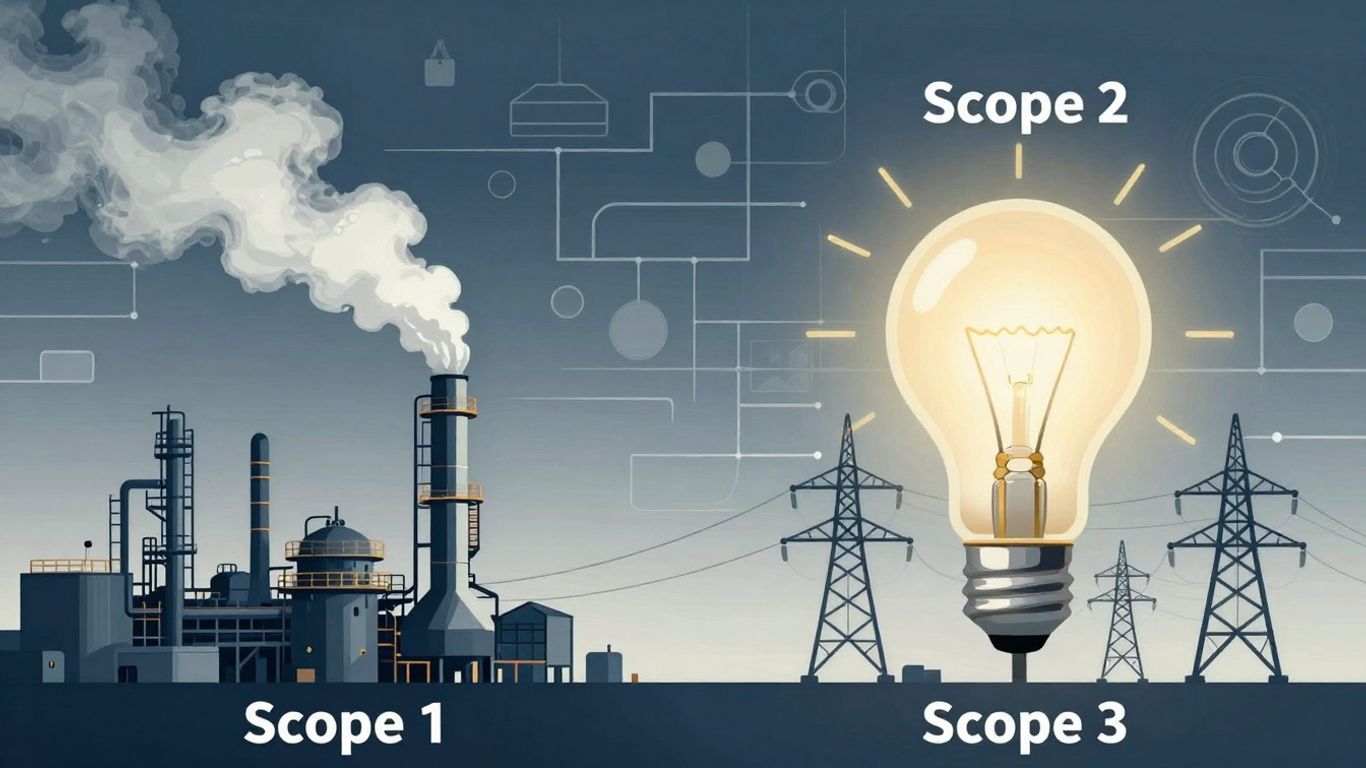
- Scope 1: These are your direct emissions. Think of the fuel your company vehicles burn or the natural gas used to heat your buildings.
- Scope 2: These are indirect emissions from the energy you buy, mainly electricity. The emissions happen at the power plant, but they're tied to your energy use.
- Scope 3: This is the big one – all the other indirect emissions that happen in your company's value chain. This includes everything from the raw materials you buy to how your products are used and disposed of.
Scope 1: Direct Emissions Explained
Alright, let's talk about Scope 1 emissions. These are the ones that come straight from your company's own operations. Think of it as the "stuff you directly control and burn." If your business owns or controls the equipment that's releasing greenhouse gases, those emissions fall under Scope 1. It's the most straightforward category to get a handle on, and often the easiest to start making changes with.
Identifying Your Company's Direct Footprint
So, how do you figure out what counts as Scope 1 for your business? You need to look at all the places where you're burning fuel or releasing gases directly. This usually involves looking at stationary sources, like boilers or furnaces in your buildings, and mobile sources, like company-owned vehicles. Don't forget about any "fugitive" emissions too – these are leaks, often from things like refrigeration systems or industrial processes. Basically, if it's happening on your property or with your equipment, and it's releasing GHGs, it's likely Scope 1.
Examples of Scope 1 Emissions
To make it clearer, here are some common examples:
- Stationary Combustion: Burning natural gas in your office building's heating system, or fuel oil in a manufacturing plant's boiler.
- Mobile Combustion: The exhaust from your company's delivery trucks, forklifts, or any other vehicles you own and operate.
- Fugitive Emissions: Leaks from air conditioning units or industrial refrigeration systems that use refrigerants. Also, emissions from processes like cement manufacturing or aluminum smelting.
Strategies for Reducing Scope 1 Emissions
Reducing Scope 1 emissions often means looking at your energy use and equipment. Here are a few ways companies tackle this:
- Upgrade Equipment: Replace old, inefficient boilers or furnaces with newer, more energy-efficient models. This can significantly cut down on fuel consumption and emissions.
- Switch Fuels: If possible, transition from higher-carbon fuels like coal or oil to lower-carbon options like natural gas, or even better, explore renewable natural gas.
- Improve Maintenance: Regularly maintain your equipment, especially HVAC systems and vehicles. Fixing leaks in refrigeration units, for instance, can prevent significant refrigerant emissions.
- Electrify Fleets: Gradually replace gasoline or diesel company vehicles with electric alternatives. This shifts emissions to Scope 2, which can then be addressed by purchasing renewable electricity.
The key takeaway for Scope 1 is direct responsibility. These are emissions you can see happening because they're tied to resources your company owns or directly manages. While they might not always be the largest portion of a company's total emissions, they are the most controllable and a good starting point for any emissions reduction journey.
Scope 2: Indirect Emissions from Purchased Energy
Alright, let's talk about Scope 2 emissions. These are the indirect ones that pop up because your company buys energy. Think electricity, steam, heating, or cooling that you get from a utility provider. The key thing here is that while you're using this energy, the actual emissions are happening way over at the power plant or wherever that energy is being generated. It's not coming directly from your office or factory, but it's definitely linked to your operations.
The impact of purchased electricity is often a big chunk of a company's carbon footprint. It’s easy to overlook because it feels removed from your direct control, but it's a significant area for improvement. If your business relies heavily on electricity to run its equipment, light its buildings, or power its servers, then Scope 2 is going to be a major consideration for your emissions reporting.
Here are some common examples of Scope 2 emissions:
- Electricity consumption: This is the big one. Every kilowatt-hour your company uses to power lights, computers, machinery, and anything else plugged into the grid counts.
- Purchased heating and cooling: If you buy steam, hot water, or chilled water from an external provider to heat or cool your facilities, the emissions from generating that energy fall under Scope 2.
- District heating and cooling: Similar to the above, but often on a larger scale, where a central plant supplies energy to multiple buildings.
So, how do you actually tackle reducing your Scope 2 carbon footprint? It's not as straightforward as just turning off lights, though that helps! One of the most effective strategies is to look at where your energy is coming from. Can you switch to a utility provider that offers renewable energy options? Or perhaps install solar panels on your own buildings? These moves can directly cut down on the emissions associated with your energy use. Another approach is to simply use less energy overall. Improving energy efficiency in your buildings and operations means you're buying less energy in the first place, which naturally lowers your Scope 2 emissions. It’s all about making smarter choices about the energy you consume and where it originates. Understanding your energy sources is a good first step in calculating a company's carbon footprint.
When you're looking at Scope 2, remember it's about the consumption of purchased energy. The emissions are generated elsewhere, but your company's demand is what drives them. This distinction is important for figuring out the best ways to make reductions.
Scope 3: The Value Chain's Indirect Emissions
Alright, so we've talked about the emissions you directly control (Scope 1) and the ones from the energy you buy (Scope 2). Now, let's get into Scope 3. This is where things get a bit more complicated, but also, honestly, where the biggest impact can be made. Scope 3 emissions cover all the other indirect emissions that happen because of your company's activities, but they occur in sources you don't own or control. Think of it as everything that happens upstream and downstream in your company's entire value chain.
Defining Scope 3 Emissions
Basically, if it's not a direct emission from your own equipment or an indirect emission from purchased energy, it's likely Scope 3. These emissions are often the largest chunk of a company's total carbon footprint, sometimes up to 90%! They're sometimes called the 'holy grail' of emissions because they're the trickiest to track and manage. But ignoring them means you're missing out on huge opportunities to actually make a difference.
Upstream vs. Downstream Scope 3 Categories
To make sense of all these emissions, Scope 3 is usually broken down into two main parts: upstream and downstream. Upstream covers everything that happens before your product or service reaches your customers, and downstream covers everything that happens after it leaves your direct control.
Here's a quick look at some of the categories:
- Upstream:
- Purchased goods and services (what you buy from suppliers)
- Capital goods (like buildings or machinery you acquire)
- Fuel and energy-related activities (not covered in Scope 2)
- Upstream transportation and distribution (getting materials to you)
- Business travel and employee commuting
- Waste generated in your operations
- Downstream:
- Downstream transportation and distribution (getting your products to customers)
- Processing of sold products (if your product needs further processing)
- Use of sold products (how customers use what you sell)
- End-of-life treatment of sold products (what happens when they're thrown away or recycled)
The Significance of Scope 3 Emissions
Why bother with all this complexity? Because Scope 3 emissions often represent the most significant environmental impact your company has. While you might not have direct control, you have influence. By working with your suppliers, designing products differently, or encouraging sustainable customer behavior, you can drive down emissions across your entire value chain. This isn't just good for the planet; it can also lead to more efficient operations, cost savings, and a stronger brand reputation. Understanding these emissions is a key part of accurate emissions reporting.
Measuring Scope 3 emissions requires a lot of data collection and collaboration. It's not a simple task, but the insights gained are incredibly important for setting meaningful climate goals and making real progress.
Navigating Scope 3 Emission Categories
Alright, so we've talked about the direct stuff (Scope 1) and the energy you buy (Scope 2). Now, let's get into Scope 3. This is where things get a bit more complicated, but also, honestly, where a lot of the real impact lies for many businesses. Scope 3 covers all those other indirect emissions that happen in your company's value chain, both before and after your direct operations.
Upstream Emissions: Purchased Goods and Services
This is about what you buy. Think about the raw materials that go into your products, or the services you contract out. Every step in creating those things has an emissions footprint. For example, if you buy steel, the emissions from mining the iron ore, processing it, and shipping it to you all count here. It's a big category, and understanding your suppliers' impacts is key.
Upstream Emissions: Transportation and Leased Assets
This covers a couple of areas. First, there's the transportation of goods to your company. If your suppliers are shipping things to your warehouse, those emissions fall under upstream transportation. Then there are leased assets. If you lease office space or equipment, the emissions associated with operating those assets (like the electricity used in a leased building you don't directly control) are part of your Scope 3. It's about emissions from things you use but don't own outright.
Downstream Emissions: Product Use and End-of-Life
This is about what happens after your product leaves your hands. How do your customers use your product? Does it consume energy? Does it create waste? And what happens when it's time to get rid of it? For instance, if you sell electronics, the electricity your customers use to power those devices is a downstream emission. Similarly, if your product is disposable, the emissions from its disposal or recycling count here. This category really highlights the lifecycle impact of what you put out into the world.
Measuring and Managing Your GHG Scopes
So, you've got a handle on what Scope 1, 2, and 3 emissions are. That’s a big step! But knowing is only half the battle, right? The real work comes in actually measuring and then managing these emissions. It sounds like a lot, and honestly, it can be, but it's totally doable. Think of it like cleaning out your garage – a bit messy at first, but so much better once it's organized.
Challenges in Measuring Scope 1, 2, and 3 Emissions
Let's be real, measuring emissions isn't always a walk in the park. Scope 1 is usually the easiest because it's your direct stuff – the fuel your company vehicles burn, the natural gas heating your office. You probably have good records for that already. Scope 2, the electricity you buy, is also pretty straightforward. Your utility bills tell most of that story. The tricky part? Scope 3. This is where things get complicated because it involves your entire value chain. We're talking about the emissions from the suppliers you buy from, the travel your employees take, the products you sell and what happens to them after they're used. Getting accurate data for all of that can feel like trying to herd cats.
- Scope 1: Direct emissions from owned or controlled sources (e.g., company vehicles, on-site fuel combustion).
- Scope 2: Indirect emissions from purchased electricity, steam, heating, or cooling.
- Scope 3: All other indirect emissions in the value chain (e.g., supply chain, business travel, product use).
Tools and Technologies for Emission Measurement
Don't let the complexity of Scope 3 get you down. There are actually some pretty neat tools and technologies out there to help. Many companies use specialized software that can pull data from various sources – your accounting systems, utility bills, travel records, and even supplier information. Some of these platforms can help you estimate emissions based on industry averages if direct data is hard to come by. It's all about finding what works for your business size and complexity. For larger organizations, working with consultants who specialize in GHG accounting can also be a smart move. They've seen it all and know how to navigate the data collection maze.
Integrating GHG Reporting into Corporate Strategy
Okay, so you've measured your emissions. Now what? The goal isn't just to have a number; it's to use that number to make real changes. This means weaving your emissions data into your overall business strategy. It's not just an environmental report; it's a business performance report. Think about setting reduction targets, finding ways to use less energy, working with suppliers to lower their emissions, or even redesigning products to be more sustainable. Making emissions reduction a core part of your business plan can lead to cost savings, innovation, and a stronger brand reputation. It shows your customers and investors that you're serious about sustainability, not just talking about it.
Reporting your emissions is becoming less of an option and more of a necessity. It's not just about complying with new regulations; it's about understanding your business's impact and finding opportunities to improve. By breaking down emissions into scopes and actively managing them, companies can build resilience and stay competitive in a changing world.
Here’s a quick look at how you might approach managing each scope:
- Scope 1: Focus on energy efficiency in your facilities, maintaining company vehicles, and managing refrigerant leaks.
- Scope 2: Switch to renewable energy sources where possible, improve building insulation, and optimize heating/cooling systems.
- Scope 3: Engage with suppliers on their emissions, encourage sustainable business travel, and consider the lifecycle impact of your products.
Understanding and handling your greenhouse gas (GHG) emissions, often called "scopes," is a big step for any company. It shows you care about our planet. We can help you figure out your emissions and how to lower them. Ready to make a difference? Visit our website to learn more about how we can help you manage your company's environmental impact.
Wrapping It Up
So, we've gone through what Scope 1, 2, and 3 emissions really mean for your business. It might seem like a lot at first, especially Scope 3 with all its different parts. But understanding these categories, thanks to the Greenhouse Gas Protocol, is the first step. Knowing where your emissions come from helps you figure out what you can actually do to lower them. It's not just about ticking boxes; it's about making real changes that help the planet and can even make your business run better. Don't get too bogged down in the details – just start with what you can measure and go from there. Every bit of effort counts.
Frequently Asked Questions
What are greenhouse gases and why do they matter?
Greenhouse gases are like a blanket around the Earth, trapping heat and keeping our planet warm. Gases like carbon dioxide and methane are the main ones. While some warmth is good, too much of these gases, mostly from human activities, is causing the planet to get too hot, leading to problems like changing weather and rising seas. Businesses need to understand these gases because their actions can release them.
What's the difference between Scope 1, 2, and 3 emissions?
Think of it this way: Scope 1 emissions are the ones your company directly creates, like burning fuel in your own trucks or heating your buildings. Scope 2 emissions are from the electricity you buy – you don't make the pollution, but it's created to power your business. Scope 3 emissions are all the other indirect ones that happen because of your company's activities, but outside of your direct control, like the emissions from making the products you buy or how your customers use your products.
Can you give some examples of Scope 1 emissions?
Sure! Scope 1 emissions are your direct responsibility. This includes burning fuel in company-owned cars or trucks, using natural gas to heat your office or factory, or any leaks from cooling systems (like air conditioners) that release greenhouse gases.
What are common examples of Scope 2 emissions?
Scope 2 emissions are all about the energy you purchase. The most common example is the electricity you use to power your office buildings, factories, or stores. If your company uses energy for heating or cooling that comes from a purchased source, that's also Scope 2. Even electricity used for electric company vehicles falls under this category.
Why are Scope 3 emissions considered so important, even if they're harder to track?
Scope 3 emissions are a big deal because they often make up the largest part of a company's total carbon footprint – sometimes up to 90%! While they're trickier to measure because they involve your entire supply chain and customer use, tackling them offers the biggest chance to make a real difference in fighting climate change. Plus, customers and investors are increasingly looking at these emissions.
What are some of the challenges in measuring all these emission scopes?
Measuring Scope 1 is usually the easiest because it's your direct activity. Scope 2 is also fairly straightforward, mainly involving your energy bills. However, Scope 3 is much more complex. It requires gathering data from many different sources, like your suppliers and customers, and involves many steps in the product's life. Getting accurate information for all 15 Scope 3 categories can be a significant challenge.