
Advance Your Career with an Executive MBA in Sustainability Management

Thinking about taking your career to the next level while also making a real difference? An executive MBA in sustainability management might be just the ticket. It's not just about learning business principles; it's about learning how to run a company in a way that's good for the planet and people, too. This kind of degree is becoming super important as more and more businesses realize that being sustainable isn't just a nice idea, it's good for business.
Key Takeaways
- An executive MBA in sustainability management equips you with the skills to lead businesses profitably while minimizing negative environmental and social impacts.
- The curriculum covers essential topics like global sustainability frameworks (GRI, ISSB, TNFD), data analysis for sustainability metrics, and integrating green practices across all business functions.
- Real-world projects, industry collaborations, and practical application through internships provide hands-on experience in tackling sustainability challenges.
- Graduates can pursue diverse career paths, including sustainability management roles, ESG analysis, consulting, and supply chain optimization.
- Choosing the right program involves looking at accreditation, faculty expertise, flexible study options, and a curriculum that truly embeds sustainability throughout.
Understanding the Value of an Executive MBA in Sustainability Management
Why Sustainability Matters in Today's Business Landscape
Let's be real, the business world has changed. It's not just about profits anymore. Customers, employees, and even investors are paying attention to how companies act. They want to see businesses that care about more than just the bottom line. This shift means companies need leaders who get it – leaders who can balance making money with doing good for the planet and people. Ignoring sustainability isn't just bad PR; it's becoming a real business risk. Companies that don't adapt risk falling behind. It's about building a business that lasts, one that's responsible and respected. This is where understanding sustainable development management becomes key for global career opportunities.
The Evolving Role of Leaders in Sustainable Business
Think about it: the boss of yesterday might have focused solely on sales targets. Today's leader needs a broader view. They have to be smart about environmental impact, social fairness, and good governance – often called ESG. This isn't just a side project; it's becoming part of how a business operates day-to-day. Leaders need to be able to spot risks related to climate change and figure out how to turn those challenges into opportunities. They're the ones who guide the company through complex changes, making sure it's not just surviving but thriving in a world that demands more responsibility. It's a big shift, and it requires a new set of skills.
Core Competencies for Sustainable Leadership
So, what does it take to be one of these new leaders? It's a mix of things. You definitely need the standard business smarts – finance, marketing, operations. But you also need to understand how environmental and social issues affect all of that. This means being able to think critically about complex problems, come up with new ideas, and adapt when things change. Communication is huge, too – you have to be able to talk to different groups, from employees to investors, about why sustainability matters and what the company is doing. Emotional intelligence helps a lot, too, in understanding people and building strong teams. Basically, it's about being a well-rounded leader who can see the bigger picture and make smart decisions that benefit everyone.
The business landscape is increasingly shaped by environmental and social considerations. Leaders who can integrate these factors into their strategy are better positioned for long-term success and positive impact.
Here's a quick look at what's expected:
- Problem-Solving: Tackling complex issues with no easy answers.
- Adaptability: Rolling with the punches when market or environmental conditions shift.
- Communication: Clearly explaining sustainability goals and progress to various stakeholders.
- Strategic Thinking: Seeing how sustainability fits into the overall business plan.
Curriculum and Key Learning Areas
Integrating Sustainability Across Business Functions
This part of the program really digs into how sustainability isn't just a side project for one department. You'll learn how to weave it into everything the company does, from HR and marketing to operations and finance. It's about seeing how things like diversity and inclusion, responsible advertising, or even how you buy your supplies can all connect to the bigger sustainability picture. It’s about making sustainability a core part of how the business runs, not just an add-on.
Mastering Global Sustainability Frameworks
Today's business world relies on specific ways to talk about and measure sustainability. You'll get familiar with important standards like the Global Reporting Initiative (GRI) for tracking environmental and social impact, and the Taskforce on Nature-related Financial Disclosures (TNFD) which is becoming key for understanding risks related to biodiversity. The goal isn't just to know what these are, but to actually use them to make smart business choices. You'll learn to interpret and apply these frameworks in real situations. This is where you start to build a solid foundation in sustainability reporting.
Developing Data-Driven Analytical Skills
Being a leader in sustainability today means you've got to be comfortable with numbers and data. This section focuses on building those skills. You'll look at things like carbon accounting, figuring out the impact of different actions, and understanding key performance indicators (KPIs) for sustainability. It’s about learning to use data to analyze risks and make informed decisions. Expect to work with real data and case studies to get a feel for what's expected in the business world.
The modern sustainability leader is part analyst, part strategist, and part communicator. They need to translate complex environmental and social data into actionable business insights that resonate with stakeholders at all levels.
Here's a look at some of the skills you'll develop:
- Carbon accounting and emissions tracking
- Impact assessment methodologies
- ESG metrics and KPI development
- Data analysis for risk management
- Interpreting sustainability reports
Experiential Learning and Industry Relevance
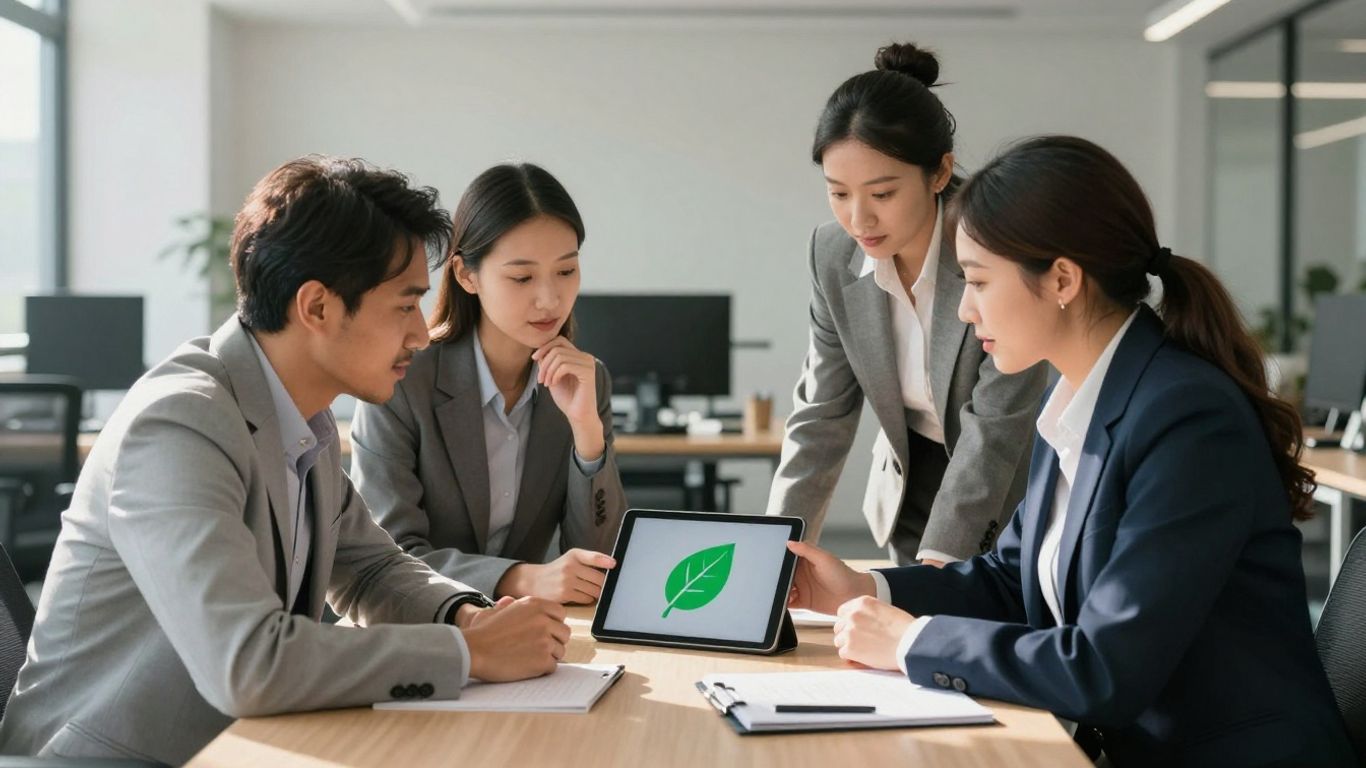
An Executive MBA in Sustainability Management isn't just about sitting in lectures; it's about getting your hands dirty. The real world is where sustainability challenges play out, and your learning should reflect that. This means moving beyond theory and engaging directly with the issues businesses face today.
Real-World Projects and Industry Collaboration
Top programs understand that you learn best by doing. You'll likely get opportunities to work on actual projects for companies, non-profits, or even government bodies. Think of it like a consulting gig, but for your education. This isn't just about applying what you've learned; it's about confronting complex sustainability problems head-on and figuring out practical solutions. SUMAS, for example, really pushes for these kinds of practice-oriented projects. It’s a chance to test your ideas, work with external groups, and build those important soft skills that lectures alone can't teach. This practical exposure is key to becoming a confident and effective sustainability leader.
Internships and Practical Application
While not always a formal part of every EMBA, many programs facilitate internships or similar practical experiences. These can be incredibly beneficial for applying your newfound knowledge in a professional setting. Whether it's within a corporate ESG department, a sustainability consulting firm, or a non-profit focused on environmental issues, an internship provides invaluable on-the-job learning. It’s a chance to see how sustainability principles are implemented (or not) in day-to-day operations and to build your professional network. You might even discover a new career path you hadn't considered before.
Guest Lectures and Site Visits
To keep things grounded, many programs bring in guest speakers who are actively working in the sustainability field. Hearing directly from industry specialists about their successes, failures, and the challenges they face offers a unique perspective. Site visits to companies or facilities that are leaders in sustainable practices can also be eye-opening. Seeing innovative solutions in action, whether it's a circular economy initiative or advanced waste management, makes the concepts you're studying much more tangible. It helps you understand the practicalities and the potential for positive change within various industries.
The integration of real-world projects and industry collaboration is what truly separates a theoretical degree from one that prepares you for immediate impact. It bridges the gap between academic concepts and the messy, dynamic reality of business and environmental stewardship.
Career Opportunities Post-MBA
So, you've gone and gotten yourself an Executive MBA in Sustainability Management. Now what? Well, the good news is, you're in a pretty sweet spot. The business world is really starting to get that sustainability isn't just a buzzword; it's a necessity. This means there are a bunch of cool jobs out there waiting for folks like you who know how to balance profit with planet.
Sustainability-Centric Management Roles
This is probably the most direct path. Companies are actively looking for people to lead their sustainability initiatives. Think of roles like a Director of Sustainability, a Chief Sustainability Officer, or a Sustainability Manager. These positions involve developing and implementing strategies to reduce environmental impact, improve social responsibility, and ensure ethical operations. You'll be the go-to person for all things green within the organization, working across different departments to make sure sustainability goals are met. It's about making sure the business runs well, but also that it does so responsibly.
Consulting and Advisory Positions
If you like variety and solving different puzzles, consulting might be your jam. Many businesses, big and small, need help figuring out how to become more sustainable. They don't always have the in-house know-how, so they hire consultants. As a sustainability consultant, you'd advise companies on everything from reducing their carbon footprint to improving their supply chain ethics. You might help them set targets, implement new practices, or even prepare for reporting requirements like those from CDP reporting. It's a dynamic field where you get to see a lot of different business models and challenges.
Roles in ESG Analysis and Reporting
Environmental, Social, and Governance (ESG) is a huge deal for investors these days. They want to know how companies are performing not just financially, but also on these broader sustainability metrics. An MBA in Sustainability Management equips you with the skills to analyze this data. You could work as an ESG Analyst, evaluating companies for their sustainability performance, or in an ESG Reporting role, making sure all the necessary information is collected and communicated accurately. This field is growing fast, and accurate reporting is key for companies wanting to attract investment.
Supply Chain and Operations Management
Think about all the stuff that goes into making and delivering a product. That's the supply chain and operations. Making these processes more sustainable is a massive undertaking. Graduates can step into roles focused on optimizing logistics, reducing waste in manufacturing, sourcing materials ethically, and ensuring fair labor practices throughout the chain. It's about making the whole system run smoother and cleaner. This often involves a lot of data analysis and process improvement, areas where your MBA will have given you a solid foundation.
Choosing the Right Executive MBA Program
Accreditation and Institutional Credibility
When you're looking at Executive MBA programs focused on sustainability, don't forget to check if the school is properly accredited. This is a big deal because it means the program meets certain quality standards. It's like getting a stamp of approval. Even though sustainability is a newer field, your degree should still come from a place with a solid reputation, experienced teachers, and a curriculum that makes sense globally. This way, employers and other schools will actually recognize your degree.
Flexible Study Options and Academic Rigor
Many people looking into a sustainability MBA are already working, maybe have families, or even run their own businesses. A good program understands this. They should offer different ways to study – like online, in-person, or a mix of both (hybrid). The important thing is that these flexible options don't mean you're getting a watered-down education. You want to make sure the quality and the learning experience are just as good, no matter how you attend. It's about finding a program that fits your life without sacrificing the depth of learning.
Faculty Expertise and Program Specialization
It's also worth looking into who is teaching the courses. Do the professors have real-world experience in sustainability or related fields? Are they actively involved in research or consulting? Some programs might focus more on, say, climate finance, while others might lean towards circular economy models. Think about what specific areas of sustainability management you want to focus on and find a program that aligns with those interests. This specialization can make a big difference in your career path. For example, understanding frameworks like the SEBI BRSR guidelines can be a key differentiator depending on your career goals.
Integrating Sustainability Across Business Functions
A top-tier sustainability MBA shouldn't just tack on a few environmental classes. Sustainability needs to be woven into the core of the business subjects. You should see how it connects to finance, marketing, operations, and strategy. Ask yourself if the program treats sustainability as a central theme or just an optional extra. A leader in today's world needs to understand both how businesses work and the environmental realities they face. This integrated approach is what truly prepares you for modern leadership challenges.
The Impact of an Executive MBA in Sustainability Management

So, you've got this Executive MBA in Sustainability Management. What does that actually mean for you and the companies you'll work with? It's more than just a fancy degree; it's about equipping you to make real, lasting changes. This program is designed to turn sustainability commitments into tangible results for organizations. You're not just learning theory; you're learning how to implement it effectively.
Driving Profitable Growth with Positive Footprints
Think sustainability is just about being 'green' and maybe costing the company money? Think again. An MBA focused on sustainability management teaches you how to integrate eco-friendly and socially responsible practices in ways that actually boost the bottom line. It's about finding that sweet spot where business success and positive impact go hand-in-hand. You learn to spot opportunities for efficiency, reduce waste, and build stronger brand loyalty because customers and investors increasingly care about these things. It’s about running a business efficiently, ethically, and in a way that respects the planet and its people.
Navigating Climate Transition and Risk Management
Climate change isn't some far-off problem anymore; it's a present reality that businesses have to deal with. This MBA gives you the tools to understand the risks associated with climate change – think supply chain disruptions, regulatory changes, and shifting consumer demands. More importantly, it teaches you how to plan for these transitions. You'll learn about things like carbon accounting and how to assess environmental impact, which are becoming standard parts of business strategy. Understanding these global sustainability frameworks, like GRI and ISSB, is key to reporting accurately and managing these complex issues. This is where you can really make a difference, helping companies adapt and thrive in a changing world. You can find more information on sustainability management.
Becoming a Transformative Leader in the Green Economy
Ultimately, an Executive MBA in Sustainability Management is about becoming a different kind of leader. It's about developing the skills to see the bigger picture, to connect business goals with environmental and social well-being. You'll learn to think critically, solve complex problems, and innovate. The program helps you develop a systems thinking approach, so you understand how different parts of a business and its environment are connected. This allows you to lead transformations, not just manage day-to-day operations. You'll be ready to guide your organization through the challenges and opportunities of the growing green economy, making decisions that are good for business and good for the world.
Thinking about getting an advanced degree in managing sustainability? An Executive MBA focused on this area can really open doors. It equips you with the skills to lead green initiatives and make a real difference in how businesses operate. Ready to learn more about how this can boost your career and help the planet? Visit our website today to explore your options!
Wrapping It Up
So, if you're looking to make a real difference while also moving up in your career, an MBA focused on sustainability management seems like a solid bet. It's not just about being 'green'; it's about smart business that considers the planet and people too. You'll gain the skills to lead companies in a way that's good for everyone, from the bottom line to the environment. It really sets you apart and prepares you for the future of business, which, let's face it, has to be sustainable.
Frequently Asked Questions
What exactly is an Executive MBA in Sustainability Management?
It's a special business degree for people who already have some work experience. It teaches you how to run a company in a way that's good for the planet and people, not just for making money. You learn how to make smart choices that help the environment and society while still growing the business.
Why is sustainability so important for businesses now?
Nowadays, people care a lot about how companies treat the environment and their workers. Businesses that are sustainable often have better reputations, attract more customers, and can even save money by using resources wisely. It's becoming a must-have for long-term success.
What kind of jobs can I get after finishing this MBA?
You could become a sustainability manager, helping a company be more eco-friendly. Other options include working as an advisor, helping businesses improve their environmental and social impact, or focusing on how companies report their green efforts (ESG). You might also work in managing supply chains to make them greener.
Do I need to have a background in environmental science to do this MBA?
Not at all! This MBA is for business professionals. It teaches you the business side of sustainability. You'll learn how to apply green principles to areas like finance, marketing, and operations, even if your previous studies were in a different field.
How will this MBA help me be a better leader?
This program teaches you important skills like solving tough problems, thinking critically, and adapting to change. You'll learn how to lead teams and make decisions that consider the environment and society, making you a more well-rounded and effective leader for the future.
What are some common topics covered in this type of MBA program?
You'll dive into subjects like managing climate change risks, creating sustainable strategies for companies, understanding global rules for sustainability, and using data to track progress. It covers everything from how to reduce waste to how to invest responsibly.