
Understanding 'What Does Emission Mean?' Beyond the Dictionary

So, what does emission mean? It sounds like a pretty straightforward word, right? Like something just coming out of something else. But it's a bit more than that. We hear about emissions all the time, especially with cars and pollution, but the idea pops up in a bunch of different places. Let's break down what emission really means, going beyond just a quick definition.
Key Takeaways
- Emission basically means something being sent out or released, like gas, light, or heat.
- Things can emit naturally, like volcanoes, or because of human-made stuff, like cars and factories.
- We talk about emissions in lots of ways – from car exhaust and pollution to energy and even in electronics.
- The word comes from Latin, meaning 'to send out'.
- Understanding emissions helps us talk about pollution, energy use, and how things like cars and factories affect the world around us.
Understanding What Emission Means
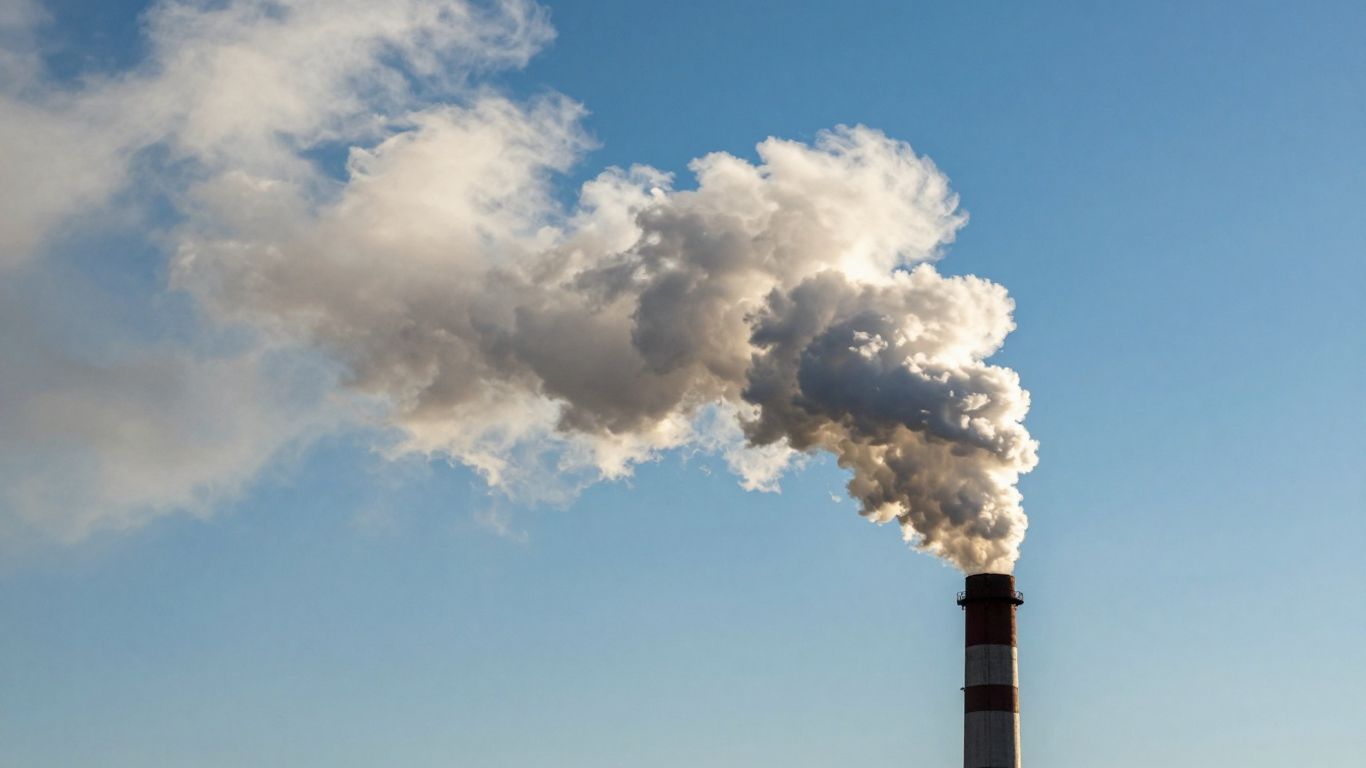
So, what exactly is an emission? At its heart, it's about something being sent out or released. Think of it like a sigh – it's air leaving your lungs. But "emission" is a much broader term that covers a lot more than just air. It can be gases, liquids, heat, light, sound, or even radiation. It's essentially anything that comes out of a source.
Defining Emission Beyond a Simple Release
When we talk about "emission," we're not just talking about a basic act of letting something go. It's more about the output itself, or the process that creates that output. For instance, when a car's engine burns fuel, it releases exhaust gases. That exhaust is an emission. Similarly, a light bulb gives off light; that light is also an emission. It's the stuff that leaves the original object or system.
The Core Concept of Emitting Something
The fundamental idea behind emitting is the act of sending something forth. This can happen naturally, like a volcano spewing ash, or it can be a result of human activity, like a factory releasing smoke. The key is that something is being produced and then discharged into the surrounding environment. It's a one-way street; the substance or energy moves from the source outward.
Natural vs. Man-Made Emissions
Emissions aren't all created equal, and they don't all come from the same place. We can broadly categorize them into two main groups:
- Natural Emissions: These happen without any human involvement. Think about:
- Volcanic eruptions releasing gases and ash.
- Forest fires sending smoke into the air.
- Plants releasing pollen or certain gases.
- The sun emitting light and heat.
- Man-Made Emissions: These are the result of human activities and technologies. Examples include:
- Exhaust fumes from vehicles.
- Smoke and gases from power plants and factories.
- Refrigerants leaking from air conditioning units.
- Radio waves from electronic devices.
It's important to note that while natural emissions have always been part of Earth's systems, human-caused emissions have significantly increased in recent times, leading to environmental concerns like climate change. Understanding the difference helps us pinpoint where certain environmental issues might be originating.
Types of Emissions and Their Sources
Gaseous and Particulate Emissions
When we talk about emissions, often the first things that come to mind are gases and tiny particles floating around. Think about the exhaust from your car – that's a mix of gases like carbon dioxide and nitrogen oxides, plus some fine soot particles. Power plants burning coal or natural gas also release a lot of these. Even natural events like volcanic eruptions spew out gases and ash. These emissions can travel far and wide, affecting air quality and contributing to things like smog and respiratory problems.
- Carbon Dioxide (CO2): From burning fossil fuels, deforestation.
- Sulfur Dioxide (SO2): From burning coal and oil, industrial processes.
- Nitrogen Oxides (NOx): From vehicle engines, power plants.
- Particulate Matter (PM): Soot, dust, and other tiny particles from combustion and industrial activities.
Energy and Radiation Emissions
Emissions aren't just about stuff you can see or smell. Energy itself can be emitted, often in the form of radiation. The sun is a massive source of radiation, emitting light and heat that warm our planet. But there are other, less obvious sources. Electronic devices, for instance, can emit electromagnetic radiation. While usually at low levels, it's something engineers consider. Medical imaging technologies like X-rays also involve controlled emission of radiation. The key here is that energy is being released from a source.
- Electromagnetic Radiation: Includes radio waves, microwaves, infrared, visible light, ultraviolet, X-rays, and gamma rays.
- Heat (Thermal Radiation): Objects above absolute zero temperature emit thermal radiation.
- Sound Waves: While often overlooked, sound is a form of energy emission.
Liquid and Heat Discharges
Beyond gases and particles, emissions can also involve liquids and heat. Factories often discharge wastewater, which can contain various chemicals and pollutants, into rivers or oceans. This is a significant concern for aquatic ecosystems. Similarly, power plants and industrial facilities often release large amounts of heat into nearby water bodies, a process called thermal pollution. This can drastically change the water temperature, impacting fish and other aquatic life. Even something as simple as a hot engine or a warm computer is emitting heat into its surroundings.
Discharges of liquids and heat are critical to monitor because they can have immediate and localized impacts on the environment, affecting water quality and the health of ecosystems that depend on it.
- Wastewater: Industrial or municipal water containing pollutants.
- Thermal Discharge: Release of heated water from industrial processes.
- Chemical Runoff: Liquids carrying dissolved chemicals from land into water bodies.
Contextualizing Emissions in Real-World Scenarios
Vehicle Exhaust and Carbon Emissions
When we talk about emissions in everyday life, cars and trucks often come to mind first. The exhaust pipes on our vehicles are constantly releasing gases into the atmosphere. A big part of this is carbon dioxide (CO2), a major greenhouse gas. The more we drive, the more CO2 we put out. This contributes to climate change, and it's something scientists have been tracking for a long time. Think about it – every car trip, big or small, adds to the total. It's not just about the CO2, though; other pollutants like nitrogen oxides and particulate matter also come out, affecting air quality in our cities.
Here's a quick look at what's typically in car exhaust:
- Carbon Dioxide (CO2)
- Nitrogen Oxides (NOx)
- Carbon Monoxide (CO)
- Particulate Matter (PM)
- Unburned Hydrocarbons
Industrial Discharges and Environmental Impact
Factories and power plants are huge sources of emissions. These facilities often burn fossil fuels to generate energy, and this process releases a lot of different substances. We're talking about sulfur dioxide, which can cause acid rain, and various types of particulate matter that are bad for breathing. The scale of industrial emissions can be massive, impacting local air and water quality, and even contributing to global environmental issues. It's a complex problem because these industries are vital for our economy, but their environmental footprint is significant. Finding ways to clean up these processes is a constant challenge.
The sheer volume of materials processed and energy consumed by large industries means their emissions, even if treated, can still have a noticeable effect on the surrounding environment and beyond.
Technological Applications of Emission
It might seem like emissions are always a bad thing, but the concept of emitting something is also used in technology. For example, in electronics, components can emit signals or light. Think about your Wi-Fi router; it's emitting radio waves to send data. Or consider LEDs, which emit light. Even in scientific instruments, detecting specific emissions, like ultraviolet emissions from space using telescopes, is how we gather information about the universe. So, while we often focus on the negative environmental aspects, the act of emitting is also a fundamental part of how many technologies work. It's all about understanding what is being emitted and its purpose.
Here are a few tech examples:
- Radio Frequency (RF) Emission: Devices like phones and routers emit radio waves for communication.
- Light Emission: LEDs and lasers emit photons to produce light.
- Signal Emission: Antennas emit electromagnetic signals for broadcasting or communication.
- Particle Emission: In some manufacturing processes, controlled particle emissions are part of the design. global greenhouse gas
The Process and Act of Emitting
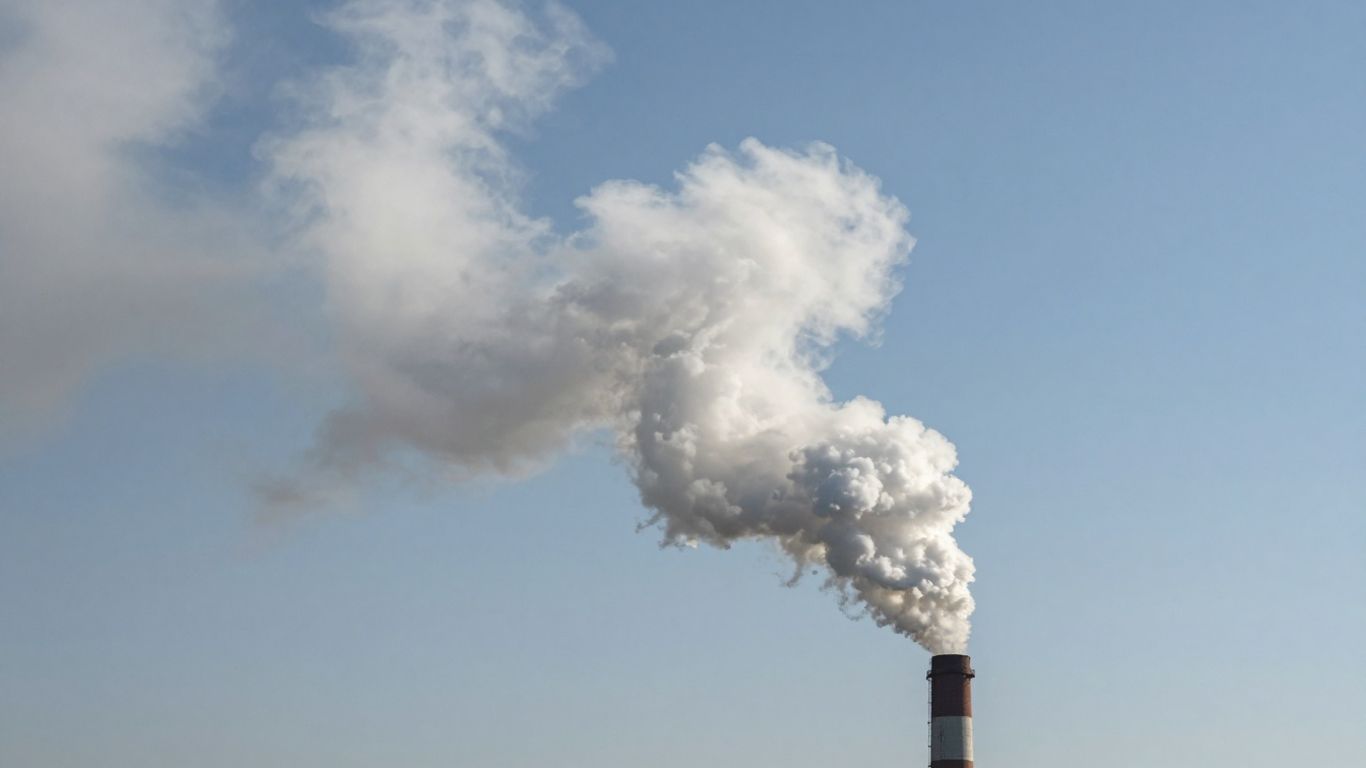
So, what's actually happening when something "emits"? It's not just a magical appearance out of nowhere. Emission is fundamentally about something being sent out or released from a source. Think of it as a one-way street for energy, particles, or substances. The core idea is a departure from a point of origin.
Emission as an Action
At its heart, emission is an active process. Something is doing the emitting. This could be a natural phenomenon, like a volcano releasing gases, or a deliberate action, like a power plant releasing steam. It's the act of sending something forth into the surrounding environment. This can happen in a blink or over a long period, depending on what's being emitted and why.
Instances of Emission
Emissions show up in all sorts of places. We often hear about them in the context of pollution, like the carbon dioxide from cars or factories. But it goes beyond that. Consider these examples:
- Light: A light bulb emits light. A star emits light and heat. Even your phone screen emits light.
- Heat: A radiator emits heat to warm a room. A computer generates heat that it then emits.
- Sound: A speaker emits sound waves. Your voice emits sound when you speak.
- Particles: A chimney emits smoke (which contains particles). A volcano emits ash and gases.
Reducing Emission Rates
Because emissions can have significant impacts, especially on the environment, there's a lot of focus on reducing them. This involves a few key strategies:
- Improving Efficiency: Making processes use less energy or fewer resources means less gets emitted. Think of more fuel-efficient cars.
- Capturing Emissions: Using filters or scrubbers to trap substances before they are released into the atmosphere. This is common in industrial settings.
- Switching to Cleaner Sources: Moving away from burning fossil fuels to renewable energy sources like solar or wind power, which have much lower or zero direct emissions.
- Changing Behavior: Simple things like using public transport, recycling, or reducing energy consumption at home can collectively lower emission rates.
The rate at which something is emitted is just as important as the substance itself. A slow, steady release might have a different impact than a sudden, large burst, even if the total amount over time is the same. Understanding these rates helps us predict and manage the effects of emissions.
Broader Meanings and Related Terms
Emissions in Electronics
When we talk about emissions in electronics, it's a bit different from the usual gas or pollution talk. Here, it usually refers to the release of electrons. Think about old-school vacuum tubes; they had a heated part, a filament, that would 'emit' electrons. The amount of these electrons being emitted was a key measurement for how well the tube was working. It's all about how many tiny particles are being sent out from a surface, often due to heat or an electrical field. This is pretty specific to how certain electronic components function.
Physiological Discharges
In a more biological context, 'emission' can refer to bodily discharges. This might sound a bit clinical, but it's just another way of saying something is being released from the body. It can cover a range of things, but sometimes it's used specifically for involuntary releases, like certain bodily fluids. It's a term that highlights the body's natural processes of expelling or releasing substances.
Related Concepts: Discharge and Radiation
It's easy to see how 'emission' ties into other words like 'discharge' and 'radiation'. They all deal with the idea of something being sent out or released. Discharge is a very general term for letting something go, whether it's water from a pipe or a formal release from a duty. Radiation, on the other hand, is more specific to energy waves or particles traveling through space.
Here's a quick look at how they relate:
- Emission: The general act or instance of releasing something.
- Discharge: A broader term for release, often involving fluids or formal release.
- Radiation: A specific type of emission involving energy waves or particles.
These terms often overlap, but each carries its own nuance. For instance, a car's exhaust is an emission, and it's also a discharge of gases. The heat and light coming from a hot object are forms of radiation, which are also emissions. Understanding these connections helps paint a fuller picture of what 'emission' can mean in different situations.
The Etymology of Emission
Latin Roots of Emission
The word 'emission' has a pretty straightforward origin, tracing back to Latin. It comes from the word ēmissiō, which is essentially the noun form of the verb ēmittere. Now, ēmittere itself is a combination of two parts: 'ē-' meaning 'out of' or 'from', and 'mittere' meaning 'to send'. So, right from its roots, emission means 'to send out'. Think of it like a messenger being sent out from a city – the act of sending them out is the emission.
Evolution Through French
Before it landed in English, the word took a detour through French. It appeared in Middle French as 'emission'. This French version kept the core meaning of 'sending forth' or 'releasing'. When English adopted the word around the early 1600s, it kept this meaning, making it a direct link from Latin, through French, to the word we use today.
Understanding the 'Emit' Component
The 'emit' part of emission is the action word, the verb. It's what something does. When we talk about a car emitting fumes, or a star emitting light, we're focusing on the act of sending something out. The '-ion' suffix, as we saw in the Latin ēmissiō, turns that action into a thing or a process. So, 'emit' is the action, and 'emission' is the result or the ongoing process of that action. It’s a neat way to see how language builds on itself, with a core idea of 'sending' being present all the way back to ancient Rome.
Ever wondered where the word "emission" comes from? It's a fascinating journey from old languages to today's environmental talk. Understanding the roots of words helps us grasp their meaning better. Want to learn more about environmental terms and how we can all make a difference? Visit our website today!
So, What's the Takeaway?
Alright, so we've talked about what 'emission' really means. It's not just some fancy science word; it's about stuff being let out, whether it's from a car's tailpipe, a factory smokestack, or even natural things like volcanoes. We saw it can be gases, heat, light, you name it. Understanding this helps us get why we hear so much about things like carbon emissions and climate change. It’s basically about what’s being released into the air, water, or environment, and whether that’s a good thing or not. So next time you hear the word, you’ll know it’s about something being sent out, and why that matters.
Frequently Asked Questions
What is the simplest way to understand 'emission'?
Think of emission as something being let out or sent out. It could be a gas, a liquid, heat, light, or even sound. Imagine steam coming out of a teapot – that's an emission of heat and water vapor.
Are all emissions bad for the environment?
Not necessarily! While things like car exhaust and factory smoke (which are harmful emissions) cause problems, nature also has its own emissions. For example, volcanoes release gases, and plants release oxygen. The key is whether the emission is harmful or happens in large amounts that upset the balance.
Can you give an example of a man-made emission?
A very common example is the exhaust from cars, trucks, and buses. This exhaust releases gases like carbon dioxide into the air. These are often called 'carbon emissions' and can contribute to climate change.
What's the difference between an 'emission' and the 'act of emitting'?
An 'emission' is the thing that is released, like the smoke from a chimney. The 'act of emitting' is the process of letting that thing out, like the chimney releasing the smoke. So, the smoke is the emission, and the chimney doing the releasing is the act of emitting.
How can we reduce emissions?
We can reduce harmful emissions in many ways. For cars, this means using less fuel or switching to electric vehicles. For factories, it involves using cleaner technologies or filters to trap pollutants before they are released into the air or water.
What does 'emission' mean in electronics?
In electronics, 'emission' often refers to how easily tiny particles called electrons can be released from a material, usually when it's heated. This is important for things like old-style TV tubes and some scientific equipment.