
Understanding the Definition of Emissions: A Comprehensive Guide

So, what exactly are emissions? It's a term we hear a lot these days, especially with all the talk about climate change and environmental rules. Basically, it's about stuff being released into the air. Think of it like a car exhaust pipe or smoke from a factory chimney. But it's not just about visible smoke; it includes gases that we can't see but that affect our planet. Understanding this definition of emissions is pretty important if you run a business or are just trying to keep up with environmental news. It helps us figure out where these releases come from and what we can do about them. Let's break it down.
Key Takeaways
- Emissions are generally understood as the release of gases into the atmosphere, often linked to human activities.
- These releases include greenhouse gases that contribute to warming the planet.
- There are different ways to categorize emissions, like direct and indirect, and scopes 1, 2, and 3.
- Laws and regulations exist at federal and state levels to manage and report emissions.
- Knowing how to calculate and track emissions is vital for compliance and environmental responsibility.
Understanding the Definition of Emissions
So, what exactly are we talking about when we say "emissions"? It's a term we hear a lot, especially with all the talk about climate change and environmental rules. Basically, emissions refer to the release of certain gases into the atmosphere. These aren't just any gases; they're typically greenhouse gases that can trap heat. Think of it like putting on an extra blanket on a warm night – it makes things hotter.
What Constitutes Emissions?
When we talk about emissions in a regulatory or environmental context, we're usually focusing on gases released from human activities. This includes things like burning fossil fuels for energy, industrial processes, and even certain agricultural practices. It's not about natural processes like a volcano erupting, but rather the stuff we humans are putting into the air. The key is that these releases have an impact on the atmosphere and, consequently, on our planet's climate.
The Role of Greenhouse Gases
Greenhouse gases are the main players here. The most well-known is carbon dioxide (CO2), but there are others, like methane (CH4) and nitrous oxide (N2O). These gases act like the glass in a greenhouse, letting sunlight in but preventing some of the heat from escaping back into space. Over time, as more of these gases build up, the planet's average temperature can rise. This is the basic idea behind global warming. Understanding which gases are considered greenhouse gases is pretty important when discussing emissions.
Human Activities as a Source
It's pretty clear that human actions are the primary driver of the increased emissions we're seeing today. Everything from driving our cars and heating our homes to the way we produce goods in factories contributes. Even the food we eat has an emissions footprint, from farming to transportation. It's a complex web, and pinpointing all the sources can be a challenge. For those looking to get involved in sustainability, joining a community like Breathe Zero can offer support and collaboration.
The definition of emissions can sometimes get a bit fuzzy, especially when trying to figure out exactly what counts and what doesn't. Regulations often specify which gases and which sources are included, so it's not always a one-size-fits-all answer. It really depends on the context, like whether you're talking about a specific law or a general environmental discussion.
Legal Frameworks Governing Emissions
When we talk about emissions, it's not just a scientific concept; there are actual laws and rules in place to manage them. Think of it like traffic laws for the air. These regulations are designed to keep track of what's being released into the atmosphere and to encourage cleaner practices. It can get a bit complicated, but understanding the basics is pretty important if you're involved with a business or even just curious about environmental policy.
Federal and State Regulations
Laws about emissions happen at both the national and state levels. The federal government sets broad guidelines, like the Clean Air Act, which is a big one for controlling air pollution from all sorts of sources, from cars to factories. Then, states often have their own rules that can be stricter or more specific to their local needs. For example, California has been pretty aggressive with its emission reduction targets and programs.
It's a layered system, and sometimes figuring out which rule applies to you can be a puzzle. What's clear, though, is that there's a definite push to monitor and limit what we're putting into the air.
Key Legal Elements in Emissions
When laws talk about emissions, they usually focus on a few key things. They need to define what counts as an emission, especially those coming from human activities. This often involves distinguishing between direct releases from a facility and indirect ones, like the emissions from the electricity a company buys. Identifying the sources, whether it's a smokestack or a company car, is also a big part of it. And, of course, there are the rules about who has to report what and when.
Here’s a quick rundown of what these legal frameworks often look at:
- Direct Emissions: Gases released straight from sources owned or controlled by an entity (e.g., burning fuel on-site).
- Indirect Emissions: Emissions that occur as a consequence of an entity's activities but are released from sources owned or controlled by another entity (e.g., purchased electricity).
- Anthropogenic Sources: Emissions specifically linked to human activities, as opposed to natural processes.
- Reporting Thresholds: The specific levels of emissions that trigger mandatory reporting requirements.
Reporting Requirements for Organizations
For businesses and organizations, keeping track of emissions often means a lot of paperwork. There are specific rules about how much you need to report, what information to include, and how often you need to submit it. This is especially true for larger companies or those in industries known for significant emissions. The goal is transparency and accountability. Failure to report accurately or on time can lead to some pretty hefty fines and other legal trouble.
It’s not just about avoiding penalties, though. Understanding your own emissions can help you find ways to reduce them, which can save money in the long run and improve your company's reputation. Some resources even offer templates and guides to help with this process, making it a bit less daunting.
Types and Sources of Emissions
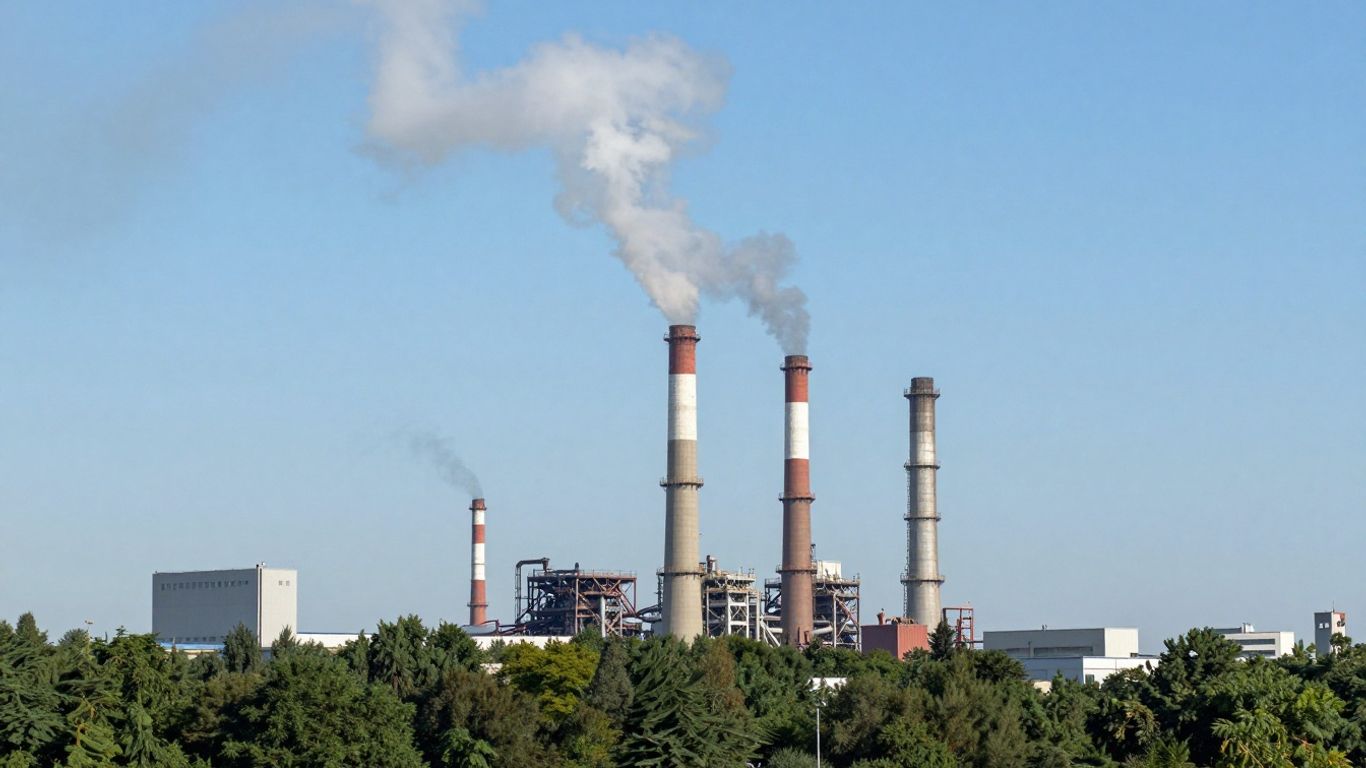
When we talk about emissions, we're really talking about what gets released into the air from various activities. It's not just one thing, though. There are different ways to categorize them, and understanding these categories helps us figure out where they come from and how to manage them. The main distinction is between direct and indirect emissions.
Direct Emissions Explained
Direct emissions, often called Scope 1 emissions, are the ones that come straight from sources owned or controlled by an organization. Think about a factory burning natural gas to heat its buildings – that's a direct emission. Or a company's own fleet of delivery trucks burning diesel fuel. These are pretty straightforward because the source is right there, under the company's roof, so to speak. It's about the immediate release of gases from things you directly operate.
Indirect Emissions and Energy Use
Indirect emissions are a bit trickier. They happen because of something an organization does, but the actual release of gases occurs somewhere else. The most common example is electricity use. When a company buys electricity from a utility company, and that utility generates the power by burning coal or natural gas, the emissions from burning that fuel are indirect emissions for the company. These are often referred to as Scope 2 emissions. It's like buying a product that has its own environmental footprint, even though you didn't make it yourself. This is a big part of why decarbonization is so important across industries.
Categorizing Emissions: Scope 1, 2, and 3
To get a clearer picture, emissions are often broken down into three scopes:
- Scope 1: These are your direct emissions, like those from company-owned vehicles or on-site fuel combustion.
- Scope 2: These are indirect emissions from purchased electricity, steam, heating, or cooling. It's the energy you buy that has emissions associated with its production.
- Scope 3: This is the broadest category and includes all other indirect emissions that happen in a company's value chain. This can cover a lot of ground, from the emissions created when making the raw materials a company buys, to the transportation of its products, employee commuting, and even the disposal of waste. It's about everything else that contributes to the company's footprint but isn't directly owned or controlled.
Understanding these different scopes is key to getting a full picture of an organization's environmental impact. It's not just about what you do directly, but also about the ripple effect of your activities throughout the wider economy and supply chain. This detailed breakdown helps in identifying areas for improvement and setting realistic reduction targets.
Calculating and Quantifying Emissions
So, you've heard about emissions, but how do you actually put a number on them? It's not as simple as just guessing. We need solid methods to figure out how much greenhouse gas is being released. This is where things get a bit technical, but stick with me.
The Importance of Emission Factors
Think of emission factors as conversion rates. They tell you how much of a specific greenhouse gas is released for every unit of activity. For example, burning a gallon of gasoline releases a certain amount of CO2. That 'certain amount' is the emission factor. These factors are super important because they let us translate everyday activities – like driving a car or using electricity – into measurable greenhouse gas emissions. They aren't just pulled out of thin air, either; they're based on scientific research and can vary depending on the fuel type, the technology used, and even where the activity is happening. Getting these factors right is key to accurate calculations.
Utilizing Global Warming Potentials
Not all greenhouse gases are created equal when it comes to warming the planet. Carbon dioxide (CO2) is the most common, but gases like methane (CH4) and nitrous oxide (N2O) are much more potent, even if they're released in smaller amounts. That's where Global Warming Potentials (GWPs) come in. GWPs are basically a way to compare the warming effect of different gases to CO2 over a specific period, usually 100 years. So, if methane has a GWP of 25, it means that over 100 years, one ton of methane traps as much heat as 25 tons of CO2. By using GWPs, we can convert emissions of all these different gases into a single number, usually expressed as CO2 equivalent (CO2e). This makes it easier to track and compare overall climate impact. It’s a bit like converting different currencies into one standard dollar amount so you can see the total value.
Gathering Accurate Activity Data
Emission factors and GWPs are useless without good activity data. This is the raw information about what you're actually doing. It could be the number of miles your fleet of trucks drove, the amount of natural gas your building consumed, or the kilowatt-hours of electricity used. The more precise your activity data, the more accurate your emissions calculation will be. This means keeping good records, using reliable measurement tools, and being honest about what's happening. For businesses, this often involves setting up systems to track energy use, fuel purchases, and other relevant activities. It’s a lot of detail work, but it’s the foundation for any credible emissions report. You can find tools to help with this, like the Simplified GHG Emissions Calculator.
The process of calculating emissions requires careful attention to detail. It involves selecting appropriate emission factors, understanding the warming impact of different gases through GWPs, and meticulously collecting data on all relevant activities. Without accurate data and consistent methodologies, the resulting emissions inventory can be misleading. This meticulous approach is vital for effective climate action planning and reporting.
Here's a quick look at what kind of data you might need:
- Energy Consumption: Electricity (kWh), natural gas (therms or cubic meters), fuel oil (gallons or liters).
- Transportation: Vehicle mileage, type of fuel used, number of trips.
- Industrial Processes: Production volumes, specific chemical inputs, waste generated.
- Waste Management: Amount of waste sent to landfill, incinerated, or recycled.
Getting this data right is the first big step in understanding your carbon footprint.
Real-World Implications of Emissions
So, what does all this talk about emissions actually mean when you step outside the textbook? It means real consequences, both for the planet and for businesses. When we talk about emissions, we're really talking about the stuff we release into the air that traps heat, and that has a ripple effect.
Examples of Emissions in Industry
Think about a factory churning out widgets. That process often releases gases, like carbon dioxide from burning fuel or methane from certain chemical reactions. These are direct emissions, and companies have to keep track of them. Then there's the electricity they use. If that power comes from a coal plant, the factory is indirectly responsible for the emissions from that power generation. It's a bit like ordering a pizza – you didn't make the pizza, but you're still part of the transaction. For example, a manufacturing plant might emit carbon dioxide as a byproduct of its production process. This direct emission must be reported under federal regulations. Similarly, a company using electricity from a coal-fired power plant is responsible for the indirect emissions associated with that energy use.
Consequences of Emissions Violations
Getting this wrong can be costly. Governments have rules, and breaking them usually comes with a price tag. We're talking fines, sometimes pretty hefty ones. Beyond just the money, there can be legal action, and companies might be forced to change how they operate to meet environmental standards. It's not just about avoiding a penalty, though; it's about being a responsible player in the global community. The penalties can range from fines to mandatory compliance measures, and the jurisdiction for these issues spans both federal and state levels.
State-Specific Emissions Regulations
It's not a one-size-fits-all situation, either. Different states have their own takes on emissions. California, for instance, is known for having pretty strict rules and programs aimed at cutting down emissions. Texas, on the other hand, might have regulations that lean more towards supporting economic growth, meaning they could be less stringent. New York is also pushing hard with its own initiatives to reduce emissions. So, if you're dealing with emissions, you really need to know the specific rules where you are. Understanding your emissions reporting requirements based on your activities is a good first step. Resources like US Legal Forms can help you find templates for compliance documentation.
The release of greenhouse gases from human activities, known as emissions, is a complex issue with far-reaching effects. It involves direct releases from industrial processes and vehicles, as well as indirect consequences of energy consumption. Regulatory bodies at both federal and state levels oversee these activities, imposing requirements and penalties for non-compliance. Awareness and adherence to these regulations are vital for both environmental protection and business sustainability.
Distinguishing Emissions from Related Terms
Emissions vs. Pollution
It's easy to get emissions and pollution mixed up, but they aren't quite the same thing. Think of it this way: emissions are the release of gases, while pollution is the harmful effect those gases (or other substances) can have on the environment. So, while all greenhouse gas emissions can contribute to pollution, not all pollution comes from what we typically call emissions. For instance, dumping plastic into a river is pollution, but it's not usually classified as an emission in the context of climate change discussions.
Understanding Greenhouse Gases
When we talk about emissions, we're often focusing on greenhouse gases (GHGs). These are gases that trap heat in the Earth's atmosphere, kind of like a blanket. The main ones you'll hear about are carbon dioxide (CO2), methane (CH4), and nitrous oxide (N2O). While CO2 gets a lot of attention, methane and nitrous oxide are actually much more potent at trapping heat, even though they are released in smaller amounts. It's important to remember that emissions aren't just about CO2; they encompass a range of heat-trapping gases.
Clarifying Common Misconceptions
There are a few common misunderstandings about emissions that are worth clearing up.
- It's not just CO2: As mentioned, other gases like methane and nitrous oxide are also significant emissions.
- It's not just big companies: While large industrial facilities are major sources, individual actions like driving cars, heating homes, and even the food we eat all contribute to overall emissions.
- Direct vs. Indirect: Sometimes people only think about emissions that come directly from their own operations (like a factory smokestack). However, emissions from the energy a company buys (like electricity) or from its supply chain are also part of the picture, especially when looking at a company's total environmental footprint.
The key takeaway is that 'emissions' usually refers to the gases released that contribute to climate change. Understanding the nuances helps in accurately measuring and managing our impact on the planet.
It's easy to mix up terms like 'emissions' with other related ideas. Understanding the exact meaning is key to talking about environmental impact accurately. Want to learn more about how we help businesses clarify their environmental data? Visit our website today!
Wrapping It Up
So, we've gone over what emissions really mean, and yeah, it's a bit more than just what comes out of a car's tailpipe. It's about all those greenhouse gases from stuff we do, whether it's big factories or even just how we use energy. Laws are in place to keep track of this, and different places have different rules, which can get confusing. But the main thing is, knowing about emissions helps us figure out how to make better choices for the planet. It’s not always simple, but understanding the basics is a good start for everyone, really.
Frequently Asked Questions
What exactly are emissions?
Emissions are basically gases that get released into the air, mostly from things people do. Think of smoke from a car's tailpipe or a factory chimney. These gases can trap heat and affect our planet's climate.
Are all emissions bad for the environment?
While the term 'emissions' often brings to mind harmful gases, it specifically refers to greenhouse gases that contribute to global warming. Some emissions, like those from natural sources, aren't typically included in this definition. However, the ones we release from burning fuels or industrial processes are the main concern for climate change.
What are greenhouse gases?
Greenhouse gases are like a blanket for the Earth. They trap some of the sun's heat, which is good because it keeps our planet warm enough to live on. But when we release too many of these gases, the blanket gets too thick, and the Earth heats up too much, causing climate change.
Where do most emissions come from?
A lot of emissions come from burning fuels like coal, oil, and gas for energy. This happens in power plants that make electricity, in cars and trucks we drive, and in factories that make things. Human activities are the main cause of the increase in these gases.
What's the difference between direct and indirect emissions?
Direct emissions are the ones that come straight from sources you own or control, like the exhaust from your company's trucks. Indirect emissions are from things you use but don't directly control, like the electricity you buy from a power company. The power company makes emissions to generate that electricity.
Why do companies need to track their emissions?
Companies track emissions because governments have rules about them. It helps them understand how their activities affect the environment and what they need to do to reduce their impact. Plus, many customers and investors want to see that companies are being responsible.