
Understanding GHG Emissions Scopes: A Comprehensive Guide to Scope 1, 2, and 3

Figuring out greenhouse gas emissions can feel like a puzzle, right? Companies have to track where their emissions come from, and they usually break it down into three main groups, called scopes. Understanding these ghg emissions scopes is the first step to actually doing something about them. It helps businesses see the big picture of their environmental impact, from what they do directly to what happens all along their supply chain. Let's break down what each scope means.
Key Takeaways
- Scope 1 covers emissions directly from a company's own operations, like burning fuel in company vehicles or factory equipment.
- Scope 2 includes emissions from the energy a company buys, mainly electricity, steam, heat, or cooling from utility providers.
- Scope 3 is the broadest, covering all other indirect emissions that happen in a company's value chain, both before and after its own operations.
- While Scope 1 and 2 are often more straightforward to measure, Scope 3 emissions can be the largest part of a company's total footprint and are trickier to track.
- Knowing and reporting on all three ghg emissions scopes allows businesses to identify where they can make the biggest reductions and work towards sustainability goals.
Understanding GHG Emissions Scopes
When we talk about greenhouse gas (GHG) emissions, it's not just one big blob. The Greenhouse Gas Protocol, which is kind of the go-to rulebook for this stuff, breaks it down into three main categories, or 'scopes'. Think of it like this: Scope 1 is what you directly control, Scope 2 is the energy you buy, and Scope 3 is everything else that happens because of your business, but outside your direct control. Getting a handle on all three is key to really understanding your company's total climate impact.
Defining the Three GHG Emissions Scopes
So, what exactly falls into each scope? It's pretty straightforward once you break it down. Scope 1 covers emissions from things your company owns or directly manages. This includes burning fuel in your own boilers or company vehicles. Scope 2 deals with the indirect emissions from the electricity, heat, steam, or cooling you purchase from a utility provider. It’s about the energy you consume. Scope 3 is the broadest category. It includes all the other indirect emissions that happen in your company's value chain, both upstream (like the emissions from making the stuff you buy) and downstream (like how your products are used or disposed of). This is often the biggest chunk of emissions for many businesses, but also the trickiest to track.
The Importance of Comprehensive GHG Emissions Scoping
Why bother with all this detail? Well, just looking at Scope 1 and 2 emissions gives you an incomplete picture. Your suppliers, your customers, the entire lifecycle of your products – it all adds up. Companies that measure and report on all three scopes, including those tricky Scope 3 emissions, are better positioned to identify risks and opportunities. They can find ways to become more efficient, collaborate with partners on sustainability goals, and ultimately build a more resilient business. It’s not just about compliance; it’s about smart business. For instance, understanding your energy use is a good start, but looking at purchased goods and services can reveal even bigger areas for improvement.
Navigating the GHG Protocol Corporate Standard
The GHG Protocol Corporate Standard is the main guide here. It lays out the rules for how companies should measure and report their emissions. It's designed to be a consistent framework so that different companies can be compared. While Scope 1 and 2 are generally considered mandatory for reporting, Scope 3 is often voluntary, though increasingly expected by stakeholders. The standard helps you figure out what counts as direct, indirect, and value chain emissions. It’s a detailed document, but it provides the structure needed for accurate accounting. Here’s a quick breakdown:
- Scope 1: Direct emissions from owned or controlled sources.
- Scope 2: Indirect emissions from purchased electricity, steam, heat, or cooling.
- Scope 3: All other indirect emissions in the value chain (upstream and downstream).
Accurately accounting for emissions across all scopes provides a clearer view of a company's environmental footprint. This detailed insight is crucial for developing effective strategies to reduce greenhouse gases and move towards sustainability goals.
Scope 1: Direct Emissions from Operations
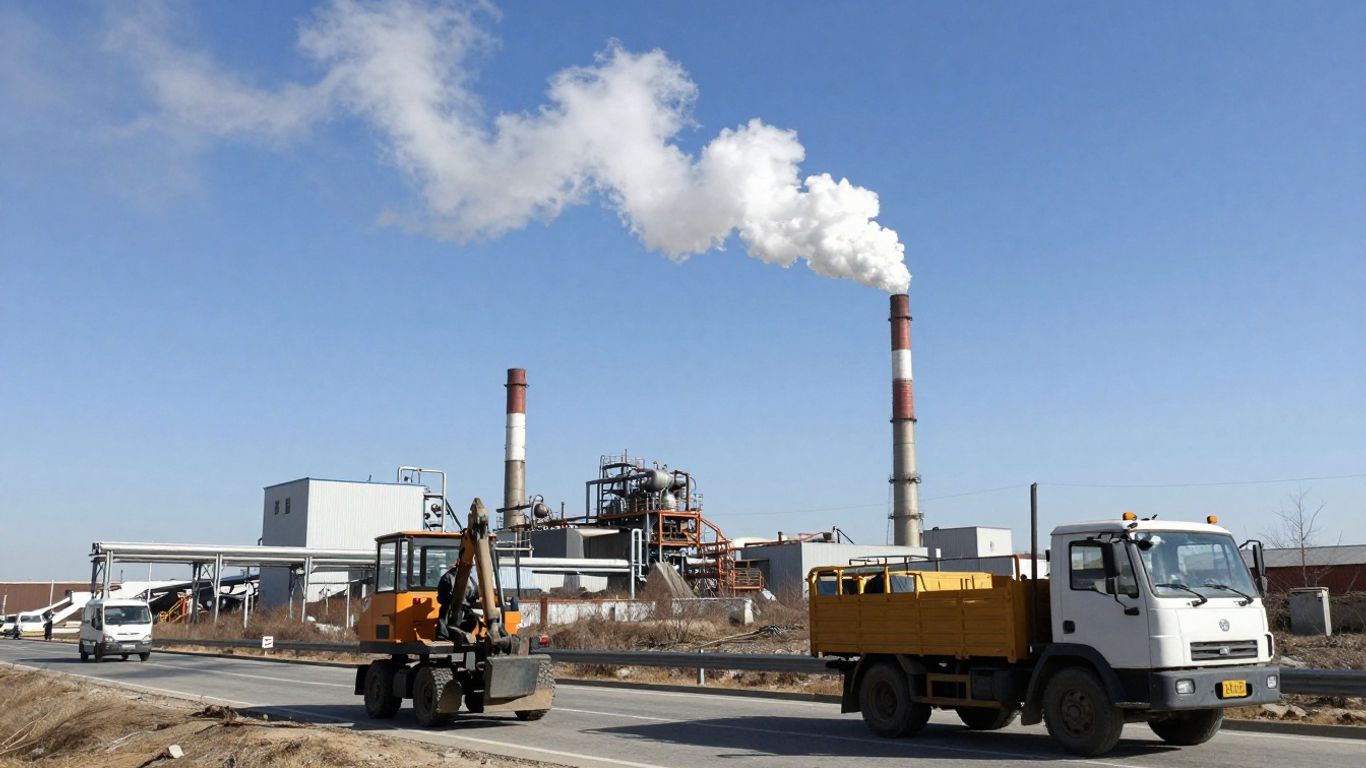
Alright, let's talk about Scope 1 emissions. These are the greenhouse gases that come straight out of sources your company actually owns or controls. Think of it as the direct exhaust from your own machinery and vehicles. It’s the most straightforward category to track, really, because you can usually see it happening.
Stationary Combustion Sources
This is about anything that burns fuel on your property to generate heat or power. Boilers, furnaces, generators – if they're burning natural gas, oil, or other fuels, the emissions are Scope 1. It's pretty common for businesses that have their own heating systems or on-site power generation. You'll want to keep tabs on the type and amount of fuel used.
Mobile Combustion and Company Fleets
This covers emissions from vehicles your company owns or leases. So, if you have a fleet of delivery trucks, company cars, or even forklifts that run on gasoline or diesel, their tailpipe emissions fall under Scope 1. It's important to track fuel consumption for these vehicles. If your company is moving towards electric vehicles, those emissions might shift to Scope 2, which is an interesting point to consider as fleets evolve.
Fugitive Emissions and Industrial Processes
Fugitive emissions are a bit trickier. These are essentially leaks of greenhouse gases. The most common examples are refrigerants escaping from air conditioning or refrigeration units. These gases can be super potent, way more so than CO2. Industrial processes also contribute here; for instance, emissions released during manufacturing, like in cement production or chemical processes. It’s vital to have good maintenance practices to minimize leaks and track any specific process emissions.
Keeping a close eye on Scope 1 emissions is the first step in understanding your company's direct environmental impact. It's about accountability for what you directly control.
Here's a quick breakdown of common Scope 1 sources:
- Stationary Combustion: Boilers, furnaces, generators, process heaters.
- Mobile Combustion: Company-owned cars, trucks, vans, forklifts, planes, ships.
- Fugitive Emissions: Refrigerant leaks from HVAC systems, natural gas leaks.
- Industrial Processes: Emissions from chemical reactions or manufacturing steps.
Tracking these emissions helps identify areas where direct improvements can be made, like switching to cleaner fuels or improving equipment efficiency. It's a solid foundation for any sustainability efforts.
Scope 2: Indirect Emissions from Purchased Energy
Alright, let's talk about Scope 2 emissions. These are the indirect greenhouse gas emissions that come from the energy you buy. Think of it this way: your company isn't directly burning fuel to create electricity, but the power plant that does is still linked to your operations. These emissions are tied to the generation of purchased electricity, steam, heat, or cooling.
Electricity Consumption and Utility Providers
This is usually the biggest chunk of Scope 2 for most businesses. Every kilowatt-hour of electricity your company uses has an associated carbon footprint, depending on how that electricity was generated. If your utility provider relies heavily on coal or natural gas, your Scope 2 emissions will be higher than if they use a lot of renewables. It's a good idea to look into where your electricity comes from. Some companies are starting to report emissions based on consumption, which is a way to measure emissions within your own inventory [d884].
Purchased Steam, Heat, and Cooling
Beyond just electricity, some facilities might purchase steam, heat, or cooling from external sources. This is common in industrial parks or large office complexes where a central plant provides these services. The emissions associated with generating that steam, heat, or cooling also fall under your Scope 2. It's all about the energy you consume that wasn't produced on-site by your own equipment.
Transmission and Distribution Losses
Here's a bit of a tricky one. When electricity travels from the power plant to your building, some energy is lost along the way due to the resistance in the wires. These are called transmission and distribution (T&D) losses. While these emissions technically happen outside your direct control, they are a consequence of your energy consumption. How you account for these can vary, but they are an indirect emission linked to your purchased power.
Understanding Scope 2 is about recognizing the environmental impact of the energy you consume, even if you're not the one producing it. It's a significant area where businesses can make a difference by focusing on energy procurement and efficiency [4adb].
Here's a quick breakdown:
- Electricity: The most common source, directly linked to your usage.
- Steam, Heat, Cooling: Purchased from external providers.
- T&D Losses: Energy lost during electricity transmission.
It's pretty straightforward to get data for this scope, usually from your utility bills. This makes it a good starting point for emissions reduction efforts.
Scope 3: Value Chain Emissions
Alright, let's talk about Scope 3. This is where things get a bit more complex, but honestly, it's also where a lot of the real impact lies for many businesses. Scope 3 emissions are all those indirect greenhouse gases that happen outside of your company's direct control but are still linked to your operations. Think of it as the ripple effect of your business activities throughout the entire value chain. This includes everything from the raw materials your suppliers use, to how your customers use your products, and even what happens to them after they're no longer needed.
Upstream Activities: Purchased Goods and Services
This category covers the emissions generated from producing all the stuff you buy. It's like looking at the 'cradle-to-gate' impact of everything from the components in your products to the office supplies on your desk. For instance, if you buy a lot of plastic, the emissions from making that plastic are part of your Scope 3. It's a big one for many companies, and understanding these upstream impacts is key to making smarter purchasing decisions.
Business Travel and Employee Commuting
Remember all those flights and car trips? They add up. Business travel, whether it's by plane, train, or car, contributes to Scope 3. Similarly, how your employees get to work matters. Encouraging public transport, cycling, or even remote work can significantly cut down on these emissions. It's about looking at the indirect emissions tied to your workforce's movement.
Waste Generated and Transportation Logistics
What happens to the waste your company produces? If it goes to a landfill, it can release methane, a potent greenhouse gas. Proper waste management and recycling programs are important here. Also, think about how goods get from your suppliers to you, and from you to your customers. Emissions from shipping, trucking, and warehousing all fall under this umbrella. Optimizing these logistics can make a real difference.
Scope 3 emissions are often the largest portion of a company's total carbon footprint, yet they can be the most challenging to measure and manage. Addressing them requires collaboration across the entire value chain.
Here's a quick look at some key Scope 3 categories:
- Purchased Goods and Services: Emissions from producing what you buy.
- Business Travel: Emissions from employee trips for work.
- Employee Commuting: Emissions from employees traveling to and from work.
- Waste Generated: Emissions from waste disposal.
- Transportation and Distribution: Emissions from moving goods upstream and downstream.
It might seem overwhelming, but breaking it down into these categories helps. For many organizations, getting a handle on Scope 3 emissions is the next frontier in sustainability efforts. It's not just about what you do directly, but also about the impact of everything connected to your business.
Exploring Scope 3's Upstream and Downstream Impacts
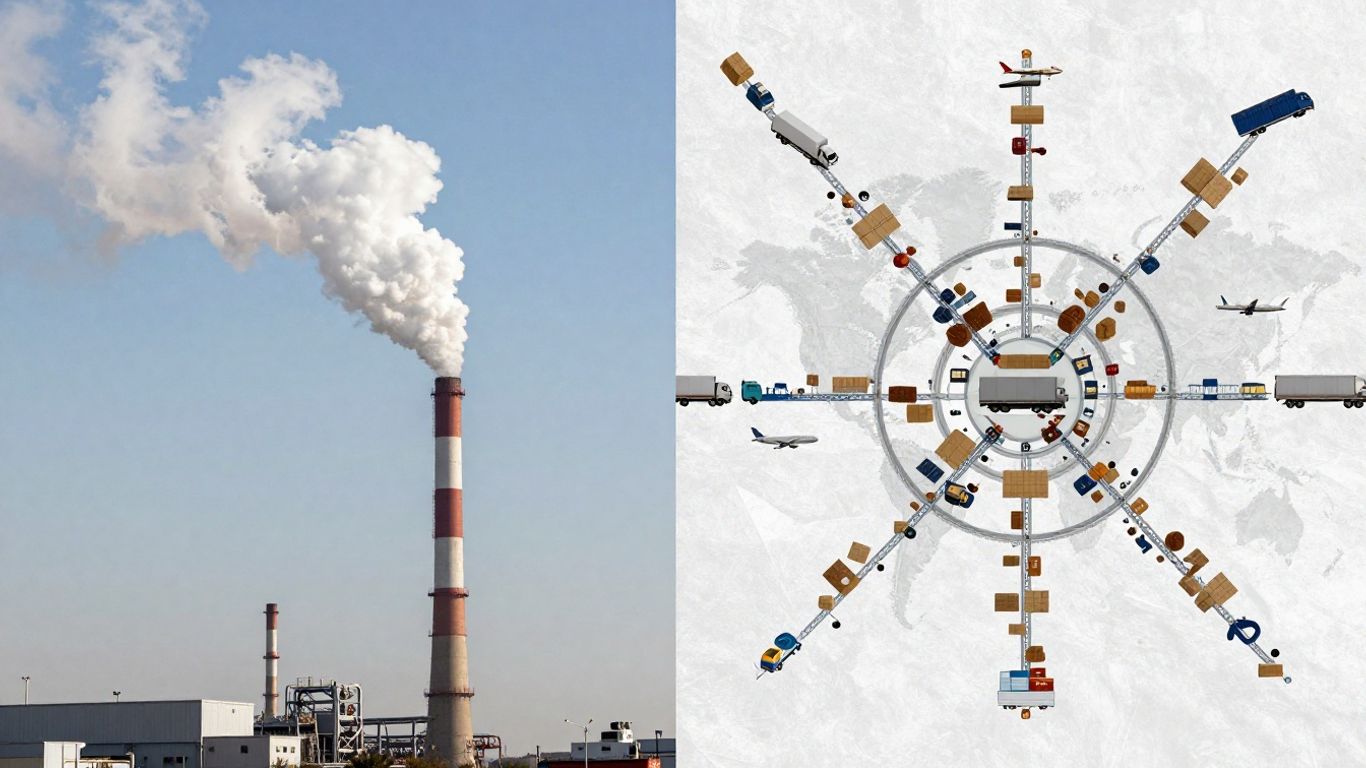
Scope 3 emissions are where things get really interesting, and honestly, a bit complicated. These are all the indirect emissions that happen outside of your company's direct control but are still tied to your business activities. Think of it as the ripple effect your company has across its entire value chain. We're talking about everything from the raw materials used to make the stuff you buy, to how your customers use your products, and even what happens to them after they're thrown away. It's a big picture view, and it's often the largest chunk of a company's total carbon footprint.
Capital Goods and Fuel-Related Activities
When we talk about capital goods, we mean those big-ticket items that your company uses for a long time – things like buildings, machinery, or vehicles. The emissions associated with making these goods, from start to finish, are counted in Scope 3. It’s not about how much they emit while you use them (that might be Scope 1 or 2), but about their entire production footprint. Similarly, fuel- and energy-related activities cover emissions from producing the fuels and energy you purchase, but only if those emissions aren't already accounted for in Scope 1 or 2. This can get a bit technical, but it's about capturing the full lifecycle impact.
Investments, Franchises, and Leased Assets
This is where Scope 3 really stretches out. For companies, especially financial institutions, emissions from investments are a significant consideration. This includes everything from stocks and bonds to project finance. Then there are franchises – if your company licenses its brand or products to others, the emissions from those franchised operations can fall under your Scope 3. And don't forget leased assets. If you lease equipment or property, the emissions associated with those assets, whether you're leasing them out or leasing them in, need to be considered. It's all about tracing the emissions linked to your business, even when you don't directly own the source.
Product Use and End-of-Life Treatment
Finally, we look at what happens after your product leaves your direct control. How do your customers use your products? If you sell electronics, for example, the electricity they consume during their lifespan is a Scope 3 emission. If you sell cars, the fuel they burn is a Scope 3 emission. Then there's the end-of-life phase. What happens when those products are no longer wanted? Are they recycled, landfilled, or incinerated? Each of these disposal methods has associated greenhouse gas emissions. Understanding these downstream impacts is key to designing more sustainable products and services.
Assessing Scope 3 emissions requires a broad perspective. It means looking beyond your own factory gates and offices to understand the full environmental impact of your business activities. This often involves working closely with suppliers and customers to gather data and identify reduction opportunities. It's a challenging but necessary step for any organization serious about tackling climate change across its entire value chain.
Here's a breakdown of some key Scope 3 categories:
- Purchased Goods and Services: Emissions from producing the materials and services you buy.
- Transportation and Distribution: Emissions from moving goods upstream (to you) and downstream (to your customers).
- Use of Sold Products: Emissions generated when customers use your products.
- End-of-Life Treatment of Sold Products: Emissions from disposing of your products after use.
Getting a handle on Scope 3 is tough, but it's where many companies can find the biggest opportunities for reducing their overall climate impact. It's not just about reporting; it's about making smarter business decisions that benefit both the planet and your bottom line. For guidance on how to avoid double counting emissions within your inventory, the GHG Protocol offers specific advice.
Strategies for Reducing GHG Emissions Across Scopes
So, we've talked about what Scope 1, 2, and 3 emissions are. Now, the big question: what do we actually do about them? It's not just about knowing the numbers; it's about taking action. And honestly, tackling emissions across all three scopes is where the real work happens. It's a bit like cleaning your house – you can't just focus on the living room; you've got to get into the kitchen and the garage too.
Decarbonizing Scope 1: Direct Action
This is where you have the most direct control. Think about the fuel your company vehicles burn or the natural gas heating your office. Reducing these direct emissions often means making some practical changes. For instance, switching to electric or hybrid company vehicles is a big one. If you have a fleet, this can make a noticeable difference. Also, looking at your heating systems – can you upgrade to more efficient models or even explore renewable heating options? For industrial processes, it might involve tweaking how things are made to use less energy or produce fewer byproducts. It's about looking at what you own and control and finding ways to make it cleaner.
Optimizing Scope 2: Energy Efficiency and Renewables
Scope 2 is all about the energy you buy, mainly electricity. The easiest way to cut down here is simply to use less. Simple things like better insulation, LED lighting, and making sure equipment is turned off when not in use can add up. But beyond just using less, you can also change where your energy comes from. This is where renewable energy comes in. Can you switch to an electricity provider that sources power from wind or solar? Some companies even install their own solar panels. It's about making smarter energy choices and pushing for cleaner grids.
Addressing Scope 3: Value Chain Collaboration
Okay, Scope 3. This is the big, complicated one, covering everything else in your value chain. It's where you have the least direct control but often the biggest impact. Reducing these emissions requires working with others. Think about your suppliers: can you encourage them to reduce their own emissions? Maybe by choosing suppliers who are already on a low-carbon path. For business travel, promoting virtual meetings and opting for train travel over flights when possible helps. Even employee commuting can be influenced by offering incentives for public transport or cycling. It's a team effort, really. You can't do it alone.
Here are some common areas to focus on for Scope 3:
- Purchased Goods and Services: Work with suppliers to find lower-impact materials or processes.
- Business Travel: Encourage virtual meetings and lower-emission travel options.
- Employee Commuting: Support public transport, cycling, or remote work.
- Waste Management: Focus on reducing waste generation and improving recycling rates.
- Product Use: Design products that are more energy-efficient during their lifespan.
- End-of-Life Treatment: Plan for products to be reused or recycled more easily.
Tackling Scope 3 emissions is often the most challenging part of a company's carbon footprint. It requires looking beyond your own four walls and engaging with partners across your entire supply chain. This collaborative approach is key to achieving significant reductions and building a more sustainable business model. Effective emission reduction strategies often start here.
It's a journey, for sure. You won't fix everything overnight. But by breaking it down and focusing on each scope, you can make real progress. Remember, understanding your emissions is the first step, but taking action is what truly counts. There are many resources available to help guide you through this process.
Want to lower your company's greenhouse gas (GHG) emissions? We've got great ideas for cutting down on pollution across all areas. Ready to make a real difference? Visit our website to learn more and get started!
Wrapping It Up
So, we've gone through what Scope 1, 2, and 3 emissions really mean. Scope 1 is the stuff you directly control, like your company cars or factory fumes. Scope 2 is the energy you buy, mostly electricity. And Scope 3? That's the big one, covering everything else in your supply chain and product use – the really tricky part. Figuring all this out isn't exactly a walk in the park, especially Scope 3. But getting a handle on these different scopes is super important if you want to actually make a difference in reducing your company's environmental impact. It’s a journey, for sure, but understanding these categories is the first big step.
Frequently Asked Questions
What exactly are Scope 1, 2, and 3 emissions?
Think of emissions like trash. Scope 1 is the trash your house makes directly, like burning gas in your car or furnace. Scope 2 is the trash from the electricity you buy, like the power plant making electricity for your lights. Scope 3 is all the other trash connected to your life, like the emissions from making your phone or the trash from your trash being taken away.
Why is it important for companies to track all three scopes?
Tracking all three scopes is like getting a full picture of a company's environmental impact. Scope 1 and 2 are important, but Scope 3 often shows the biggest impact because it includes everything a company buys, sells, and how its products are used and thrown away. Understanding this helps companies find the best ways to reduce their overall pollution.
Is reporting Scope 3 emissions always required?
While Scope 1 and 2 emissions are usually a must-report for companies, Scope 3 reporting can be voluntary in some situations. However, many companies are choosing to report it because it gives them a more complete understanding of their environmental footprint and helps them be more sustainable.
Which scope is the hardest to measure?
Scope 3 emissions are generally the trickiest to track. This is because they happen all along a company's supply chain and involve many different partners and activities, like the emissions from making the materials a company uses or how customers get rid of products after they're done with them.
How can a company start reducing its Scope 3 emissions?
Reducing Scope 3 emissions often means working closely with suppliers and customers. Companies can encourage their suppliers to use cleaner energy, design products that are easier to recycle, or find ways to make shipping more efficient. It's all about collaborating across the entire chain.
Does using electric vehicles (EVs) mean zero emissions?
Switching to electric vehicles is a great step! While the car itself doesn't burn fuel directly (Scope 1), the electricity used to charge it still has emissions associated with its production (Scope 2). So, while it's a big improvement, it's not entirely emission-free unless the electricity comes from renewable sources.