
Understanding Climate-Neutral Meaning: Beyond Just Carbon Offsets

So, you've been hearing a lot about 'climate-neutral' and 'net-zero' lately, right? It seems like every company is jumping on the bandwagon, promising the world. But what does it actually mean to be climate-neutral? It's more than just buying some carbon offsets and calling it a day. We're going to break down what this term really means, how it differs from other environmental jargon, and what it takes for businesses and even individuals to genuinely make a difference. Let's get into it.
Key Takeaways
- Climate neutrality means balancing greenhouse gas emissions by reducing them as much as possible and then offsetting what's left. It's about achieving a net-zero impact on the climate.
- It's important to distinguish climate-neutral from similar terms like carbon-neutral (which focuses only on CO2) and net-zero emissions (which covers all greenhouse gases). Climate positive or carbon negative goes a step further by removing more emissions than are produced.
- Achieving climate neutrality isn't just about offsets. The primary focus must be on drastically reducing emissions from the source through changes in operations, energy use, and supply chains.
- Businesses are increasingly motivated to become climate-neutral not just for environmental reasons, but also due to consumer demand, investor interest, and the competitive edge it provides.
- True climate neutrality requires transparency. Companies must accurately measure their carbon footprint, clearly communicate their reduction strategies, and ensure any offsetting projects are legitimate and effective, avoiding 'greenwashing'.
Understanding Climate-Neutral Meaning
Defining Climate Neutrality
So, what does it really mean for something to be climate-neutral? At its core, it's about achieving a balance. Think of it like a scale: on one side, you have all the greenhouse gases (GHGs) released into the atmosphere from your activities, and on the other, you have the amount of those gases that are taken out or offset. When these two sides are equal, you've reached climate neutrality. It's not about stopping all emissions entirely, but about making sure that whatever is emitted is balanced out. This concept is a big part of the global effort to tackle climate change, aiming to stop adding to the problem.
The Role of Greenhouse Gases
When we talk about climate neutrality, we're mostly concerned with greenhouse gases. These are gases like carbon dioxide (CO2), methane (CH4), and nitrous oxide (N2O). They trap heat in the atmosphere, which leads to the warming of our planet. Different activities release different GHGs, and they all contribute to the overall climate impact. Understanding which gases are involved and how much of each is being released is the first step in figuring out how to balance them out. It's a bit like knowing all the ingredients in a recipe before you can adjust the flavors.
- Carbon Dioxide (CO2): The most common GHG, largely from burning fossil fuels.
- Methane (CH4): Released from agriculture, waste, and natural gas systems.
- Nitrous Oxide (N2O): Comes from agricultural and industrial activities, as well as burning fossil fuels.
Historical Context of Climate Action
The idea of climate neutrality didn't just pop up yesterday. It's been a growing concern for decades, really picking up steam after the industrial revolution. The big moment for international agreement was the 2015 Paris Climate Summit. Here, countries agreed to limit global temperature rise. To hit that target, a key goal was to achieve a balance between emissions and removals by the second half of this century. This led to frameworks like the Paris Agreement and initiatives like the European Green Deal, setting targets and strategies for countries and regions to work towards this balance.
The journey towards climate neutrality is a complex one, involving a deep look at our emissions and how we can counteract them. It's a global challenge that requires coordinated efforts from governments, businesses, and individuals alike.
Distinguishing Climate-Neutral From Similar Terms
So, you hear terms like "carbon neutral," "net-zero," and "climate positive" thrown around a lot these days. It can get pretty confusing, right? They all sound good, like companies are doing their part for the planet, but they don't always mean the same thing. Let's break it down so you know what's what.
Carbon Neutral vs. Net-Zero Emissions
Think of carbon neutral as balancing the scales. It means that for every bit of carbon dioxide (CO2) a company releases, they're taking an equal amount out of the atmosphere. This is often done through things like buying carbon offsets. It's a good step, but it focuses specifically on CO2.
Net-zero emissions, on the other hand, is a bit broader. It aims to balance all greenhouse gases (GHGs), not just CO2. This includes gases like methane and nitrous oxide. The goal here is to reduce emissions as much as humanly possible across all operations, and then offset whatever tiny amount is left. It's about getting as close to zero emissions as you can, across the board.
Here's a quick way to look at it:
- Carbon Neutral: Balances CO2 emissions. Often relies on offsets.
- Net-Zero Emissions: Balances all GHG emissions. Focuses on deep reduction first.
Climate Positive and Carbon Negative Explained
These two terms are pretty much interchangeable and go a step beyond net-zero. When a company is climate positive or carbon negative, it means they're actually removing more greenhouse gases from the atmosphere than they emit. They're not just balancing their own impact; they're actively contributing to cleaning up the air. It's like not only cleaning your own room but also helping your neighbor clean theirs.
The Nuances of Net-Zero CO2 vs. Net-Zero GHG
This is where it gets a little technical, but it's important. When you see "net-zero CO2," it means the company is only looking at balancing carbon dioxide emissions. But CO2 isn't the only culprit when it comes to warming the planet. Other gases, like methane (CH4) from agriculture or industrial processes, are also major players.
So, net-zero GHG (greenhouse gas) is the more comprehensive goal. It accounts for all the different gases that contribute to climate change. A company aiming for net-zero GHG is tackling a wider range of environmental impacts than one focused solely on CO2. It's the difference between just cleaning up one type of mess versus cleaning up all the messes.
It's easy to get lost in the jargon, but the core idea is about reducing harm. While offsetting can play a role, the real win is when companies drastically cut their emissions at the source. That's the path to truly making a difference for the climate.
Achieving Climate Neutrality: Strategies and Actions
So, you want to get to climate neutrality? It sounds like a big deal, and honestly, it is. But it's not some impossible dream. It's about making smart choices and taking concrete steps. Think of it like cleaning up your room – you can't just wish it clean, you have to actually do the work. The first big step is figuring out just how much "mess" you're making in the first place. That means understanding your carbon footprint.
The Importance of Emission Reduction
Before you even think about balancing things out, the main goal is to cut down on the greenhouse gases you're putting out. This is the "reduce" part of the equation. It's like trying to use less water before you start collecting rainwater. For businesses, this could mean a bunch of things:
- Switching to renewable energy sources for your operations.
- Making your buildings more energy-efficient, so you're not wasting heat or electricity.
- Rethinking your supply chain to find suppliers who are also working on reducing their emissions.
- Encouraging employees to use public transport, cycle, or carpool instead of driving alone.
The less you emit, the less you'll need to offset later. It’s really that simple.
Understanding Carbon Offsetting
Okay, so you've done your best to cut down on emissions, but there are always some that are really hard to get rid of completely. Maybe it's a specific industrial process or certain types of travel. This is where carbon offsetting comes in. It's basically a way to compensate for the emissions you can't avoid by funding projects that reduce or remove greenhouse gases elsewhere. Think of it as a trade-off. For example, you might invest in a project that plants trees, builds renewable energy farms in developing countries, or captures methane from landfills.
It's important to know that not all offsets are created equal. You want to make sure the projects you support are legitimate and actually make a difference. This means looking for projects that are verified by reputable organizations and that wouldn't have happened anyway without your investment.
Measuring Your Carbon Footprint
How do you know where to start with reducing emissions if you don't know what you're emitting? You've got to measure it. This is your starting point, your baseline. For a company, this involves looking at everything from the energy you use in your offices to the travel your employees take, the materials you buy, and even how your products are used and disposed of. It can get pretty detailed.
There are different ways to do this, from simple online calculators for individuals to more complex methodologies for businesses that follow international standards. The goal is to get a clear picture of your total greenhouse gas emissions across all scopes (direct and indirect). This data is what helps you set realistic reduction targets and track your progress over time. Without this measurement, any claims about climate neutrality are just guesswork.
The journey to climate neutrality isn't a single leap but a series of deliberate actions. Prioritizing emission reduction forms the bedrock, with offsetting serving as a complementary tool for unavoidable impacts. Accurate measurement is the compass that guides these efforts, ensuring that progress is real and not just aspirational.
The Business Case for Climate Neutrality
It might seem like going climate-neutral is all about saving the planet, and sure, that's a big part of it. But let's be real, businesses are also looking at their bottom line. Turns out, being good to the environment can actually be good for business. People are paying more attention these days to where their stuff comes from and how it's made. They want products and services that are kinder to the earth, and companies that show they care about sustainability often get a better reputation.
Consumer Demand for Sustainable Products
Think about it: when you're shopping, do you ever look for labels that say "eco-friendly" or "made with recycled materials"? Lots of people do. This trend means that businesses that make an effort to reduce their environmental impact can attract more customers. It's not just a niche thing anymore; it's becoming a mainstream expectation. Companies that are transparent about their climate goals and actions often see a boost in sales and customer loyalty. It's a way to connect with consumers on a deeper level, showing that your brand aligns with their values.
Attracting Investors and Favorable Reviews
Beyond just customers, investors are also taking notice. Many investment funds now have criteria that favor companies with strong environmental, social, and governance (ESG) practices. Being climate-neutral can make your company a more attractive prospect for these investors, potentially leading to easier access to capital and better funding terms. Plus, good environmental practices can lead to better public relations and more positive media coverage. Think of it as a way to build trust and credibility in the market.
Competitive Advantage in the Market
In today's world, being a "green" company isn't just a nice-to-have; it's becoming a real competitive edge. Companies that actively work to reduce their greenhouse gas emissions and offset what they can't eliminate often find themselves ahead of the curve. This can mean:
- Optimizing Operations: The process of measuring and reducing your carbon footprint often involves looking closely at how your business runs. This can uncover inefficiencies and lead to cost savings, like using less energy or reducing waste.
- Future-Proofing: Regulations around emissions are likely to get stricter. Getting ahead of the game now means you'll be better prepared for future legal requirements and won't face costly last-minute changes.
- Talent Attraction: Younger generations, in particular, want to work for companies that have a positive impact. A strong commitment to climate neutrality can help you attract and retain top talent.
Ultimately, embracing climate neutrality isn't just about corporate social responsibility; it's a smart business strategy. It can lead to cost savings, attract customers and investors, and position your company for long-term success in an increasingly environmentally conscious world. It's about building a resilient business that's prepared for the future.
Challenges and Considerations in Climate Neutrality

So, we've talked about what climate neutrality means and why it's a big deal. But getting there isn't exactly a walk in the park. There are some real hurdles and things we need to think about carefully.
Avoiding Greenwashing
This is a big one. You hear "climate-neutral" thrown around a lot, but not everyone is actually doing the hard work. Greenwashing is basically when a company or organization makes itself look more environmentally friendly than it really is. They might focus on a small, positive action while ignoring much larger negative impacts. It's super important to look beyond the marketing claims.
Here’s how to spot potential greenwashing:
- Vague language: Claims that aren't specific or backed by data.
- Irrelevant claims: Highlighting something true but unimportant, like being "CFC-free" when CFCs have been banned for years.
- Hidden trade-offs: Focusing on one green attribute while ignoring other environmental problems.
- Lack of proof: Making claims without any verifiable evidence or third-party certification.
The Global Nature of Climate Goals
Climate change doesn't stop at borders, right? This means that achieving climate neutrality is a global effort. While one country or company might reduce its emissions, others might not. This can make it tricky to reach overall climate goals. For example, if a company buys carbon offsets from a project in another country, it's a good step, but it doesn't magically fix emissions happening elsewhere.
The interconnectedness of our planet means that actions taken in one place have ripple effects everywhere. This global scale presents a significant challenge, as achieving true climate neutrality requires coordinated efforts and shared responsibility across nations and industries. It's not just about what we do, but what everyone does.
Transparency in Offsetting Projects
Carbon offsetting is a key part of many climate neutrality strategies, but it's also an area where transparency is often lacking. When a company claims to be climate-neutral because it's bought offsets, we need to know where those offsets came from and if they're legitimate. Are the projects actually reducing emissions that wouldn't have been reduced otherwise? Are they benefiting local communities? Without clear information, it's hard to trust these claims.
Here are some questions to ask about offset projects:
- Additionality: Would the emission reduction have happened anyway, even without the offset funding?
- Permanence: Will the carbon be stored permanently, or could it be released back into the atmosphere later?
- Leakage: Does the project simply shift emissions elsewhere?
- Verification: Has the project been verified by a reputable, independent third party?
Getting these details right is tough, but it's what separates genuine climate action from just a nice-sounding story.
Global Commitments and Climate Neutrality
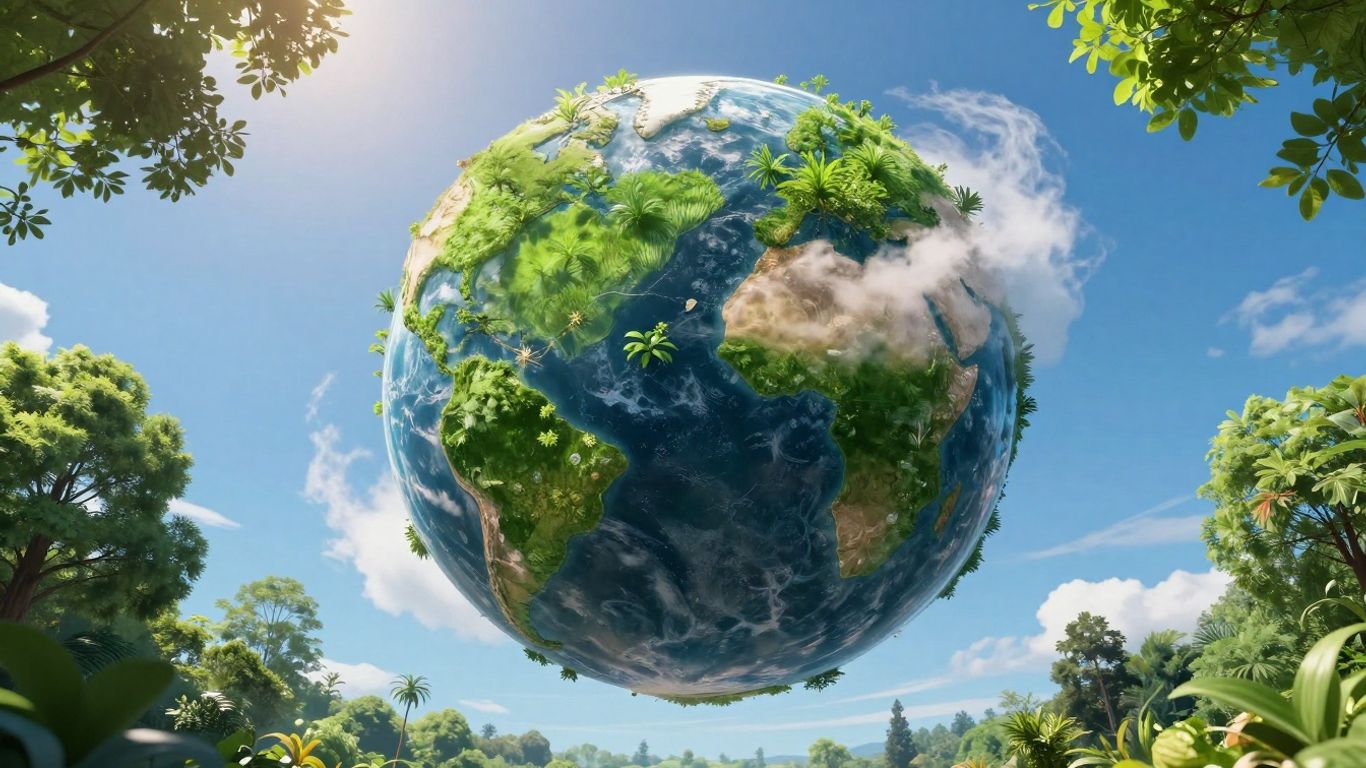
The Paris Agreement and Climate Goals
The big moment for global climate action really kicked off with the Paris Agreement back in 2015. It's where nearly every country on the planet got together and agreed that we needed to seriously limit how much the Earth heats up – aiming for well below 2 degrees Celsius compared to how things were before the industrial revolution. To actually make that happen, countries committed to reaching a state of climate neutrality sometime in the latter half of this century. This means balancing the greenhouse gases we put into the atmosphere with ways to remove them. Article 6 of that agreement even laid the groundwork for how we'd handle emissions offsets.
National and Regional Climate Initiatives
Following the Paris Agreement, lots of places started setting their own targets. The European Union, for example, rolled out the European Green Deal. It's a huge plan to become climate-neutral by 2050. This involves a bunch of things like investing in green tech, supporting new ideas, making transportation cleaner, cleaning up our energy systems, making buildings use less energy, and working with other countries to raise standards everywhere. A key part of this is the EU Climate Law, which makes that 2050 goal official. They also have the "Fit for 55" package, which is all about cutting greenhouse gas emissions by 55% by 2030, putting them on track for that 2050 neutrality.
The Role of Organizations and Individuals
It's not just countries, though. The UN even has a "Climate Neutral Now" campaign. It encourages organizations and even individuals to help achieve climate neutrality by 2050. How? By offsetting the emissions they produce, usually by contributing to UN-approved projects that are good for the climate. Think of it like this:
- Reduce what you can: First, focus on cutting down your own emissions as much as possible. This could mean using less energy, choosing sustainable transport, or changing business practices.
- Measure your impact: You can't manage what you don't measure. Figure out your carbon footprint.
- Offset the rest: For the emissions that are really hard to get rid of, you can balance them out by supporting projects that remove greenhouse gases from the atmosphere, like planting trees or investing in renewable energy.
While countries and big organizations have the most impact, every bit counts. Individual actions, when multiplied by millions, can make a real difference in pushing us toward that global climate-neutral goal.
Our company is dedicated to helping businesses achieve their global climate goals. We understand the importance of reaching climate neutrality and are here to support your journey. Discover how we can help you make a real difference. Visit our website today to learn more about our solutions and how we can partner with you to create a sustainable future.
So, What's the Takeaway?
Look, getting to a truly climate-neutral state isn't just about buying some carbon credits and calling it a day. It's a whole process. We've seen that terms like 'carbon neutral,' 'net-zero,' and 'climate positive' can get pretty confusing, and honestly, sometimes they're used more for marketing than for real change. The big picture is that we need to cut down on emissions first and foremost. Offsetting can help, sure, but it's not the whole story. Think of it like cleaning your room: you gotta pick up the mess (reduce emissions) before you can really say it's tidy (offsetting). Companies need to be clear about what they're doing, and we as consumers need to look past the buzzwords and see the actual actions being taken. It’s a big challenge, but understanding these terms is the first step to pushing for genuine progress.
Frequently Asked Questions
What does 'climate-neutral' really mean?
Being climate-neutral means that a company or organization balances the amount of greenhouse gases it releases into the air with an equal amount that is removed. Think of it like a scale: you add some weight (emissions), and then you take away the same amount of weight (removal) to keep it balanced. It's about making sure your actions don't add extra warming gases to the planet.
How is 'climate-neutral' different from 'net-zero'?
While they sound similar, there's a key difference. 'Carbon-neutral' often focuses on balancing carbon dioxide (CO2) emissions, sometimes through buying 'offsets' that help reduce CO2 elsewhere. 'Net-zero' is a bigger goal. It means reducing all greenhouse gas emissions as much as possible, aiming for almost zero, and only then balancing out any tiny bit that's left. Net-zero is seen as a more thorough way to tackle climate change by focusing on cutting emissions first.
What are greenhouse gases, and why do they matter?
Greenhouse gases (like carbon dioxide, methane, and others) are gases in the Earth's atmosphere that trap heat, kind of like the glass roof of a greenhouse. This natural process keeps our planet warm enough for life. However, human activities, like burning fossil fuels, release too many of these gases, trapping too much heat and causing the planet to warm up, which we call climate change.
What are carbon offsets, and are they always good?
Carbon offsets are like credits you buy that represent a reduction or removal of greenhouse gases from the atmosphere. For example, planting trees or investing in clean energy projects can create offsets. They can be a useful tool to help companies become climate-neutral, but it's important to make sure the projects are real, effective, and don't harm local communities. Simply buying offsets without reducing your own emissions first isn't the best approach.
What is a carbon footprint?
Your carbon footprint is the total amount of greenhouse gases that are generated by your actions. For a person, it includes things like driving, flying, heating your home, and the food you eat. For a company, it includes all its operations, from making products to shipping them. Knowing your footprint helps you figure out where you can make changes to reduce your impact on the climate.
Why should businesses care about being climate-neutral?
Being climate-neutral is becoming really important for businesses. Customers increasingly want to buy from companies that are kind to the planet. Investors also like to support businesses that are sustainable. Plus, being environmentally friendly can make a company stand out from its competitors and build a better reputation. It's not just about doing good; it can also be good for business.