
Navigating the Future: Key Takeaways from the Climate Capital Summit 2026

The Climate Capital Summit 2026 just wrapped up, and it was a pretty packed event. Lots of talk about how we're going to deal with climate change, especially when it comes to money and business. It feels like things are moving, but there's still a long way to go. A lot of the discussions circled back to the need for faster action and how we can actually pay for it all. Plus, with major global events on the horizon, the summit felt like a good warm-up.
Key Takeaways
- The summit highlighted the growing urgency for climate action, noting that economies are still heavily tied to fossil fuels even as clean energy gains traction. Businesses are being called upon to play a bigger part in building resilience.
- Discussions around moving away from fossil fuels are intensifying, with a stronger focus on their economic and health downsides. International talks are aiming for a 'just transition' for workers and communities affected by this shift.
- Finding ways to fund climate solutions and manage carbon is a major theme. This includes exploring different financing models and new technologies for removing carbon dioxide from the atmosphere.
- Global cooperation is seen as vital for climate progress. The summit looked at outcomes from recent climate talks and prepared for future negotiations, stressing the need for countries to work together.
- The health of our oceans and the biodiversity within them were also key topics. The recent High Seas Treaty was discussed as a significant step in protecting marine life, which is linked to both human health and climate goals.
Navigating The Climate Capital Summit 2026 Landscape
The Climate Capital Summit 2026 kicked off this week, and honestly, it feels like the world is really starting to grapple with the sheer scale of what's happening. We're not just talking about warmer weather anymore; the impacts are hitting hard. Think about it – extreme weather events are becoming the norm, and it's messing with everything, from our food supplies to the very ecosystems that keep us alive. Some of the planet's natural carbon sponges, like forests and wetlands, are actually starting to release more carbon, which is a pretty worrying sign. The Arctic is on track to have its first ice-free day before 2030, which is wild to even think about.
The Imperative for Climate Action
It's clear we need to act, and fast. The goals set by the Paris Agreement are ambitious – we need to cut emissions by 43% by 2030. This is a massive shift, especially since our economies still lean heavily on fossil fuels. But there's a silver lining. Clean energy is gaining serious traction. In 2024, electricity from clean sources made up over 40% of the global total, thanks in large part to solar power, which is now the cheapest form of energy out there. Investment in clean energy also topped $2 trillion for the first time. It’s a sign that change is not only possible but already happening.
Economic Realities and Clean Energy Momentum
The economic case for clean energy is becoming undeniable. Solar and wind power are not just environmentally sound; they're increasingly the most cost-effective options for new electricity generation. This shift is driving innovation and creating new markets. However, the transition isn't without its challenges. Integrating these new energy sources into existing grids and ensuring reliable power supply requires significant investment and smart planning. The summit highlighted the need for policies that support this transition, making it easier for businesses and consumers to adopt cleaner alternatives.
Business's Role in Resilience
Beyond just cutting emissions, businesses have a bigger part to play in building resilience. In a world facing political instability and unpredictable events, companies need to uphold principles like accountability and transparency. These aren't just buzzwords; they're the bedrock of both economic stability and our ability to adapt to climate change. The summit emphasized that building resilient supply chains and operations is no longer optional but a necessity for long-term survival and success. It’s about more than just profit; it’s about being a responsible part of the solution.
Fossil Fuel Transition Discussions At The Climate Capital Summit
This year's Climate Capital Summit saw some pretty intense conversations about moving away from fossil fuels. It's not exactly a new topic, but the urgency feels different now. We're seeing more and more evidence that sticking with coal, oil, and gas just isn't sustainable, economically or for our health.
Strengthening Arguments Against Fossil Fuels
The case against fossil fuels is getting stronger, and it's not just about the climate anymore. We heard a lot about the economic risks involved in continuing to invest in these old energy sources. Plus, with clean energy like solar and wind becoming cheaper and more reliable, the financial argument for sticking with fossil fuels is looking pretty weak. The momentum behind renewables is undeniable, and it's forcing a re-evaluation of long-term energy strategies.
Health Implications of Polluting Energy Sources
Beyond the environmental impact, the health consequences of burning fossil fuels were a major talking point. Respiratory illnesses, air pollution-related deaths – these are real, tangible costs that affect communities worldwide. It's becoming harder to ignore the direct link between the energy we use and the well-being of populations, especially in areas close to power plants and industrial sites. We're talking about cleaner air and healthier lives, and that's a powerful motivator for change.
International Conference on Just Transition
One of the most significant developments discussed was the upcoming International Conference on the Just Transition Away from Fossil Fuels. This conference, co-hosted by Colombia and the Netherlands, aims to create a roadmap for moving away from fossil fuels in a way that doesn't leave workers and communities behind. It's a recognition that this transition needs to be managed carefully, with support for those most affected.
Here's a look at what a 'just transition' might involve:
- Retraining programs: Offering new skills for workers in industries impacted by the shift.
- Economic diversification: Investing in new industries and job opportunities in affected regions.
- Social safety nets: Providing support for communities during the transition period.
- Community engagement: Ensuring local voices are heard and included in planning.
The discussions highlighted that a rapid shift away from fossil fuels is necessary, but it must be managed thoughtfully. Ignoring the social and economic impacts would be a mistake, potentially creating new problems while trying to solve existing ones. The goal is a future that is both environmentally sound and socially equitable.
Financing And Innovation In Climate Capital
This section of the Climate Capital Summit 2026 really zeroed in on the practicalities of making climate solutions happen. It wasn't just about talking; it was about figuring out how to pay for everything and how to come up with new ideas.
Navigating Carbon Management
We heard a lot about how companies are trying to get a handle on their carbon footprint. It’s not as simple as just measuring it, though. There’s a whole process involved in tracking emissions, figuring out where they come from, and then planning how to reduce them. Some businesses are getting pretty sophisticated with this, using new software and data analysis. It’s becoming a big part of how they report their performance, not just to regulators but to investors too.
- Tracking Scope 1, 2, and 3 emissions.
- Setting science-based reduction targets.
- Developing strategies for emission offsets and insetting.
The push for better carbon management is driven by a mix of regulatory pressure, investor demand, and a genuine desire to operate more sustainably. It's a complex puzzle, but one that's becoming unavoidable for businesses of all sizes.
Financing Mechanisms for Climate Solutions
This was a hot topic. How do we actually fund the massive shift needed for clean energy and climate adaptation? We saw discussions on green bonds, sustainability-linked loans, and the growing role of private equity in climate tech. There’s also a lot of talk about blended finance – where public money is used to de-risk private investments, making them more attractive. It seems like a lot of different financial tools are being developed and refined.
Here’s a quick look at some of the mechanisms discussed:
- Green Bonds: Issuing debt specifically for environmental projects.
- Carbon Markets: Trading allowances or credits for greenhouse gas emissions.
- Impact Investing: Investing with the intention to generate positive, measurable social and environmental impact alongside a financial return.
- Public-Private Partnerships: Collaborations between government and private sector entities to fund and deliver projects.
Carbon Dioxide Removal Approaches
Beyond just cutting emissions, the summit also looked at ways to actively remove CO2 from the atmosphere. This is where things get really interesting, and sometimes a bit controversial. We heard about nature-based solutions like reforestation and soil carbon sequestration, but also about technological approaches like direct air capture (DAC) and enhanced weathering. The big question is scalability and cost. While direct air capture is gaining traction, its current cost remains a significant barrier to widespread adoption. It’s clear that a portfolio of different approaches will be needed, and research and development are key to making these methods more effective and affordable.
- Direct Air Capture (DAC): Technologies that pull CO2 directly from the ambient air.
- Bioenergy with Carbon Capture and Storage (BECCS): Burning biomass for energy and capturing the resulting CO2.
- Enhanced Weathering: Accelerating the natural process of rock weathering to absorb CO2.
- Afforestation and Reforestation: Planting new trees or restoring forests.
Global Diplomacy And Climate Capital

The Climate Capital Summit 2026 highlighted how international cooperation is more important than ever. With global temperatures rising and extreme weather events becoming more common, countries need to work together. It's not just about setting goals; it's about making them happen.
Key Outcomes from Climate Negotiations
The summit reviewed the progress made in recent climate talks. A big focus was on how to actually implement the agreements made. We saw discussions about setting up better ways to track progress, especially on adaptation measures. Health indicators were brought up as a key part of this tracking. There was also a lot of talk about the gap between what countries promise to do and what they actually achieve, particularly concerning the 1.5°C target.
- Tracking adaptation progress with new indicators.
- Addressing the ambition gap in emission reduction targets.
- Exploring the role of trade in climate action.
The Role of International Cooperation
It's clear that no single country can solve the climate crisis alone. The summit emphasized the need for shared strategies and mutual support. This includes sharing technology, financial resources, and best practices. The discussions also touched on how international trade agreements can either help or hinder climate efforts. Finding ways to make trade work for the climate is a big challenge.
The complex geopolitical landscape adds another layer of difficulty. Building trust and ensuring that all nations, especially developing ones, are supported in their climate efforts is paramount. This requires consistent dialogue and a commitment to shared responsibility.
Preparing for COP31
Looking ahead, the summit provided a strategic briefing for COP31, which will be co-hosted by Australia and Türkiye. This unique arrangement presents both opportunities and challenges. The goal is to build on the momentum from previous COPs and ensure that the priorities of vulnerable nations, like those in the Pacific, remain at the forefront. The success of COP31 will depend on strong diplomatic efforts and a genuine commitment to collaboration.
- Australia and Türkiye co-hosting COP31.
- Focus on Pacific island nations' priorities.
- Strengthening climate diplomacy through collaboration.
Ocean Health And Biodiversity At The Climate Capital Summit
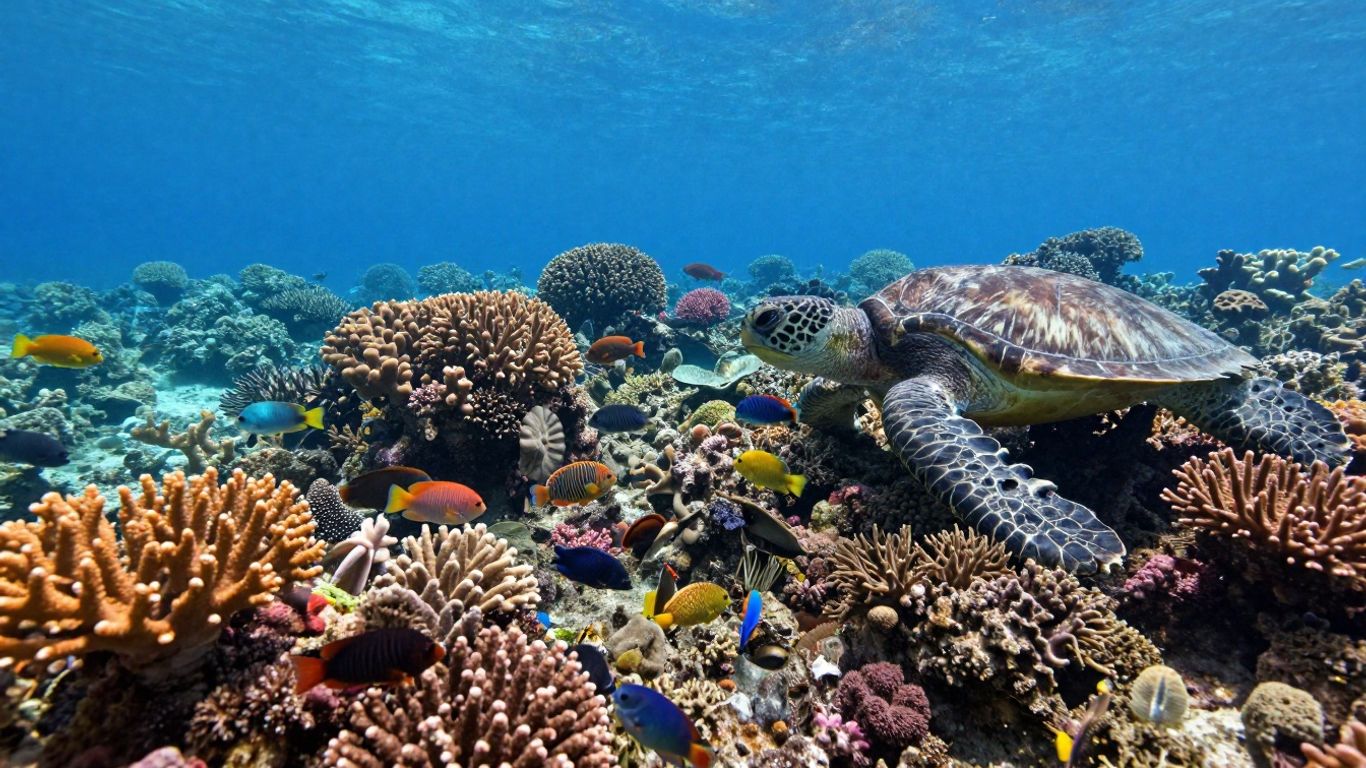
The High Seas Treaty's Impact
The High Seas Treaty, officially known as the UN Agreement on Biodiversity Beyond National Jurisdiction (BBNJ), officially became international law on January 17th, 2026. This is a pretty big deal, honestly. For ages, a huge chunk of our oceans – like, two-thirds – hasn't really had any solid legal protection. This treaty changes that, offering legal safeguards for marine life in international waters, which is basically half the planet. It's a major step towards the goal of protecting 30% of the world's land and oceans by 2030. UN Secretary-General António Guterres even said, and I'm paraphrasing here, that the ocean's health is basically our health. Makes sense, right?
Protecting Marine Biodiversity
So, what does this treaty actually do? Well, it makes it possible to set up marine protected areas in these previously unprotected zones. Think of them as national parks for the ocean, but in the open sea. It also strengthens the rules for how we manage these areas. This is super important because biodiversity loss is a massive problem, and our oceans are a huge part of that. We're talking about everything from tiny plankton to the biggest whales – they all need a safe place to live and thrive. Without these protections, things like overfishing and pollution just keep chipping away at these vital ecosystems.
Oceans' Role in Health and Climate Goals
It's easy to forget, but healthy oceans are directly linked to our own health and our ability to meet climate targets. Oceans absorb a lot of the carbon dioxide we pump into the atmosphere, acting as a massive carbon sink. When ocean ecosystems are damaged, their ability to do this job is weakened. Plus, think about food security – so many people rely on fish for protein. Damaged oceans mean less food. The High Seas Treaty isn't just about saving fish; it's about safeguarding a system that supports life on Earth, including our own. It's a complex web, and protecting one part helps the whole thing stay stable. This treaty is a hopeful sign that we can actually make progress on these big, global issues.
Addressing Tipping Points And Future Risks
Understanding Global Tipping Points
The Climate Capital Summit 2026 really hammered home how much the planet is nearing some serious tipping points. We're not just talking about gradual changes anymore; scientists are increasingly worried about sudden, irreversible shifts in major Earth systems. Think about the Arctic ice melt – it's on track for its first ice-free day before 2030, which is sooner than many expected. This isn't just a distant problem; it affects weather patterns and sea levels globally. The discussions highlighted that some natural carbon sinks, like forests and permafrost, are actually starting to release more carbon than they absorb. It’s a stark reminder that the systems we rely on are under immense pressure.
Climate-Health-Equity Nexus in Asia-Pacific
A significant portion of the summit focused on the Asia-Pacific region, specifically the interconnectedness of climate change, public health, and social equity. This region is particularly vulnerable, facing unique challenges from rising sea levels, extreme heat, and changing rainfall patterns. The discussions pointed out how these climate impacts disproportionately affect marginalized communities, exacerbating existing health disparities and economic inequalities. Finding solutions that address these intertwined issues is paramount for building truly resilient societies.
Driving Accelerated Climate Action
Given the urgency of these tipping points, the summit stressed the need for faster, more decisive climate action. While clean energy is gaining serious momentum – solar is now the cheapest energy source globally, and clean energy investment topped $2 trillion in 2024 – it's not enough on its own. We need to see a more rapid transition away from fossil fuels, supported by innovative financing mechanisms and technologies. The conversations also touched on the importance of international cooperation and policy frameworks to speed up this transition, making sure it's a just transition that leaves no one behind. It felt like a call to action, urging businesses and governments to move beyond incremental changes and embrace bolder strategies to avert the worst-case scenarios.
Thinking about the big risks and what might happen in the future? These are important topics that can affect everyone. We can help you understand these challenges better. Visit our website to learn more about how we can support you in navigating these complex issues.
Wrapping Up the Climate Capital Summit 2026
So, what's the big picture after all the talks at the Climate Capital Summit 2026? It's clear that the world is really feeling the heat from climate change, and things aren't going back to how they were. We're seeing more extreme weather, and our natural systems are struggling. Even though we've made some progress, like clean energy becoming cheaper and more common, we've still got a long way to go to meet our goals. It’s not just about cutting emissions anymore; it’s also about making sure our economies and societies can handle the changes already happening. The summit highlighted that businesses have a big part to play in keeping things fair and stable. It’s a lot to think about, but there’s still a chance to build a better future if we all work together.
Frequently Asked Questions
What was the main point of the Climate Capital Summit 2026?
The summit was all about figuring out how we can deal with climate change and its effects. It brought together important people to talk about how to protect our planet, make our economies stronger, and ensure everyone is safe, especially with things like extreme weather becoming more common.
Why are people talking so much about moving away from fossil fuels?
Fossil fuels, like coal and oil, cause a lot of pollution that harms our planet and our health. The summit highlighted that we need to switch to cleaner energy sources faster. It's not just about the environment, but also about making sure we have enough energy for the future and keeping people healthy.
How will climate change be paid for?
The summit discussed ways to fund projects that help fight climate change. This includes managing carbon better, finding new ways to pay for green projects, and exploring technologies that can remove carbon dioxide from the air. It's about making sure there's money available for solutions.
What's the big deal about the High Seas Treaty?
This treaty is a new international law that helps protect the parts of the ocean that are far from land. These areas are important for ocean life and help our planet. The treaty aims to keep these waters safe from pollution and overfishing, which is great news for marine animals and our climate goals.
What are 'tipping points' in climate change?
Tipping points are like a 'point of no return' for the climate. Imagine a domino effect; once one falls, it triggers others. These are critical moments where small changes in the climate can cause big, sudden, and often irreversible shifts in natural systems, like ice melting or forests dying. The summit discussed how serious these risks are, especially in places like Asia and the Pacific.
What is COP31 and why is it important?
COP31 is the big United Nations climate conference happening at the end of the year. It's where countries come together to discuss and agree on actions to tackle climate change. The summit looked at what happened at previous meetings and how countries can work together better to make COP31 a success, especially with new ways of working together being tried out.