
Navigating the Future: Essential Features of Sustainability Reporting Software in 2026

So, you're trying to figure out what's what with sustainability reporting software these days? It feels like every year there's something new to keep track of, right? From nature stuff and EU rules to how investors want their data, it's a lot. This article breaks down the key things to watch out for in 2026, focusing on how software can help make sense of it all. Think of it as a quick rundown so you're not caught off guard.
Key Takeaways
- Nature and biodiversity reporting is getting more attention, with new standards coming and markets for nature credits starting up. Sustainability reporting software will need to handle this information.
- The EU is trying to simplify its many sustainability rules, but it's still complicated. Software needs to help companies follow these evolving EU requirements.
- Investors want better ESG data for making decisions, especially with more IPOs and company sales happening. AI tools are starting to play a bigger role in digging into this data.
- Global reporting rules are being adopted, but countries are doing it their own way. Software has to be flexible enough to work with different rules and make data comparable.
- Companies need to be more open about their supply chains due to new rules. Also, watch out for stricter rules against greenwashing, as regulators want proof behind claims.
Integrating Nature and Biodiversity Disclosures
Adapting to Evolving Nature-Related Financial Disclosures
Okay, so nature and biodiversity. It's not just a buzzword anymore, right? By 2026, companies are going to have to really show their work when it comes to how they impact the natural world. The Taskforce on Nature-related Financial Disclosures (TNFD) recommendations have been gaining steam, and it looks like the International Sustainability Standards Board (ISSB) is jumping in too. They're planning to release a global standard on nature, probably by late 2026. This means we're moving beyond just talking about climate change to seriously looking at risks and opportunities tied to things like deforestation and ecosystem health. Software will be key here, helping track all these new data points.
Leveraging Software for Biodiversity Impact Tracking
Tracking biodiversity impacts can get complicated fast. It’s not as straightforward as measuring carbon emissions. Think about water usage, land use changes, or even the impact on local wildlife. Software solutions in 2026 will need to go beyond basic metrics. They'll need to help companies map out their supply chains, identify biodiversity hotspots, and quantify their footprint in these areas. This could involve using satellite imagery analysis, on-the-ground data collection tools, and advanced analytics to connect business activities to specific ecological outcomes. The goal is to move from general statements to concrete, measurable data that shows a real understanding of a company's relationship with nature.
Preparing for Nature Credit Market Infrastructure
This is a newer area, but it's definitely one to watch. The EU, for example, is working on developing a market for nature credits. Basically, this means companies might be able to invest in projects that restore or protect nature, and get credit for it. By 2026, we'll likely see more defined rules and infrastructure for these markets. Sustainability reporting software will need to adapt to track these investments and claims. It’s about showing how a company is contributing to nature restoration, not just minimizing harm. This could involve tracking the purchase of credits, verifying the impact of the projects funded, and integrating this information into overall sustainability reports. It's a complex space, but it's shaping up to be a significant part of future nature disclosures.
Streamlining Compliance with EU Sustainability Frameworks
The EU's sustainability landscape is always shifting, and keeping up with all the rules can feel like a full-time job. By 2026, software designed for sustainability reporting is going to be a lifesaver for companies trying to make sense of it all. The big push has been towards simplification, especially with the Sustainability Omnibus package that started rolling out in early 2025. The idea was to smooth out the bumps between different regulations like the Corporate Sustainability Reporting Directive (CSRD) and the EU Taxonomy. It's meant to cut down on overlapping requirements and make things less of a headache, though, let's be honest, it hasn't always felt simple. There have been debates and delays, leaving some companies scratching their heads about exactly what's expected.
Navigating the Sustainability Omnibus Simplification Agenda
The Sustainability Omnibus was supposed to make life easier by tidying up rules across major EU sustainability frameworks. Think of it as a big cleanup effort to reduce the paperwork and costs associated with reporting. However, the path to this simplification has been a bit bumpy. Different countries and political groups have had varying ideas about how far these rules should go, especially concerning climate transition plans and how EU rules apply outside the EU. This has caused some confusion and delays. Now, in 2026, the focus is shifting from making new rules to actually putting them into practice and making sure everyone is on the same page. The European Commission is expected to release more guidance to help companies figure out how the Omnibus changes things, particularly for reporting and due diligence.
The ongoing efforts to simplify EU sustainability regulations, while complex in their initial stages, aim to create a more coherent and manageable reporting environment for businesses. Companies need to stay informed about the latest guidance to adapt their strategies effectively.
Ensuring Alignment with CSRD and EU Taxonomy
Staying compliant with the Corporate Sustainability Reporting Directive (CSRD) and the EU Taxonomy is a big deal. The CSRD, a cornerstone of the EU's Green Deal, requires detailed reporting on a company's environmental and social impacts. It's setting a global standard, influencing how businesses worldwide approach sustainability. The EU Taxonomy, on the other hand, provides a classification system to help investors identify sustainable economic activities. Software in 2026 will need to help companies gather and report the specific data points required by both these frameworks, especially concerning double materiality – looking at both how sustainability issues affect the company and how the company affects sustainability. This is a big shift from just focusing on financial risks. For North American companies dealing with CSRD, figuring out the exact requirements amidst ongoing uncertainty in their local markets remains a challenge.
Managing Due Diligence and Product Compliance
Beyond reporting, the EU is also tightening up rules on due diligence and product compliance. This means companies need to be more thorough in checking their supply chains for environmental and human rights issues. Software will play a key role in tracking these aspects, making sure products meet all the necessary standards before they hit the market. This includes preparing for new regulations like the Empowering Consumers for the Green Transition Directive, which starts applying in September 2026. This directive cracks down on vague environmental claims, restricts claims about future performance unless backed by solid plans, and bans uncertified sustainability labels. It’s all about making sure consumers aren't misled and that environmental claims are real and verifiable. This push for transparency extends to supply chains, where expanding traceability requirements are fundamentally reshaping sourcing and logistics globally.
Enhancing ESG Data for Investment and Due Diligence
In 2026, the way investors and businesses look at company data is changing. It's not just about the numbers anymore; it's about how a company handles risks and opportunities related to the environment and society. With interest rates expected to shift, we're likely to see more activity in areas like IPOs and company mergers. Investors are definitely paying closer attention to ESG (Environmental, Social, and Governance) information when making decisions, both before and after these big financial moves.
Utilizing AI for Deeper ESG Diligence
Artificial intelligence is becoming a big help here. Think about it: AI tools can sift through vast amounts of information to spot potential issues that might be hard for humans to find. This includes things like labor practices or human rights concerns deep within a company's operations or its supply chain. Using AI helps buyers and investors get a much clearer picture of a company's actual business model and the risks involved. It's like having a super-powered assistant that can flag problems before they become major headaches, impacting a company's value or its reputation with customers and investors.
Supporting IPO and M&A Transactions with ESG Data
When a company is getting ready to go public or when two companies are merging, ESG data is no longer an afterthought. Investors want to see that the company has a solid plan for managing sustainability risks and opportunities. This data helps them understand the long-term health of the business. For example, a company with strong environmental policies might be seen as less risky in the long run. Software that can gather and present this ESG information clearly and accurately is becoming really important for these high-stakes transactions.
Integrating ESG into Private Capital Investment Processes
In the world of private investment, ESG is pretty much built-in now. Whether it's about raising money that meets certain sustainability standards or simply attracting investors, ESG performance matters. This is especially true when companies are buying other businesses or making big acquisitions. The acquiring company needs to be sure about the target company's culture and risks, and ESG diligence is a key part of that. It helps determine the right price and makes sure the integration process goes more smoothly.
The focus on ESG data isn't just a trend; it's becoming a standard part of how businesses operate and how investments are made. Companies that can clearly show their commitment and performance in these areas will likely find it easier to attract capital and build trust with stakeholders.
Addressing Global Reporting Standards and Interoperability

It's a bit of a puzzle, isn't it? Trying to keep up with all the different sustainability reporting rules popping up everywhere. The big news is that the International Sustainability Standards Board (ISSB) has put out its standards, and a lot of countries are looking at using them. We're talking about nearly 60% of the world's economy potentially basing their reports on these ISSB rules. That's a pretty big deal for companies that operate internationally.
Adopting ISSB Standards for Global Baseline Reporting
The idea behind the ISSB standards is to create a common ground, a global baseline, so that reporting is more consistent. Think of it like a universal language for sustainability data. California, for example, is already pointing to these standards as a way to meet their own reporting requirements. It simplifies things, at least in theory, by giving companies a starting point.
Managing Divergences in National Implementation
But here's the catch: "global baseline" doesn't mean "global identical." Even though many countries are adopting the ISSB standards, they're doing it their own way. Some are making it mandatory, others voluntary. The timelines are different, what they expect companies to report on can vary, and when they expect it can also be staggered. So, while Australia, Hong Kong, and Singapore are moving ahead with ISSB-aligned reports, some places like Singapore have even pushed back deadlines to give companies more time. It means you can't just assume what works in one country will automatically work in another. You still have to pay attention to the local rules.
Ensuring Interoperability Across Jurisdictions
This is where things get really interesting, and frankly, a bit complicated. We're seeing a lot of talk about making sure these different reporting systems can talk to each other – that's interoperability. The goal is to avoid companies having to report the same information multiple times in different formats. Software is going to be key here, helping to translate and connect data. But until that's fully sorted, companies will likely be dealing with a mix of the global ISSB rules and specific national requirements. It's like having to speak English, Spanish, and French all at once. The EU, for instance, is working on simplifying its own rules, but they also want to make sure their standards can connect with international ones, while still keeping their own unique aspects, like "double materiality." It's a balancing act, for sure.
The push for global standards is a positive step, but the reality of implementation is always more nuanced. Companies need to be prepared for a patchwork of regulations, where a global framework serves as a foundation, but local adaptations are unavoidable. Software solutions that can adapt to these varying requirements will be indispensable.
Strengthening Supply Chain Transparency and Trade Compliance
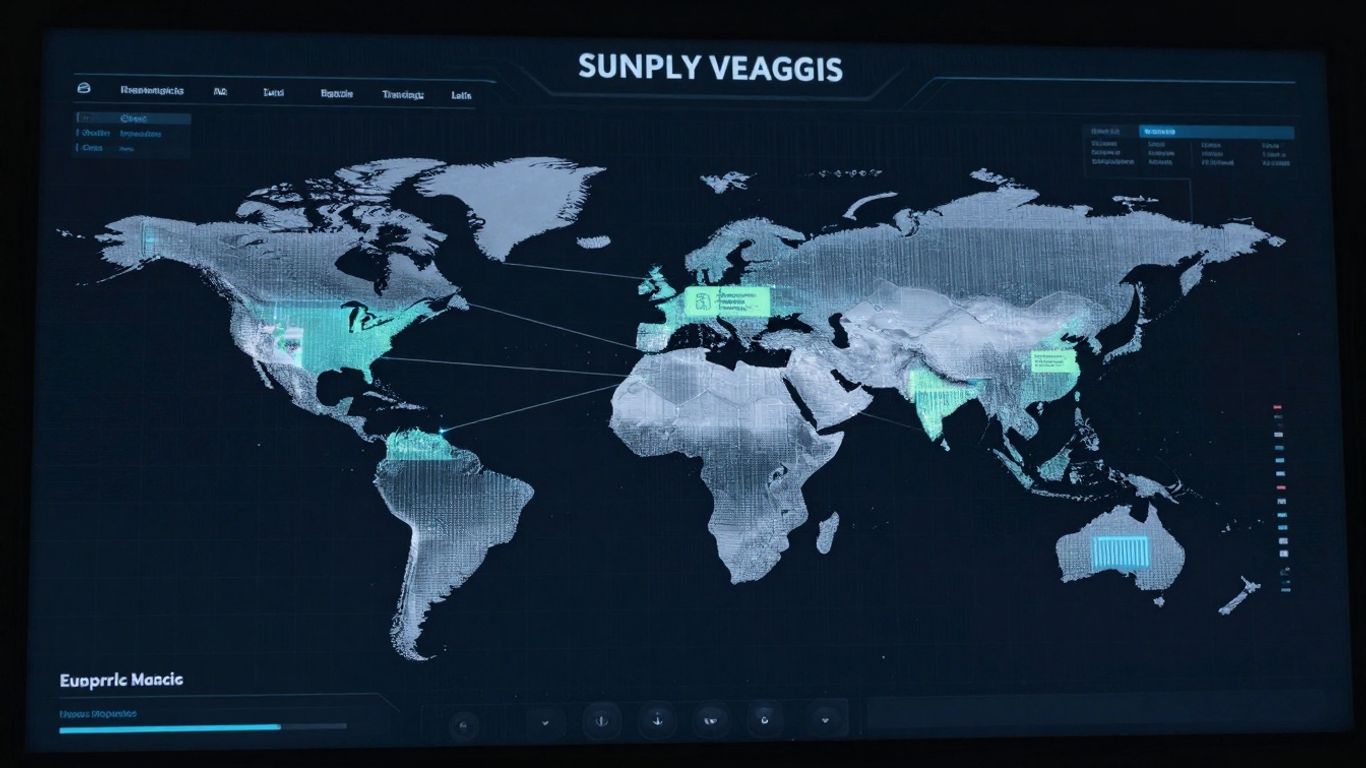
It feels like every week there's a new regulation or a new demand from consumers about where stuff comes from and how it's made. For businesses, especially those with complex global operations, keeping up with all of it is a real challenge. We're seeing a big shift where sustainability rules aren't just about what you do in your own factory; they're increasingly about your entire supply chain. This means companies have to be way more upfront about their suppliers, their sourcing practices, and how their products move around the world.
Meeting Expanding Due Diligence and Traceability Requirements
Governments are putting more pressure on companies to know exactly what's happening upstream. Think about the EU Deforestation Regulation (EUDR), which is really starting to bite for certain products like wood, coffee, and palm oil. You have to prove your goods aren't contributing to deforestation before they can even enter the EU market. This isn't just a paperwork exercise; it requires deep visibility into your supply chain, often going down to the farm or forest level. Software is becoming indispensable here, helping to map out these complex networks and collect the necessary data. Without robust traceability, market access can be severely restricted.
Adapting Sourcing and Logistics to ESG Regulations
These new rules are forcing companies to rethink their entire sourcing strategy. If a supplier can't provide the required documentation or meet certain environmental or labor standards, businesses might have to find new partners. This can be disruptive, but it's also an opportunity to build more resilient and ethical supply chains. Logistics also needs to adapt. For instance, the UFLPA in the US has made importing goods from certain regions much harder if you can't prove they weren't made with forced labor. This means more scrutiny on shipping routes, customs documentation, and supplier verification. It's a constant balancing act between cost, efficiency, and compliance.
Leveraging Software for EPR and Trade Compliance
Extended Producer Responsibility (EPR) schemes are also gaining traction, pushing companies to take responsibility for their products' end-of-life management. Software can help track product lifecycles, manage waste streams, and report on EPR obligations. On the trade front, tools are emerging that can help companies stay on top of a patchwork of international regulations, from import/export controls to sanctions lists, all while integrating sustainability data. This helps avoid costly delays at borders and ensures smoother cross-border operations. It's about using technology to turn what could be a compliance nightmare into a more manageable, even strategic, advantage.
The global regulatory landscape is becoming increasingly interconnected, with sustainability mandates directly influencing trade flows and market access. Companies that proactively build transparency and compliance into their supply chains will be better positioned to navigate these complexities and maintain their competitive edge.
Combating Greenwashing with Verifiable Claims
It feels like everywhere you look, companies are shouting about how green they are. But how much of it is real? By 2026, the days of vague claims like "eco-friendly" are numbered, especially in the EU. The new Green Transition Directive, kicking in September 27, 2026, means generic claims need solid proof. If you say something is sustainable, you better have the data to back it up. This also applies to claims about future environmental performance – you can't just promise a better future without a clear plan and commitments to show how you'll get there.
Complying with EU Green Transition Directive Restrictions
The EU's Green Transition Directive is a big deal for how companies talk about their environmental efforts. It's cracking down on unsubstantiated claims. Think of it like this:
- No More Generic Buzzwords: Terms like "eco-friendly" or "sustainable" are out unless you can prove them with facts. This means having detailed reports and data ready.
- Future Promises Need Proof: If you're talking about what your company will do for the environment down the road, you need a concrete plan. This includes timelines, specific actions, and measurable goals.
- Certified Labels Only: Any sustainability or ESG labels you use must come from official, approved certification schemes. No more making up your own eco-badges.
This directive aims to make sure consumers and business partners aren't misled. It's about transparency and accountability, pushing companies to be genuinely better, not just sound better.
Implementing Ex-Ante Verification for Environmental Claims
Before 2026, the idea of "ex-ante" verification was mostly discussed. Now, it's becoming a real requirement in some places. This means getting your environmental claims checked by an independent third party before you make them public. It’s a bit like getting a second opinion from a doctor before starting a new treatment. This process adds a layer of trust, showing that your claims have been reviewed and validated by someone objective. While some argued this could be a burden, the goal is to prevent misleading information from ever reaching the public in the first place.
The shift towards verifiable claims means that sustainability reporting software needs to be robust enough to not only collect data but also to facilitate its verification. This includes features for audit trails, data validation, and secure sharing with third-party verifiers. The technology needs to keep pace with regulatory demands.
Monitoring Biodiversity-Linked Claims
We're not just talking about carbon emissions anymore. The focus is broadening to include nature and biodiversity. Claims like "nature-positive" or "deforestation-free" are gaining traction, but they'll also face increased scrutiny. Software in 2026 will need to help companies track their impact on biodiversity, much like they track carbon footprints. This could involve mapping supply chains to identify deforestation risks or monitoring habitat restoration projects. As new frameworks for nature-related reporting and credits emerge, the ability to substantiate these biodiversity claims will be just as important as proving climate commitments. It's all part of building a more credible and trustworthy sustainability narrative.
Leveraging Digital Tagging for Enhanced Reporting
Okay, so let's talk about digital tagging. It sounds a bit technical, but it's really about making sustainability data speak a common language. Think of it like adding specific labels to information so computers can understand it easily. This is becoming a big deal, especially with new rules coming into play.
Implementing XBRL for Machine-Readable Sustainability Data
The big player here is XBRL, or eXtensible Business Reporting Language. Basically, it's a way to structure financial and sustainability data so that software can read and process it automatically. The Corporate Sustainability Reporting Directive (CSRD) in the EU is pushing this hard. Companies now have to tag their sustainability reports using XBRL. This means the data isn't just a PDF document anymore; it's structured information. This machine-readability is key for making data comparable and transparent across different companies and even countries. It helps regulators and investors get a clearer picture without having to manually sift through mountains of text. It’s a significant shift from just reporting to reporting in a way that’s ready for automated analysis.
Improving Data Comparability and Transparency
When everyone uses the same tagging system, like XBRL, it becomes much easier to compare how different companies are performing on sustainability. Before, you might have had one company reporting its carbon emissions in tons, another in kilograms, and another just describing it. With digital tagging, all that information gets standardized. This makes it simpler for investors to see who's really leading the pack and for consumers to make informed choices. It cuts down on the guesswork and makes the whole process more honest. Transparency goes up, and frankly, it makes it harder for companies to hide things or present a misleading picture.
Strengthening Regulatory Oversight and Accountability
This digital tagging also gives regulators a much better toolset. They can more easily monitor compliance, spot trends, and identify potential issues. Imagine being able to automatically flag companies that aren't meeting certain targets or whose data looks inconsistent. It makes the oversight process more efficient and effective. This increased accountability is a good thing for the overall integrity of sustainability reporting. It means companies are more likely to take their commitments seriously when they know their data is being scrutinized in a structured, automated way.
The move towards digitally tagged sustainability data isn't just a technical upgrade; it's a fundamental change in how corporate responsibility is measured and communicated. It’s about creating a more reliable and accessible system for everyone involved.
Making your reports better is easier when you use digital tags. These tags help organize information so you can see what's important more clearly. Want to learn how to use these tags to make your reports shine? Visit our website to discover more!
Looking Ahead: What's Next for Sustainability Reporting?
So, as we wrap up our look at sustainability reporting software for 2026, it's clear things aren't slowing down. We've seen a big push towards clearer rules, especially with the EU's efforts to simplify things, though that's been a bit of a bumpy road. Nature and biodiversity are really coming to the forefront, with new standards on the way that companies will need to get a handle on. Plus, the way we talk about being 'green' is changing, with stricter rules against vague claims. It’s a lot to keep track of, and businesses will need smart tools to manage it all. Staying on top of these changes isn't just about following rules; it's about building trust and making sure your company is ready for whatever comes next.
Frequently Asked Questions
What's new with nature and biodiversity reporting?
Get ready for more focus on nature! New rules are coming to help companies report on how they affect nature and biodiversity. Think of it like tracking your company's impact on forests and animals, similar to how you track carbon emissions. There will also be new ways to trade 'nature credits,' which are like rewards for protecting nature.
How is the EU making sustainability rules easier?
The EU is trying to simplify its many rules about sustainability. They want to make it less confusing and costly for companies to follow laws like the CSRD (Corporate Sustainability Reporting Directive) and the EU Taxonomy. The goal is to make things clearer, though it's taking some time to sort it all out.
How can software help with ESG data for investors?
Software can use smart technology like AI to dig deeper into a company's environmental, social, and governance (ESG) performance. This helps investors make better decisions when buying or selling stocks, or when companies go public or merge. It's also becoming a key part of how private investors decide where to put their money.
Are there global rules for sustainability reporting?
Yes, there's a growing effort to create a single set of global rules, led by the ISSB (International Sustainability Standards Board). While many countries are adopting these rules as a base, each country might add its own twists, making it a bit tricky to report the same way everywhere. Software helps manage these differences.
How does software help with supply chain transparency?
Companies need to know more about what's happening in their entire supply chain, from where materials come from to how products are made. New rules require this. Software can help track products, ensure fair labor practices, and make sure companies are following environmental laws, especially when trading goods internationally.
What does 'combating greenwashing' mean for reporting software?
Greenwashing is when a company pretends to be more eco-friendly than it is. New rules, especially in the EU, are cracking down on misleading claims. Reporting software needs to help companies prove their environmental claims are real and accurate, often with third-party checks, to avoid penalties and build trust.