
How Your Company Can Effectively Reduce Its Carbon Footprint

So, your company wants to get greener? That's awesome. Lots of businesses are thinking about this now, and it's not as scary as it sounds. Basically, it's about figuring out what your company does that puts carbon dioxide into the air and then finding ways to do less of it. Think of it like cleaning up your room, but for the planet. We'll walk through some straightforward ways to reduce your company's carbon footprint, making your business better for everyone.
Key Takeaways
- Start by understanding how your company's activities contribute to its overall carbon footprint. Knowing this is the first step to making changes.
- Switching to renewable energy sources, like solar or wind power, can significantly cut down on emissions from your company's operations.
- Look at your supply chain and choose partners who also care about the environment. This helps reduce your company's carbon footprint indirectly.
- Encourage fewer business trips and more virtual meetings to cut down on travel-related emissions for your company.
- Implement simple reduce, reuse, and recycle programs in the office to minimize waste and conserve resources.
Understanding Your Company's Carbon Footprint

Defining Carbon Footprint for Businesses
So, what exactly is a "carbon footprint" when we talk about businesses? Simply put, it's the total amount of greenhouse gases, like carbon dioxide, that your company releases into the atmosphere. This happens through all sorts of activities, from the energy you use to power your office to the way products are made and shipped. Think of it as the environmental mark your business leaves behind. Every action, big or small, contributes to this footprint. It's not just about direct emissions from your own equipment; it also includes indirect emissions from things like employee travel or the electricity you buy.
The Importance of Measuring Emissions
Before you can start cutting down on your environmental impact, you need to know where you stand. Measuring your company's emissions is the first, really important step. It’s like getting a check-up before starting a new fitness plan – you need to know your starting point. This measurement helps you see exactly which parts of your business are producing the most greenhouse gases. You can break it down into different categories:
- Scope 1: These are emissions from sources your company directly owns or controls. Think company vehicles, heating systems in your buildings, or any manufacturing processes on-site.
- Scope 2: This covers emissions from the electricity, heat, or steam you purchase from outside suppliers. It’s about the energy you consume.
- Scope 3: This is often the biggest category and includes all other indirect emissions. It covers things like employee commutes, business travel, waste disposal, and the emissions from producing the goods and services you buy.
Knowing these numbers gives you a clear picture and helps you focus your reduction efforts where they'll make the most difference. Without measuring, you're essentially guessing.
Benefits of a Reduced Carbon Footprint
Why bother reducing your carbon footprint? Well, beyond the obvious benefit of helping the planet, there are some solid business advantages. For starters, customers are increasingly paying attention to a company's environmental record. Being seen as a responsible business can attract new clients and keep your current ones loyal. It can also lead to cost savings. For example, using less energy means lower utility bills, and optimizing transportation can cut down on fuel expenses. Plus, getting ahead of environmental regulations can save you headaches down the road. It’s about building a more resilient and reputable business for the long haul.
Reducing your carbon footprint isn't just a nice-to-have anymore; it's becoming a business imperative. It shows you're forward-thinking and responsible, which is good for your brand and your bottom line.
Implementing Energy Efficiency Measures
Making your company more energy efficient is a really practical way to cut down on emissions. It often makes financial sense too, which is a nice bonus. Think about it – less energy used means lower bills, right? It’s not just about big, expensive overhauls either; there are plenty of smaller, smarter changes you can make.
Transitioning to Renewable Energy Sources
One of the biggest impacts you can have is by switching where your company gets its electricity. Instead of relying on power generated from fossil fuels, look into providers that offer renewable energy. Many utility companies now have green energy plans, or you might need to find a new provider altogether. When you're shopping around, make sure they genuinely use renewable sources like solar or wind, not just carbon offsets. This is a significant step towards a cleaner operation and shows you're serious about sustainability. It's a good idea to check with your current provider first to see what options they have available for green energy.
Optimizing Office Lighting and Appliances
Little things add up. For lighting, switching to LED bulbs is a no-brainer. They use way less energy than old incandescent bulbs, even when they're on. Beyond that, think about smart controls. Can lights be set to dim or turn off automatically when a room is empty? If not, a simple policy of encouraging everyone to switch off lights and unplug equipment when they leave their desks can make a difference. Many devices still draw power even when they're off – that phantom load can be surprisingly high. Consider appliances too; newer, energy-efficient models will save power over time.
Leveraging Natural Light and Thermostat Adjustments
Don't forget about the basics of heating, cooling, and lighting. Maximizing natural light by arranging workspaces near windows can reduce the need for artificial lighting during the day. For heating and cooling, smart thermostat programming is key. Setting the temperature lower when the office is empty overnight or on weekends can save a lot of energy. It sounds simple, but not overheating or overcooling an empty building is a huge energy saver. You might also look into installing air curtains over doorways, especially in high-traffic areas, to keep conditioned air inside and outside air out. This helps maintain a stable temperature without the HVAC system working overtime.
Making your office more energy efficient doesn't always require a massive budget. Often, simple behavioral changes and smart adjustments to existing systems can yield significant reductions in energy use and, consequently, your carbon footprint. It's about being mindful of how energy is consumed throughout the workday.
Sustainable Procurement and Supply Chain Practices
When we talk about reducing a company's carbon footprint, it's easy to focus only on what happens inside our own four walls. But a big chunk of our impact actually comes from the stuff we buy and the companies we work with. That's where sustainable procurement and supply chain practices come in. It's about making smarter choices about who you buy from and what you buy, so that your whole operation becomes greener.
Choosing Eco-Conscious Suppliers
Think about it: your suppliers are essentially an extension of your business. If they're not operating sustainably, it's like you're still carrying a heavy load, even if you're trying to lighten your own. So, the first step is to look at who you're currently working with. Are they making an effort to reduce their emissions? Do they have any environmental certifications? It's important to favor suppliers who are already on a green path. When you're looking for new suppliers, make sustainability a key part of your selection process. Ask them about their environmental policies and what they're doing to cut down on their carbon output. This isn't just about being nice to the planet; it can also lead to more reliable and innovative partnerships. You can find resources to help you understand sustainable procurement strategies that can guide your choices.
Understanding Supplier Certifications
How do you actually know if a supplier is being eco-friendly? Certifications are a good way to get a clearer picture. Look out for things like ISO 14001. This certification means a company has a solid system for managing its environmental impact, focusing on reducing waste and using resources more efficiently. Another one to keep an eye on is CarbonNeutral® certification. This shows a supplier is serious about making measurable reductions in their carbon emissions. These certifications give you a bit of confidence that they're walking the walk, not just talking the talk.
Engaging Suppliers in Emission Reduction
Once you've identified some eco-conscious suppliers, or even if you're working with ones who are just starting out, you can play a role in encouraging them further. It's a two-way street. You can share best practices you've learned, and create an open conversation about environmental goals. This kind of dialogue helps everyone improve. You might also want to require some level of transparency from your suppliers regarding their emissions and what they're doing to reduce them. This collaboration is key to making real progress. Remember, your suppliers contribute significantly to your company's indirect emissions, so working together is a powerful way to achieve your reduction targets.
Here are a few ways to get your suppliers involved:
- Assess their current footprint: Start by understanding where your existing suppliers stand on emissions.
- Set clear expectations: Include environmental performance in your contracts and requests for proposals.
- Collaborate on solutions: Work together on projects to reduce waste or improve energy efficiency in your shared supply chain.
- Recognize good performance: Acknowledge and reward suppliers who demonstrate strong environmental commitment.
Reducing Transportation Emissions
Transportation is a big piece of the puzzle when we talk about a company's carbon footprint. Think about it: all the deliveries, business trips, and even how your employees get to work each day. It all adds up to a significant amount of greenhouse gases. The good news is there are practical ways to cut down on these emissions without completely upending how your business operates.
Encouraging Virtual Meetings and Events
Remember when every meeting meant booking a room, maybe even a flight? We can do better now. Making virtual meetings the default for internal discussions and even client check-ins can drastically cut down on travel. This isn't just about saving on plane tickets or gas; it's about reducing the emissions associated with that travel. Plus, it often saves time and can make scheduling easier. For larger events, consider hybrid models where some participants join remotely. It's a shift, for sure, but one that pays off environmentally.
Optimizing Employee Commutes
How your team gets to the office matters. If most people drive alone, that's a lot of individual car emissions. We can encourage alternatives. Think about setting up a carpool matching system within the company, or offering incentives for using public transport. Maybe even provide secure bike storage and shower facilities if cycling is an option for some. Some companies even offer pre-tax benefits for transit passes. Even small shifts in commuting habits can make a noticeable difference over time.
Evaluating Business Travel Impact
When travel is unavoidable, we need to be smart about it. Before booking that flight, ask: is this trip really necessary? Could a video call suffice? If travel is a must, look for ways to minimize its impact. Can you combine multiple trips into one? Are there more direct flight options, which are generally more fuel-efficient? Consider the carbon cost of different travel methods – trains often have a lower footprint per passenger than planes for medium distances. Tracking business travel emissions helps identify where the biggest impacts are and where to focus reduction efforts.
Making conscious choices about how we move people and goods is key. It's not about stopping all travel, but about being more thoughtful and efficient with the travel we do undertake.
Adopting Circular Economy Principles
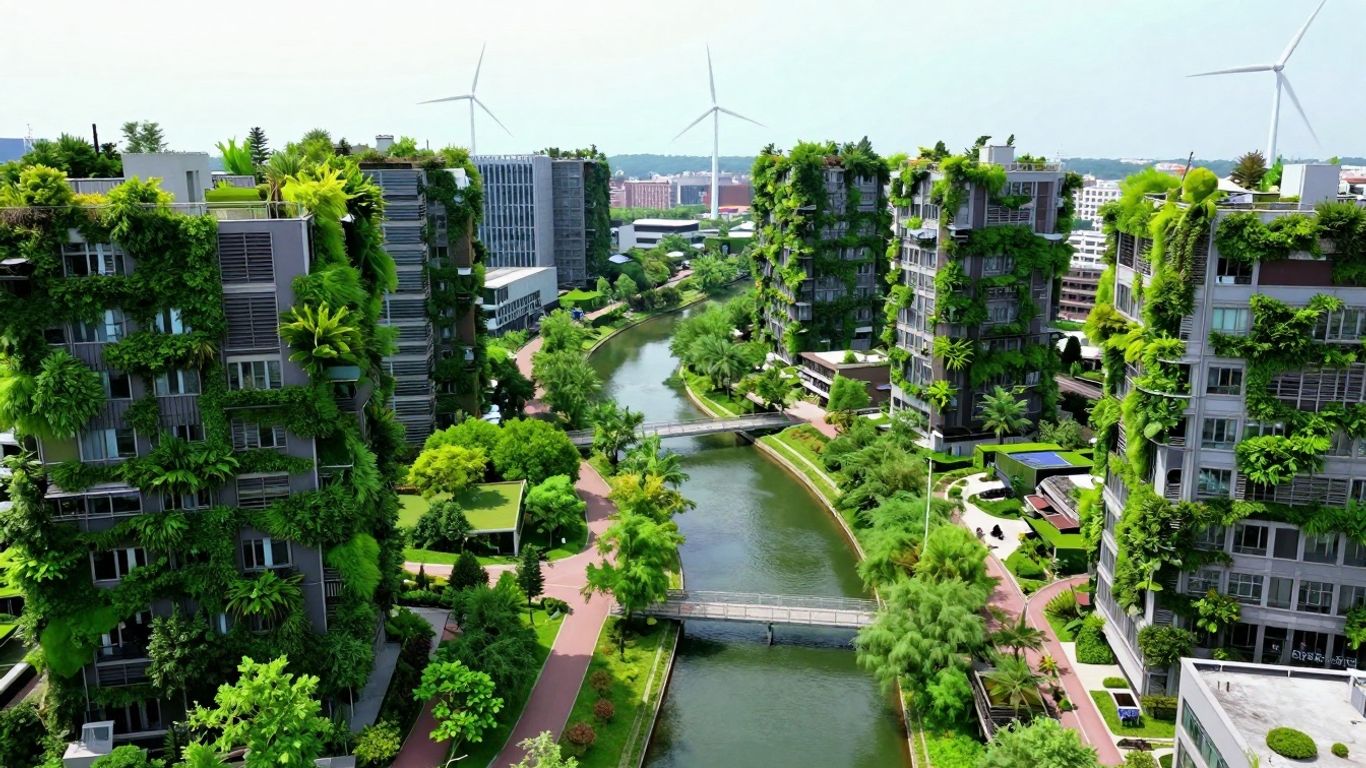
Think about it: we live on a planet with finite resources. The old way of doing things – take, make, dispose – just isn't sustainable anymore. That's where the circular economy comes in. It's all about keeping resources in use for as long as possible, getting the most value out of them, and then recovering and regenerating products and materials at the end of their service life. For your company, this means a big shift in how you think about everything from office supplies to major equipment.
Implementing Reduce, Reuse, and Recycle Strategies
This is the classic trio, and for good reason. It's the foundation of minimizing waste and, by extension, your carbon footprint.
- Reduce: This is the most impactful step. Before you even think about recycling, ask yourself: do we really need this? Can we use less of it? For example, going paperless where possible cuts down on paper production emissions and deforestation. Think about digital documents, online forms, and reducing unnecessary printing.
- Reuse: Before tossing something, see if it can be used again, either by you or someone else. This could be anything from refilling printer cartridges to finding new uses for old furniture. Even simple things like using reusable water bottles and coffee cups in the office make a difference.
- Recycle: When items can no longer be reduced or reused, recycling is the next best option. This diverts waste from landfills, where it can produce methane, a potent greenhouse gas. It also means less need to extract and process virgin materials, which is often energy-intensive.
Prioritizing Used Office Equipment
Buying new equipment, whether it's computers, desks, or chairs, has a significant environmental cost. Manufacturing these items requires energy and raw materials.
Choosing pre-owned or refurbished equipment can drastically cut down on these embedded emissions. It's not just about saving money, though that's a nice bonus. It's about giving existing products a longer life and avoiding the environmental impact of new production. Look for reputable suppliers of used office furniture and refurbished electronics. You might be surprised at the quality and selection available.
Recycling Office Supplies Effectively
Even small office supplies add up. Think about pens, paper clips, toner cartridges, and packaging.
- Set up clear recycling stations: Make it easy for employees to know what goes where. Label bins clearly for different materials like paper, plastic, metal, and electronics.
- Partner with specialized recyclers: For items like electronics (e-waste) and toner cartridges, standard recycling might not be enough. Find local services that specialize in responsibly recycling these items.
- Educate your team: Regular reminders and training on proper recycling practices can significantly improve participation and reduce contamination in recycling streams.
The circular economy isn't just a buzzword; it's a practical approach to business that aligns environmental responsibility with economic sense. By rethinking our relationship with resources, we can create a more sustainable future for our companies and the planet.
Leveraging Digital Sustainability
In today's world, a lot of our business happens online. Think about it: emails, cloud storage, video calls, websites – it all uses energy. And where does that energy come from? Often, it's from sources that add to our carbon footprint. So, looking at our digital tools and practices is a smart move for any company wanting to be more eco-friendly. It's about making our online presence work for the planet, not against it.
Selecting Sustainable Web Hosting Providers
When you're picking a place to host your company's website, it's not just about speed and uptime anymore. Some hosting companies are really stepping up their game when it comes to sustainability. They might use renewable energy to power their data centers, or they might have efficient cooling systems that use less electricity. It's worth doing a little digging to find a provider that aligns with your company's green goals. This is a pretty straightforward way to reduce your digital impact without changing how your website actually functions for users. You can often find this information on their 'About Us' or 'Sustainability' pages. Choosing a green host is a good first step towards a more sustainable online operation.
Optimizing Website Energy Consumption
Even if you have a great hosting provider, your website itself can be a bit of an energy hog. Large image files, unoptimized code, and too many plugins can make pages load slower and require more processing power from servers. This means more energy used. Simple fixes can make a big difference. Think about compressing images, cleaning up your code, and removing any unnecessary features. It's like decluttering your house – making things more streamlined uses less energy. You can use online tools to check your website's performance and get suggestions for improvement. Making your website more efficient is a win-win: it's better for the environment and often leads to a better user experience too.
Utilizing Energy-Saving Device Settings
This one is about the devices your employees use every day. Laptops, desktops, monitors – they all consume power. Most devices come with built-in energy-saving features, like sleep modes or screen dimming after a period of inactivity. Making sure these are enabled across all company devices can add up to significant energy savings over time. It's a simple policy to implement: encourage everyone to set their devices to power down or sleep when not in use. You might even consider setting company-wide defaults for these settings. It's a small change in habit that contributes to a larger reduction in your company's overall energy use. For more on how technology can help, check out how digital twins can optimize construction logistics [04a4].
Making conscious choices about our digital infrastructure and habits is no longer optional for businesses aiming for sustainability. It's an integral part of a holistic approach to reducing environmental impact. From the servers that power our websites to the devices our teams use daily, every digital interaction has an energy cost. By addressing these areas proactively, companies can significantly cut down their carbon footprint and demonstrate a genuine commitment to environmental responsibility.
Developing Actionable Reduction Strategies
So, you've figured out your company's carbon footprint, which is a big step. But what do you do next? It's time to get practical and make a real plan. This isn't about making vague promises; it's about creating concrete steps that everyone can follow and that actually make a difference. The key is to turn your findings into a clear roadmap for change.
Creating Thematic Action Plans
Think of thematic action plans as focused projects within your larger sustainability goal. Instead of trying to tackle everything at once, you break it down into manageable areas. This makes the whole process less overwhelming and more effective. You'll want to identify the main themes relevant to your business, like energy use, waste, or travel. Then, dig into each theme to understand the specific issues and what solutions are out there. For example, one theme might be 'reducing office energy consumption,' and another could be 'minimizing business travel emissions.'
Setting Measurable Reduction Objectives
Once you have your themes, you need clear goals. These aren't just 'reduce emissions'; they need to be specific and measurable. For instance, instead of 'use less energy,' aim for 'reduce electricity consumption by 15% in the next 12 months.' This requires looking at your current data and setting realistic targets. It's also important to consider what resources you have available and any limitations you might face. Setting these objectives helps keep everyone focused and provides a benchmark for success. You can find great resources on setting these targets, like those from Science-Based Targets initiative.
Monitoring Progress and Adjusting Strategies
Creating a plan is only half the battle. You have to keep an eye on how things are going. This means setting up ways to track your progress regularly. Are you hitting those measurable objectives you set? If you're falling short, don't just ignore it. You need to figure out why and be ready to tweak your plan. Maybe a certain initiative isn't working as well as you thought, or perhaps new opportunities have come up. Being flexible and willing to adjust your strategy is just as important as the initial planning. It's an ongoing process, not a one-time fix.
A company's carbon competitiveness depends a lot on its suppliers. Getting them on board with your emission reduction goals can have a big positive impact on your overall footprint and create a stronger business relationship for everyone involved.
Ready to create a plan that actually works for cutting down your impact? We can help you figure out the best steps to take. Let's make a real difference together. Visit our website to learn more about how we can help you build effective reduction strategies.
Wrapping It Up
So, we've talked about a bunch of ways your company can start cutting down on its carbon footprint. It might seem like a lot at first, but remember, you don't have to do everything at once. The key is to start somewhere, maybe by figuring out where your biggest emissions are coming from. Once you have that info, you can pick a few things to tackle first. Making these changes isn't just good for the planet; it can actually save your business money and make customers happy too. It’s a win-win, really. Just keep at it, and your company can make a real difference.
Frequently Asked Questions
What exactly is a company's carbon footprint?
Think of a company's carbon footprint as the total amount of greenhouse gases, like carbon dioxide, that are released into the air because of its activities. It's like the 'mark' a company leaves on the environment. Everything from powering computers to shipping products adds to this mark.
Why should my company bother reducing its carbon footprint?
Reducing your carbon footprint is good for the planet, helping to fight climate change. Plus, customers increasingly like businesses that care about the environment. It can also save your company money on energy and resources, and make your brand look better.
Where do I even start with reducing emissions?
The first step is to figure out how big your current carbon footprint is. This is like taking a 'before' picture. Once you know where your biggest emissions are coming from, you can make a plan to tackle them, like switching to cleaner energy or using less stuff.
How can we make our office more energy-efficient?
Simple changes can make a big difference! Switch to LED lights and turn them off when not in use. Use appliances with good energy ratings. Adjusting the thermostat a little lower can also save a lot of energy. Making the most of natural light helps too.
What role does our supply chain play in our carbon footprint?
Your suppliers can have a huge impact! If they use methods that create a lot of greenhouse gases, it adds to your company's footprint. Choosing suppliers who are eco-friendly or have certifications for sustainability can significantly lower your overall impact.
Are virtual meetings really better for the environment?
Yes, they really can be! When people don't have to travel for meetings or events, it cuts down on a major source of emissions. This means less pollution from cars and planes, and your company can also save on travel costs.