
Demystifying What Are Greenhouse Gases: A Comprehensive Guide
So, what exactly are greenhouse gases? It's a term we hear a lot, especially when folks talk about climate change. Basically, these are gases floating around in our atmosphere that trap heat, kind of like the glass roof of a greenhouse. This natural process keeps our planet warm enough for life. But when we add too many of these gases, things heat up more than they should. This guide will break down what these gases are, where they come from, and how we keep track of them, especially for businesses.
Key Takeaways
- Greenhouse gases (GHGs) are atmospheric gases that trap heat, warming the planet. Key examples include carbon dioxide (CO2), methane (CH4), and nitrous oxide (N2O).
- GHG emissions are typically categorized into three scopes: Scope 1 (direct emissions from owned sources), Scope 2 (indirect emissions from purchased energy), and Scope 3 (all other indirect emissions in the value chain).
- GHG accounting is the process of measuring and reporting a company's total GHG emissions, helping businesses understand and manage their environmental impact.
- GHG accounting is broader than carbon accounting, as it includes six major greenhouse gases, not just carbon dioxide, and considers emission sinks and the full life cycle of products or services.
- Effectively managing GHG emissions involves setting clear boundaries, collecting accurate data, estimating emissions, reporting transparently, and continuously working to improve reduction strategies.
Understanding What Are Greenhouse Gases
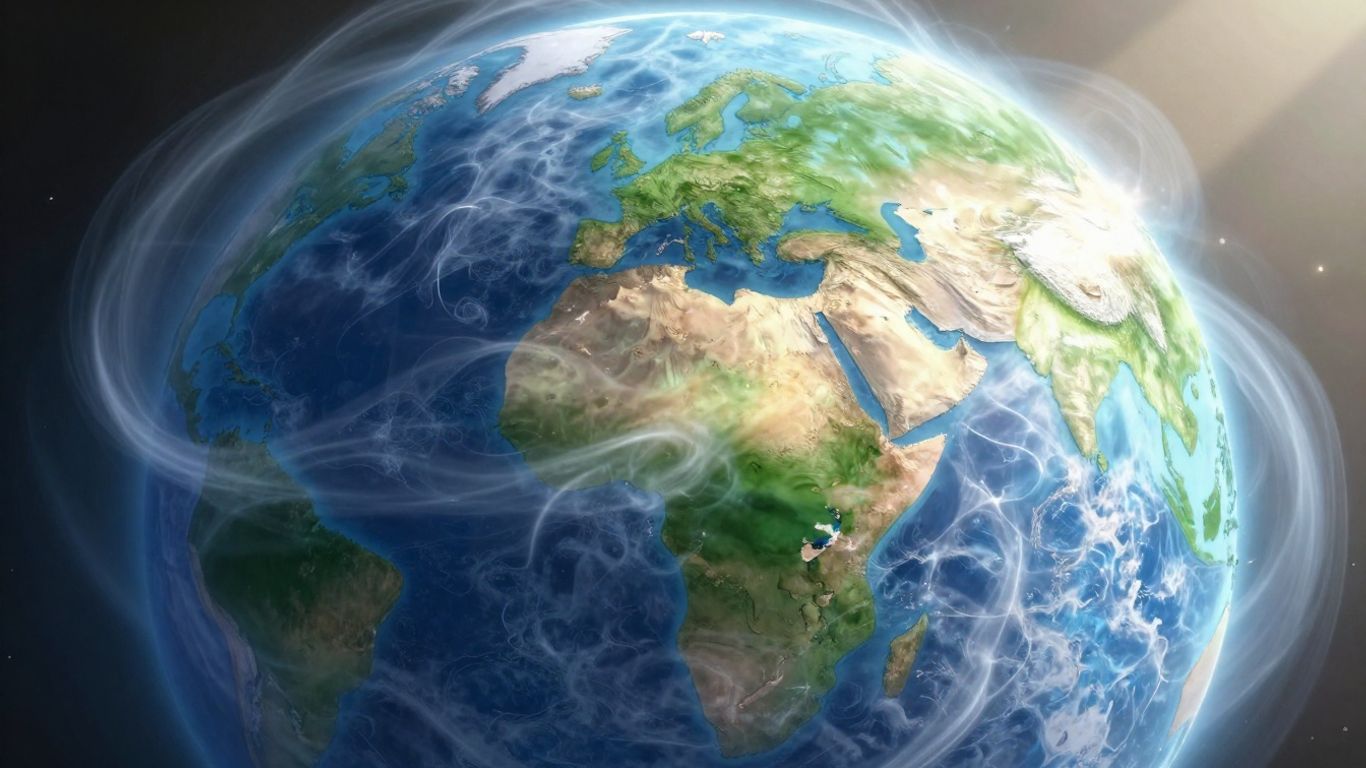
So, what exactly are these "greenhouse gases" everyone's talking about? Think of them like a blanket for our planet. Certain gases in the atmosphere trap heat from the sun, keeping Earth warm enough for us to live. This is the natural greenhouse effect, and it's a good thing! Without it, our planet would be a frozen ice ball. The problem arises when we add too many of these gases to the atmosphere, making that blanket thicker and trapping too much heat, leading to global warming.
Defining Greenhouse Gases
Greenhouse gases (GHGs) are atmospheric gases that absorb and emit radiant energy within the thermal infrared range. This process is the fundamental cause of the greenhouse effect. While naturally occurring GHGs have always kept Earth habitable, human activities have significantly increased their concentration, intensifying the warming effect. These gases don't just stay put; they mix throughout the atmosphere, meaning emissions from one place affect the entire planet.
Key Greenhouse Gases and Their Impact
While there are many greenhouse gases, a few are particularly significant due to their abundance and warming potential. These are the usual suspects you'll hear about:
- Carbon Dioxide (CO2): The most common GHG, primarily released from burning fossil fuels (coal, oil, and natural gas) for energy, transportation, and industrial processes. It also comes from deforestation.
- Methane (CH4): Released from sources like livestock digestion, natural gas leaks, landfills, and rice cultivation. Methane is more potent than CO2 over shorter periods.
- Nitrous Oxide (N2O): Emitted from agricultural and industrial activities, as well as during the combustion of fossil fuels and solid waste. It's also a powerful warming gas.
- Fluorinated Gases (HFCs, PFCs, SF6, NF3): These are synthetic gases used in various industrial applications, like refrigeration and electronics manufacturing. They are extremely potent and can last in the atmosphere for a very long time.
The Greenhouse Effect Explained
Imagine the Earth is like a car parked in the sun. Sunlight (shortwave radiation) passes through the car's windows and warms the interior. The seats and dashboard then radiate heat (longwave radiation). However, the windows don't let all of this heat escape easily; they trap some of it inside, making the car hotter.
In a similar way, Earth's atmosphere acts like the car windows. Solar radiation reaches the Earth's surface, warming it. The Earth then radiates heat back towards space. Greenhouse gases in the atmosphere absorb some of this outgoing heat and re-emit it in all directions, including back towards the Earth's surface. This process keeps the planet warmer than it would otherwise be. The issue isn't the greenhouse effect itself, but the enhancement of this effect due to increased GHG concentrations.
The balance of incoming solar radiation and outgoing infrared radiation dictates Earth's temperature. When greenhouse gas concentrations rise, more outgoing heat is trapped, leading to a gradual increase in global average temperatures.
Categorizing Greenhouse Gas Emissions
So, we've talked about what greenhouse gases are in general. Now, let's break down where these emissions actually come from for a business. It's not just about what happens inside your office walls; it's a much bigger picture. The Greenhouse Gas Protocol, which is pretty much the go-to standard for this stuff, divides emissions into three main categories, or 'scopes'. Understanding these scopes helps companies figure out exactly where their impact lies and what they can do about it.
Scope 1: Direct Emissions
This is the most straightforward category. Scope 1 covers all the greenhouse gases that come directly from sources your company owns or controls. Think about the company cars driving around, the furnaces heating your building, or any industrial processes happening on-site. If you burn fuel directly, that's Scope 1. It's your direct footprint, so to speak.
- Emissions from company-owned vehicles.
- Emissions from on-site fuel combustion (boilers, furnaces).
- Emissions from industrial processes.
Scope 2: Indirect Emissions from Purchased Energy
Scope 2 deals with the emissions that result from the electricity, steam, heating, or cooling that your company buys. Even though the emissions aren't happening at your facility, they're generated elsewhere to power your operations. So, if your office uses electricity from the grid, the emissions from the power plant generating that electricity fall into Scope 2. It's an indirect but significant part of your impact.
Scope 3: Value Chain Emissions
This is where things get a bit more complicated, and honestly, a lot bigger. Scope 3 includes all the other indirect emissions that happen as a result of your company's activities, but from sources you don't own or control. This covers your entire value chain, both upstream (suppliers) and downstream (customers). It's a huge category and often makes up the largest portion of a company's total emissions. We're talking about things like:
- Emissions from producing the raw materials you buy.
- Transportation of goods, both to you and from you to your customers.
- Employee commutes and business travel.
- How your products are used and disposed of after sale.
- Waste generated from your operations.
Scope 3 emissions are often the hardest to measure because they involve so many different parties and activities outside of a company's direct control. However, they are also where some of the biggest opportunities for reduction can be found, especially when working with suppliers and engaging with customers.
The Role of Greenhouse Gas Accounting
So, you've heard about greenhouse gases and the greenhouse effect, and now you're wondering how businesses actually keep track of all this stuff. That's where greenhouse gas accounting comes in. Think of it as the system that helps companies measure and report their impact on the atmosphere. It's not just about guessing; it's about putting numbers to emissions so you know where you stand.
What is Greenhouse Gas Accounting?
Basically, greenhouse gas (GHG) accounting is the process of quantifying and reporting the estimated amount of GHGs a company releases. This includes everything from the fuel burned in company vehicles to the electricity used in the office. It's the backbone of understanding and managing a company's environmental footprint. It helps organizations get a clear picture of their emissions, which is the first step toward reducing them. This structured approach is becoming standard practice for businesses looking to be more responsible.
Benefits of Greenhouse Gas Accounting for Businesses
Why bother with all this accounting? Well, there are some pretty good reasons. For starters, it helps you identify where your biggest emission sources are. Maybe it's your manufacturing process, or perhaps it's the transportation of your goods. Knowing this lets you focus your reduction efforts where they'll have the most impact. It also makes reporting easier, especially if you need to comply with regulations or meet investor expectations. Plus, it can actually save you money in the long run by highlighting inefficiencies. For example, reducing energy consumption directly lowers utility bills.
Here are a few key benefits:
- Identify Emission Hotspots: Pinpoint the areas within your operations that contribute most to your GHG output.
- Inform Reduction Strategies: Develop targeted plans to cut emissions based on accurate data.
- Enhance Transparency: Provide clear, verifiable information to stakeholders, customers, and regulators.
- Improve Efficiency: Discover opportunities to reduce waste and energy use, leading to cost savings.
- Meet Market Demands: Satisfy the growing expectation from consumers and investors for sustainable business practices.
Measuring and Monitoring Emissions
Getting started with GHG accounting involves a few steps. You first need to define what's included in your accounting – this is often referred to as setting your organizational boundaries. Then comes the data collection. This can involve gathering information on energy bills, fuel consumption, travel records, and waste disposal. Once you have the data, you use specific calculation methods and emission factors to convert these activities into GHG emissions. The GHG Protocol is a widely recognized standard that provides guidance on how to do this accurately. It's an ongoing process, not a one-time task; regular monitoring helps you track progress and make adjustments as needed.
Keeping track of emissions isn't just about ticking boxes. It's about building a foundation for real change. Without good data, any efforts to reduce your environmental impact are just shots in the dark. This accounting process gives you the map you need to navigate towards a more sustainable future.
Distinguishing Between Carbon and GHG Accounting
You might hear people talking about "carbon accounting" and "GHG accounting" like they're the same thing, and honestly, it's easy to get them mixed up. But there's a pretty important difference. Think of GHG accounting as the bigger, more thorough picture. Carbon accounting usually just focuses on carbon dioxide (CO2) emissions. It's like looking at just one color in a whole rainbow.
GHG accounting, on the other hand, is more inclusive. It looks at all the major greenhouse gases that contribute to warming the planet. We're talking about more than just CO2. It includes gases like methane (CH4), nitrous oxide (N2O), and some of the more technical ones like hydrofluorocarbons (HFCs), perfluorocarbons (PFCs), and sulfur hexafluoride (SF6).
Carbon Accounting vs. GHG Accounting
So, what's the real breakdown? Carbon accounting is often a narrower view, typically zeroing in on CO2 emissions from a specific project or process. It's useful, but it doesn't tell the whole story about a company's total impact. GHG accounting, however, aims for a more complete assessment. It considers not only the gases released but also any natural "sinks" – like forests – that can absorb those emissions. It also takes a broader look at the entire life cycle of a product or service, from raw materials to disposal.
The Six Major Greenhouse Gases Accounted For
GHG accounting keeps track of six main gases that really matter when we talk about climate change:
- Carbon Dioxide (CO2)
- Methane (CH4)
- Nitrous Oxide (N2O)
- Hydrofluorocarbons (HFCs)
- Perfluorocarbons (PFCs)
- Sulphur Hexafluoride (SF6)
This wider net helps businesses get a more accurate understanding of their environmental footprint.
Considering Emission Sinks and Life Cycles
Beyond just counting what goes up into the atmosphere, GHG accounting also looks at what can help bring it down. This includes things like reforestation projects or other natural processes that pull greenhouse gases out of the air. It's about the balance. Plus, it encourages a look at the entire journey of a product or service. This means thinking about where the materials came from, how it was made, how it got to the customer, and what happens to it afterward. It's a much more holistic approach than just measuring emissions from a single factory smokestack.
When we talk about accounting for greenhouse gases, it's not just about tallying up what's released. It's also about understanding the full picture, including natural processes that can help reduce those gases and the complete journey of everything a company does.
Navigating Scope 3 Emissions
Scope 3 emissions are the trickiest part of the greenhouse gas puzzle for most companies. These aren't the emissions that happen directly in your own buildings or from your own vehicles (that's Scope 1), nor are they from the electricity you buy (that's Scope 2). Instead, Scope 3 covers all the other indirect emissions that pop up across your entire value chain, both upstream and downstream.
Understanding Scope 3 Complexity
Think about everything that goes into making your product or delivering your service, and then what happens after your customer gets it. That's where Scope 3 lives. It includes things like the emissions from extracting raw materials, manufacturing components you buy, transporting goods, employee commutes, business travel, how your customers use your products, and even what happens to your product when it's thrown away. Because these emissions happen outside of your direct control, often with suppliers or customers, getting a handle on them can feel like trying to herd cats. Data collection is a big hurdle; you're relying on others to provide information, and that information isn't always readily available or consistent.
The GHG Protocol Scope 3 Standard
To bring some order to this complexity, the Greenhouse Gas Protocol developed a specific standard for Scope 3. It breaks down these indirect emissions into 15 distinct categories. This isn't just a suggestion; it's become the go-to framework for companies trying to measure and report their Scope 3 footprint. The standard helps organizations identify which categories are relevant to their business and how to go about calculating them, even if it's just an initial estimate.
Here are the 15 categories the GHG Protocol outlines:
- Purchased Goods and Services: Emissions from producing the goods and services you buy.
- Capital Goods: Emissions from producing the capital goods you purchase.
- Fuel- and Energy-Related Activities (Not Included in Scope 1 or 2): Emissions from activities related to fuel and energy that aren't directly covered by your own Scope 1 or 2.
- Upstream Transportation and Distribution: Emissions from transporting goods you buy to your facility.
- Waste Generated in Operations: Emissions from disposing of waste from your operations.
- Business Travel: Emissions from employee travel for business purposes.
- Employee Commuting: Emissions from employees traveling to and from work.
- Upstream Leased Assets: Emissions from assets your company leases but doesn't operate.
- Downstream Transportation and Distribution: Emissions from transporting your products to customers.
- Processing of Sold Products: Emissions from processing the products you sell.
- Use of Sold Products: Emissions from customers using your products.
- End-of-Life Treatment of Sold Products: Emissions from disposing of your products after use.
- Downstream Leased Assets: Emissions from assets your company leases out to others.
- Franchises: Emissions from franchises you operate.
- Investments: Emissions associated with your investments.
Upstream and Downstream Scope 3 Categories
These 15 categories are generally split into two main groups: upstream and downstream. Upstream categories cover emissions from activities that happen before your product or service reaches the customer. This includes things like your suppliers' operations and the transportation of raw materials to you. Downstream categories cover emissions that happen after your product or service has left your direct control. This often involves how your customers use your products and what happens to them at the end of their life.
For many businesses, Scope 3 emissions represent the largest chunk of their total carbon footprint. Ignoring them means you're not seeing the full picture of your environmental impact. While challenging, tackling Scope 3 is becoming increasingly important for genuine climate action and meeting stakeholder expectations.
It's important to note that not all 15 categories will be relevant for every company. A relevance test is often done first to figure out which categories have the most significant impact and are worth focusing on. You don't need perfect data to start; often, a high-level estimate is a good first step, and then you can refine it over time, especially by working with your suppliers and customers.
Strategies for Managing Greenhouse Gases

So, you've figured out what greenhouse gases are and maybe even started thinking about your company's footprint. That's a big step! But now comes the part where you actually do something about it. It's not just about knowing; it's about acting. This isn't always straightforward, and honestly, it can feel a bit overwhelming at first. Think of it like trying to organize a really messy garage – you know you need to do it, but where do you even begin?
Setting Organizational Boundaries
First things first, you need to decide what's actually in your greenhouse gas inventory. This means figuring out what parts of your business you're going to measure. Are you looking at just your main office, or does it include all your factories, warehouses, and even the vehicles you use? You'll need to map out your organizational structure and decide which entities and operations fall under your reporting umbrella. It's like drawing a line around your company's impact. This step is pretty important because it sets the stage for everything else you'll do.
Data Collection and Emission Estimation
Once you know what you're measuring, you need to gather the actual data. This is where things can get a bit detailed. You'll be looking at things like how much energy you use, how much fuel your vehicles burn, and maybe even how much waste you produce. For each activity, you'll need to find an emission factor. Think of an emission factor as a conversion rate – it tells you how much greenhouse gas is released for every unit of activity (like one gallon of gas burned or one kilowatt-hour of electricity used). It's not always easy to get perfect data, so you'll often have to make reasonable estimates.
Here's a simplified look at how it works:
- Activity Data: How much of something did you do? (e.g., miles driven, kWh of electricity used, tons of waste generated)
- Emission Factor: How much GHG per unit of activity? (e.g., kg CO2e per mile, kg CO2e per kWh)
- Calculated Emissions: Activity Data x Emission Factor = Total GHG Emissions
Reporting and Continuous Improvement
After you've crunched the numbers, you need to report what you've found. This usually means putting together a report that clearly shows your emissions, how you calculated them, and any assumptions you made. Transparency is key here; nobody likes feeling like they're being misled.
But don't stop there! The goal isn't just to measure and report once. It's about making this an ongoing process. You'll want to keep track of your emissions year after year to see if your reduction efforts are working. This means refining your data collection, looking for better emission factors, and always seeking ways to lower your impact. It's a cycle of measuring, reporting, and then improving.
Managing your greenhouse gas emissions isn't a one-off project; it's a journey. It requires a clear plan, diligent data gathering, and a commitment to getting better over time. Think of it as a marathon, not a sprint, and every step you take towards reducing your impact matters.
Want to learn more about managing greenhouse gases? We've got you covered. Discover smart ways to cut down on emissions and make a real difference. Ready to take the next step? Visit our website today to explore all the options and find the best solutions for your needs!
Wrapping Up Our Greenhouse Gas Chat
So, we've talked a lot about greenhouse gases and how they fit into the bigger picture of our planet's health. It can seem a bit complicated with all the different scopes and terms, but the main idea is pretty straightforward: understanding where these gases come from is the first step to doing something about them. Whether it's a big company or just us thinking about our own impact, knowing the facts helps us make better choices. It’s not about being perfect overnight, but about making progress, little by little. Thanks for joining me on this journey to demystify greenhouse gases!
Frequently Asked Questions
What exactly are greenhouse gases?
Think of greenhouse gases like a blanket for the Earth. They're gases in the air that trap heat, like carbon dioxide (CO2) and methane (CH4). While this is natural and keeps our planet warm enough to live on, too much of these gases can make the Earth hotter, causing climate change.
What's the difference between Scope 1, 2, and 3 emissions?
Scope 1 emissions are the ones a company directly controls, like the exhaust from its own trucks or factory smokestacks. Scope 2 emissions come from the electricity a company buys. Scope 3 emissions are all the other indirect emissions that happen because of the company's activities, like making the products it sells or how customers use them.
Why is tracking greenhouse gas emissions important for businesses?
Tracking emissions helps businesses understand their impact on the environment. It's like taking a report card for your company's environmental performance. This helps them find ways to reduce pollution, save money on energy, and show customers and investors that they care about sustainability, which is becoming really important today.
Is carbon accounting the same as greenhouse gas accounting?
Not exactly. Carbon accounting usually focuses just on carbon dioxide (CO2). Greenhouse gas (GHG) accounting is broader because it includes all the main heat-trapping gases, like methane and nitrous oxide, not just CO2. It also sometimes includes natural ways the Earth absorbs these gases, like forests.
What are Scope 3 emissions and why are they tricky?
Scope 3 emissions are the trickiest because they happen outside of a company's direct control, throughout its entire supply chain – from getting raw materials to what happens to a product after it's sold. It's hard to measure them accurately because they involve many different companies and activities.
How can a business start managing its greenhouse gas emissions?
A business can start by figuring out what to measure (setting boundaries), then collecting information about its energy use and other activities. Using this data, they can estimate their emissions. After that, they can create a plan to reduce them, maybe by using less energy, switching to cleaner power, or working with suppliers to be more eco-friendly. Reporting their progress is also key.