
Deciphering the Difference: Net Zero vs. Carbon Neutral Explained

Navigating the world of climate goals can be confusing. Here are the main points to remember about net zero and carbon neutral.
Key Takeaways
- Carbon neutral means balancing out the CO2 you release with an equal amount removed. Think of it as an accounting trick for carbon.
- Net zero goes further. It means balancing ALL greenhouse gases, not just CO2, by reducing them drastically and removing any leftovers.
- Carbon neutrality often relies heavily on buying carbon offsets, which can be a shortcut.
- Net zero prioritizes cutting emissions at the source first, then removing what remains. Offsets are a last resort.
- Net zero is generally seen as the stronger, more comprehensive approach to tackling climate change.
Understanding Net Zero vs Carbon Neutral
So, you've probably heard the terms "net zero" and "carbon neutral" thrown around a lot lately, especially when people talk about climate change. It's easy to get them mixed up because, honestly, they sound pretty similar, right? Both are about trying to balance out the greenhouse gases we put into the air. But there are some pretty important differences in what they actually mean and how you get there.
Defining The Core Concepts
Let's break it down. Carbon neutrality basically means that for every bit of greenhouse gas a company or organization emits, they remove an equal amount from the atmosphere. Think of it like a scale: you add something, but then you take an equal amount away to keep it balanced. This is often achieved by buying "carbon offsets," which are like credits for projects that reduce or capture carbon elsewhere, like planting trees or investing in renewable energy.
Net zero, on the other hand, is a bit more rigorous. It means reaching a point where the amount of greenhouse gases added to the atmosphere is zero. This isn't just about balancing things out with offsets; it's about drastically cutting down your own emissions first and foremost. Any remaining emissions that are super hard to get rid of can then be balanced out, but the main focus is on reducing them as much as humanly possible. It's about stopping the addition of new greenhouse gases altogether.
Common Ground: Balancing Emissions
Both terms are aiming for the same big picture goal: to stop adding to the problem of climate change. They both acknowledge that human activities release greenhouse gases and that we need to do something about it. The shared idea is that we need to account for our emissions and find ways to counteract them. Whether it's through reducing what we emit or taking it out of the air, the ultimate aim is to stop making the climate situation worse. This shared objective is why the terms get conflated so easily.
The Crucial Distinction
The main difference really comes down to the how and the what. Carbon neutrality can sometimes be achieved more easily by just purchasing offsets. It's like saying, "I'll pay someone else to clean up my mess." Net zero, however, demands that you clean up your own mess first. It prioritizes deep emission reductions within your own operations and supply chain. It's a more proactive and often more challenging path. For instance, a company aiming for net zero carbon by 2026 would focus heavily on internal changes before considering offsets for any unavoidable emissions. Carbon neutrality, while a good step, might not require that same level of internal overhaul.
The Scope Of Emissions Addressed
When we talk about going green, it's easy to get lost in the jargon. But understanding what emissions are actually being counted is super important. It's not just about one type of gas, and different goals tackle this in different ways.
Carbon Neutrality's Focus On CO2
Traditionally, when a company or organization claims to be "carbon neutral," they're primarily talking about carbon dioxide (CO2). This is the big one, the most common greenhouse gas we hear about, largely from burning fossil fuels. Think of it as the main character in the climate change story. Carbon neutrality often means that the amount of CO2 released into the atmosphere is balanced out by an equivalent amount being removed or offset. This is a good start, but it doesn't always look at the whole picture.
Net Zero's Broader Greenhouse Gas Approach
Net zero, on the other hand, takes a more expansive view. It aims to reduce all greenhouse gas emissions, not just CO2. This includes gases like methane (CH4), nitrous oxide (N2O), and fluorinated gases, which can be much more potent than CO2, even if they're present in smaller amounts. So, while carbon neutral might focus on balancing out CO2, net zero is about balancing out the entire basket of greenhouse gases that contribute to warming. This broader scope is why many see net zero as a more robust target for tackling climate change.
Addressing All Sectors And Gases
Achieving net zero requires a deep look across an entire organization's operations and supply chain. It means not only cutting direct emissions from things like company vehicles or factories but also indirect emissions from the energy you buy, the materials you use, and even how your products are used and disposed of. This comprehensive approach is laid out in frameworks like the Greenhouse Gas Protocol, which helps businesses and governments measure and manage their emissions accurately. It's about accounting for every bit of warming potential, from the farm that grows your ingredients to the electricity powering your office.
- Direct Emissions (Scope 1): Emissions from sources owned or controlled by the company (e.g., burning fuel in boilers, company cars).
- Indirect Emissions from Purchased Energy (Scope 2): Emissions from the generation of electricity, heat, or steam purchased by the company.
- Other Indirect Emissions (Scope 3): All other indirect emissions that occur in the company's value chain, both upstream and downstream (e.g., business travel, waste disposal, purchased goods and services, use of sold products).
The distinction between focusing solely on CO2 and addressing all greenhouse gases is a significant one. It reflects a growing understanding of the complex ways human activities impact the climate and the need for more thorough accounting to make meaningful progress.
Methods For Achieving Balance
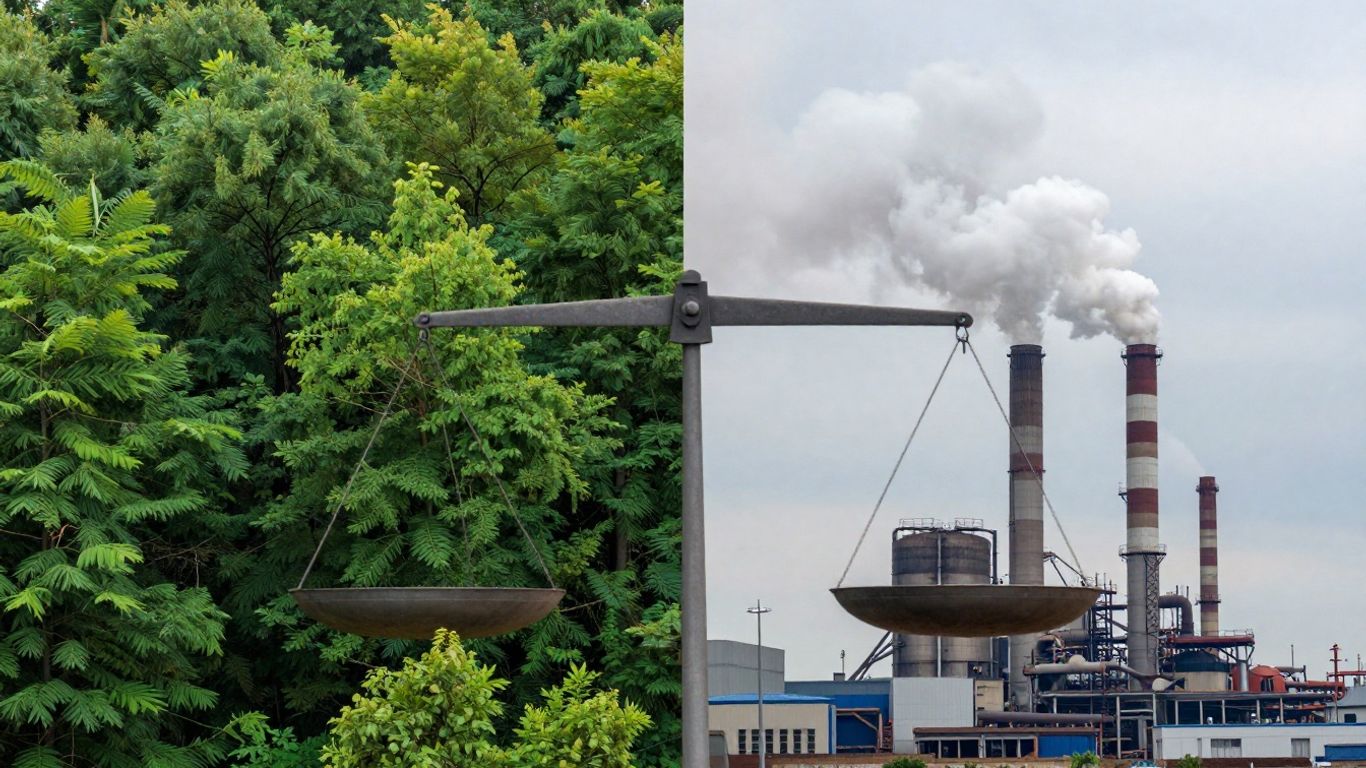
So, how do companies and organizations actually get to this point of balancing their emissions? It's not just a magic trick; there are concrete steps involved. Think of it like managing your budget – you need to know what's coming in, what's going out, and then make adjustments. For climate goals, this means looking at emissions reduction, offsets, and sometimes even active removal.
The Role Of Carbon Offsets
Carbon offsets are basically like paying someone else to reduce or remove emissions on your behalf. When a company can't cut its own emissions further, it can buy credits from projects that are actively reducing greenhouse gases elsewhere. These projects might involve planting trees, investing in renewable energy in developing countries, or capturing methane from landfills. It's a way to compensate for the emissions that are hard to eliminate entirely. However, it's important to know that not all offsets are created equal, and there's been a lot of discussion about their effectiveness and how to make sure they're legitimate. Relying too heavily on offsets can be problematic because they can be subject to fraud, or double-counting might not address the root causes of emissions. Therefore, it is generally considered more desirable to focus on reducing emissions at their source rather than relying solely on offsets. You can learn more about sustainable energy solutions.
Prioritizing Emission Reduction
This is where the real heavy lifting happens. Before even thinking about offsets, the primary goal should always be to cut down on the emissions produced in the first place. This involves a deep dive into a company's operations, supply chain, and overall business model. Are there ways to use less energy? Can renewable energy sources be adopted? Are there more efficient transportation methods? For example, a company might switch to electric vehicles for its fleet or invest in energy-efficient lighting and machinery. The idea is to shrink the carbon footprint as much as possible from the inside out. This approach is often seen as more robust and credible than simply buying offsets.
Active Carbon Removal Strategies
Beyond just reducing emissions and offsetting, there's a growing focus on actively removing carbon dioxide from the atmosphere. This is a more direct approach to cleaning up the air. Think of technologies that capture CO2 directly from industrial sources or even from the ambient air. Another method involves enhancing natural carbon sinks, like restoring forests or improving soil health, which naturally absorb CO2. These strategies are often more complex and can be more expensive, but they represent a frontier in climate action, aiming to reverse some of the damage already done. It's about not just stopping the pollution but actively cleaning it up.
The journey to balancing emissions involves a multi-pronged strategy. While carbon offsets offer a way to compensate for unavoidable emissions, they should ideally supplement, not replace, direct emission reductions. Prioritizing internal reductions and exploring active carbon removal technologies are key to achieving genuine and lasting climate goals. Transparency in these methods is also super important so everyone knows what's really going on.
Context And Application

Governmental And Global Goals
Governments and international bodies are setting ambitious targets for emissions reduction. Think of the Paris Agreement, aiming to keep global warming well below 2 degrees Celsius. These big-picture goals trickle down, influencing national policies and international cooperation. It’s a complex dance, with countries pledging different levels of commitment based on their economic situations and historical emissions. The pressure is on for everyone to play their part.
Corporate And Business Objectives
Businesses are increasingly adopting net zero or carbon neutral goals. Why? Well, it's not just about being green. Companies are realizing that sustainability can be a real competitive edge. It helps attract customers who care about the planet and can even make a business more appealing to investors looking at environmental, social, and governance (ESG) factors. Plus, it can boost employee morale when people feel they're working for a company with a purpose. It's about building a more resilient business for the future. For those looking to formalize their emissions management skills, there are certifications available that align with international standards, like the new EP®(GHG) certification [33f6].
Consumer And Investor Expectations
Folks buying stuff and people putting money into companies are paying more attention to climate claims. If a company says it's carbon neutral, consumers want to know what that really means. Investors, especially, are digging into ESG performance. They want to see clear, honest communication about climate efforts. Confusion about terms like net zero and carbon neutral can really hurt a company's reputation. Being clear and transparent is key to building trust.
Understanding the nuances between different climate terms isn't just for scientists or policymakers. For business leaders, it's becoming a strategic advantage. Knowing how to talk about emissions, reductions, and offsets accurately helps in communicating with stakeholders, from the boardroom to the public.
Evaluating The Effectiveness
So, how do we know if these climate goals are actually doing anything? It's not always straightforward, and frankly, some methods are better than others. When companies or governments talk about being carbon neutral or reaching net zero, it's important to look beyond the headline.
Why Net Zero Is Often Preferred
While both terms aim to tackle emissions, net zero generally gets more attention these days. This is mostly because it's seen as a more ambitious and comprehensive goal. It's not just about balancing out what you emit, but about drastically cutting emissions first and then dealing with the leftovers. Think of it like cleaning your room: net zero means you put away most of your stuff and then maybe donate a few things you don't need, whereas carbon neutral might just mean shoving everything into the closet. The Greenhouse Gas Protocol provides a detailed framework that many organizations use to measure and manage their emissions, which is key to making any claim credible.
Potential Pitfalls Of Offsetting
Carbon offsets are a big part of how many companies claim to be carbon neutral. The idea is you pay for a project somewhere else that reduces or removes emissions, like planting trees or investing in renewable energy. It sounds good, right? But there are issues. Sometimes, it's hard to be sure if those offsets are really happening, if they wouldn't have happened anyway, or if they're permanent. Plus, relying too much on offsets can let companies off the hook for making real changes in their own operations. It's like saying you'll clean your room by paying someone else to clean theirs – it doesn't actually fix your mess.
Transparency In Climate Claims
This is where things get really important. For any climate claim to be taken seriously, there needs to be a lot of openness about how it was achieved. Companies should clearly state what emissions they've included, what steps they've taken to reduce them internally, and how they're using offsets or removals. Without this clarity, it's easy for claims to sound good but not actually mean much. It's like a recipe that doesn't list all the ingredients – you don't really know what you're getting. Being clear about your climate actions helps build trust with consumers and investors alike, and it's a big part of effective environmental action.
The real test of any climate commitment isn't just the final number, but the journey taken to get there. A strong focus on reducing emissions at the source, coupled with verifiable and additional offsets or removals, makes for a much more robust and trustworthy claim than simply buying credits to balance the books.
Beyond Carbon Neutrality And Net Zero
So, we've talked about carbon neutral and net zero, and how they're not quite the same thing. But the climate conversation doesn't stop there. There are even more terms out there, and honestly, it can get a little confusing trying to keep them all straight. It's like trying to sort out all the different types of recycling – paper, plastic, glass, and what about those weird little batteries?
Understanding Climate Positive
Think of climate positive as taking things a step further than net zero. If net zero means balancing out your emissions, climate positive means you're actually removing more greenhouse gases from the atmosphere than you're putting into it. It's like not just cleaning up your own mess, but also helping to clean up someone else's. Companies that claim to be climate positive are essentially aiming to have a net beneficial impact on the climate. This often involves significant investments in carbon removal technologies or large-scale reforestation projects, going above and beyond what's required for net zero.
The Concept Of Carbon Negative
This one sounds pretty dramatic, right? Carbon negative is basically the same idea as climate positive. It means that an organization's activities result in the net removal of greenhouse gases from the atmosphere. So, if a company is carbon negative, it's actively taking more carbon out of the air than it's releasing. This is the ultimate goal for many, as it directly contributes to reversing the buildup of greenhouse gases. It's a big commitment, requiring substantial efforts in emission reduction and carbon sequestration. Some might say it's the gold standard for climate action, aiming for a truly restorative effect on the planet.
Differentiating Related Terms
It's easy to get these terms mixed up, and sometimes, companies use them in ways that aren't super clear. Here's a quick rundown to help:
- Carbon Neutral: Balancing your CO2 emissions, often through offsets. It's a good start, but might not cover all greenhouse gases or the full value chain. Learn about carbon offsetting.
- Net Zero: Balancing all greenhouse gas emissions, with a strong emphasis on reducing emissions first and then removing any remaining ones. This usually includes Scope 3 emissions, which are those from your entire value chain.
- Climate Positive / Carbon Negative: Going beyond net zero by removing more greenhouse gases than you emit. This is about actively improving the climate situation.
It's important to remember that while these terms sound impressive, the real impact comes down to the actions taken. Are emissions being genuinely reduced at the source, or is it all about buying credits? Transparency is key here, and consumers and investors are getting savvier about looking past the buzzwords to see the actual climate performance.
When you see these claims, it's worth asking a few questions. For instance, how are they measuring their emissions? Are they accounting for all greenhouse gases, not just CO2? And what's the plan for actually reducing emissions, rather than just offsetting them? Understanding these nuances helps us all make better decisions, whether we're buying a product or choosing where to invest our money. The goal is to support genuine climate action, and that means looking beyond the surface-level claims. The path to a stable climate involves more than just balancing the books; it requires real change across industries and societies, and companies are increasingly setting ambitious targets to meet these challenges.
Going beyond just being carbon neutral or reaching net zero is the next big step for many businesses. It's about truly making a difference and building a sustainable future. Want to learn more about how your company can lead the way? Visit our website today to discover innovative solutions and join the movement towards a healthier planet.
Conclusion
So, while both net zero and carbon neutral are steps toward a healthier planet, net zero is the more ambitious goal. It pushes us to not just balance our emissions but to drastically cut them down and actively remove what's left. Understanding these terms helps us all make better choices, whether we're individuals, part of a business, or looking at global policies. It's about being clear about our actions and their real impact on the environment.
Frequently Asked Questions
Are net zero and carbon neutral the same thing?
Not exactly. They both aim to balance out greenhouse gas emissions, but net zero is a bigger deal. Carbon neutral usually means you balance out your carbon dioxide (CO2) by taking an equal amount out, often by buying something called offsets. Net zero means balancing out *all* greenhouse gases, and it really pushes for cutting down your own emissions first before worrying about taking stuff out.
What's the main difference in what they count?
Carbon neutral mostly cares about carbon dioxide (CO2). Net zero looks at all the gases that warm up the planet, like methane and others, not just CO2. So, net zero is a more complete picture of your impact.
How do companies become carbon neutral?
Companies often measure how much CO2 they release, then they might try to reduce it. Whatever CO2 is left, they can 'offset' it by paying for projects that remove CO2 from the air, like planting trees or investing in clean energy. It's like paying someone else to clean up your mess.
What's the main way to reach net zero?
The big idea for net zero is to cut your emissions as much as humanly possible. Think changing how you make things, using less energy, or switching to renewable power. Only after you've done all you can to reduce, do you then remove the tiny bit of emissions that are left.
Is one better than the other?
Most experts think net zero is the better goal. It's more thorough because it includes all greenhouse gases and puts a strong focus on actually cutting down pollution, not just paying to offset it. Carbon neutral can sometimes be a bit of a loophole if not done carefully.
Do these terms apply to regular people too?
Yes! While we often hear about countries and big companies using these terms, individuals can also think about their own carbon footprint. Making choices like driving less, eating less meat, or using less energy at home all help reduce your personal impact, moving you towards being more carbon neutral or net zero.