
Carbon Neutral Example: How Companies Achieve Net-Zero Emissions

Climate change is a big deal, and companies are starting to notice. It's not just about feeling good; it's about making sure businesses can keep going. Many are now aiming to be carbon neutral, meaning they balance out the greenhouse gases they put into the air. This involves cutting down on emissions where they can and then finding ways to offset what's left. We're going to look at some companies that are really trying to make this happen and what we can learn from them. It's a complex process, but seeing these examples shows it's possible.
Key Takeaways
- A company is considered carbon neutral when it balances its greenhouse gas emissions with actions that remove or offset them, often by reducing energy use, switching to renewables, or investing in offset projects.
- Emissions are typically categorized into three scopes: Scope 1 (direct emissions from owned sources), Scope 2 (emissions from purchased utilities like electricity), and Scope 3 (all other indirect emissions from the value chain).
- Leading companies like Microsoft, Ford, and Apple are setting ambitious goals for carbon neutrality, demonstrating diverse strategies across technology, automotive, and supply chain management.
- Achieving carbon neutrality involves significant challenges, particularly in accurately measuring emissions across complex global supply chains and ensuring the quality and permanence of offset projects.
- While carbon offsets play a role, the most effective strategies combine them with direct emission reductions, such as adopting renewable energy, improving efficiency, and designing more sustainable products.
Understanding Carbon Neutrality: A Framework for Action
Defining Carbon Neutrality
Carbon neutrality means balancing the greenhouse gases a company puts out with actions that remove or cancel out an equal amount. Most businesses cut what they can inside their own walls — things like reducing energy, changing processes, and switching to renewables. But reaching carbon neutral almost always means adding offsets, like supporting projects that pull carbon from the atmosphere. Even the big names don’t start with zero emissions, they just match whatever they put out by pulling or preventing the same amount elsewhere.
Carbon neutrality is often a moving target because companies find new ways to cut their emissions every year. It’s continuous: measure, reduce, offset, and repeat. Here’s a quick look at the typical steps:
- Measure all the company’s emissions (direct, indirect, and supply chain).
- Cut as much as possible — switch fuels, upgrade gear, change suppliers.
- Buy trusted offsets for anything that’s left.
- Re-measure and report regularly — always looking for places to do better.
The CarbonNeutral Protocol: A Quality Framework
The CarbonNeutral Protocol is like a playbook for any business trying to hit net-zero. It launched in 2002, and experts update it every year so companies can work with current science and policy. Think of it like a checklist but tougher — if you want people to trust your carbon neutral promise, you use this protocol or something just as strong.
What the Protocol demands:
- Accurate and honest accounting of all emissions—no skipping the hard parts.
- Only use high-quality, verified offsets.
- Keep reviewing progress and push for more real cuts, not just offsets.
- Make the data and progress public for others to see.
Following a strict protocol doesn’t just look good — it keeps companies honest and helps avoid the greenwashing trap. Getting this right builds trust with customers and investors alike.
Why Companies Pursue Carbon Neutrality Now
There’s a lot pushing companies in this direction, not just environmental concern. Carbon neutrality is a big topic right now because of:
- Government rules: New laws and regulations are cracking down on emissions. Companies that ignore them pay heavy fines or lose business.
- Customer expectations: People want cleaner goods and services, especially younger buyers who watch where every dollar goes.
- Investor demands: Big investors view climate risk as financial risk. If you look exposed, you lose out on funding.
- Lower costs: Using less energy or redesigning products often cuts expenses, too.
- Reputation: Publicly committing to net zero helps a brand stand out and stay trustworthy in a crowded market.
Setting a carbon neutral goal is no longer about looking good—it’s about staying in business as expectations and rules keep changing fast. Companies that start early are usually better prepared when new policies or sudden changes come their way.
Classifying Emissions: Scopes 1, 2, and 3
Before companies can achieve real progress on carbon neutrality, they have to get a handle on exactly where their greenhouse gas emissions are coming from. Most folks are surprised to learn that emissions get sorted into three different buckets, called Scopes 1, 2, and 3. Each of these scopes captures a unique part of a company’s carbon footprint, and tackling all three is part of the journey to net-zero.
Scope 1: Direct Emissions
Scope 1 is all about what a company puts out into the air from sources it owns or controls directly. We're talking about a factory burning natural gas to power its operations, or delivery trucks in a company’s fleet burning diesel. Leaks from cooling systems (fugitive emissions) get counted here too.
Some common examples of Scope 1 emissions:
- Burning fuel on-site—like gas heaters or boilers
- Running company-owned vehicles
- Leaks from air conditioners or refrigeration units
Managing Scope 1 is often the first step toward reducing a business’s overall carbon footprint.
Scope 2: Utility Emissions
Scope 2 covers the emissions created when a company buys electricity, steam, heating, or cooling from someone else. Even if a company’s office is powered by servers hundreds of miles away, the emissions from generating that power count here. This category gives companies an opening—shifting to renewable electricity can drastically reduce Scope 2 emissions without having to overhaul on-site operations.
- Purchased electricity for factories and offices
- Heating and cooling through district energy systems
- Outsourced steam or energy supplies
A lot of companies see quick wins here by investing in solar or wind contracts.
Scope 3: Indirect Emissions and Value Chain Challenges
Scope 3 is, frankly, the most complicated and wide-reaching category. These are all the other indirect emissions that happen across a company’s value chain, both upstream and downstream. Manufacturing of products, transportation, waste from operations, business travel, employee commutes—it all falls under Scope 3. For many companies, this is the largest chunk of their total emissions, yet the hardest to measure and manage.
Some common Scope 3 emission sources include:
- Purchased goods and services
- Transportation and distribution not owned by the company
- Product use and end-of-life treatment
- Business travel and employee commuting
It’s not just about cutting your own emissions—you have to look up and down the whole value chain to make a real impact.
For more background, you can check out this overview on emission scopes, which breaks down how companies should report and address their carbon footprint.
Leading Carbon Neutral Examples in Technology

Microsoft's Journey to Carbon Negative
Microsoft has been on a sustainability path for a while, first hitting carbon neutrality back in 2012. But they didn't stop there. Their big goal now is to be carbon negative by 2030. That means they aim to take more carbon out of the atmosphere than they put into it. It’s a pretty ambitious target, and they’re backing it up with real action.
They've put money into big projects like wind farms in Texas and solar power in Chile. Plus, they started a $1 billion fund called the Climate Innovation Fund. This fund is all about helping new technologies that can reduce carbon emissions get off the ground. It’s not just about their own operations, either. Microsoft is also building digital tools to help other businesses figure out their carbon footprint and how to lower it. This shows how a tech company can use its skills to help a whole lot of other companies become more sustainable.
Microsoft's approach highlights that achieving carbon neutrality is not just an internal goal but an opportunity to influence an entire ecosystem.
Cardano's Sustainable Blockchain Model
The world of cryptocurrency often gets a bad rap for using a ton of energy. But Cardano is trying to flip that script. As a major blockchain platform, they're making a point of being carbon neutral. Their main strategy is using something called a proof-of-stake system. This method uses way less energy compared to the older, more common way of mining cryptocurrencies.
Beyond just their energy use, the Cardano Foundation is also supporting projects that actively pull carbon out of the air. This helps to offset any emissions that might still be happening. It’s a different kind of example, showing that even industries that seem energy-hungry can find ways to operate more responsibly. They're proving that sustainability can be built into the core design of digital technologies.
Automotive Industry Carbon Neutral Strategies
The car business has a big hurdle to clear when it comes to climate change. For years, it's been all about burning gasoline. But things are changing, and major players are stepping up with plans to go carbon neutral. It's not just about making fewer cars; it's about rethinking how cars are made and what powers them.
Ford's Electric Vehicle and Renewable Energy Transition
Ford is putting a lot of money into electric vehicles (EVs). They've committed billions to developing and building EVs, aiming to get more of these cleaner cars onto the road. This is a huge shift from their old ways. Beyond just the vehicles themselves, Ford is also working on making its factories greener. They're looking to power their manufacturing plants with renewable energy sources like wind and solar. This two-pronged approach – cleaner cars and cleaner production – is key to their strategy. It shows a real effort to tackle emissions from both the tailpipe and the factory floor. The company is aiming for carbon neutrality by 2050, a goal that requires significant changes across its operations.
Apple's Comprehensive Supply Chain Approach
While not strictly an automotive company, Apple's approach to carbon neutrality offers valuable lessons for the sector, especially concerning its extensive supply chain. Apple has set a goal to be carbon neutral across its entire supply chain and product lifecycle by 2040. This means they're looking at everything from the materials used to make their products to how those products are manufactured and eventually recycled. They're pushing their suppliers to use renewable energy and are investing in projects that help remove carbon from the atmosphere. This kind of broad view, impacting every step of production, is something the automotive industry is increasingly looking at. It's about more than just the car itself; it's the entire ecosystem surrounding it. The Science Based Targets initiative is also providing frameworks for industries like automotive to set credible net-zero targets.
The automotive industry's path to carbon neutrality is complex, involving massive investments in new technologies and a complete overhaul of manufacturing processes. It requires a long-term vision that addresses direct emissions from vehicles, energy used in production, and the entire lifecycle of a car, from raw materials to end-of-life disposal.
Diverse Sector Carbon Neutral Initiatives
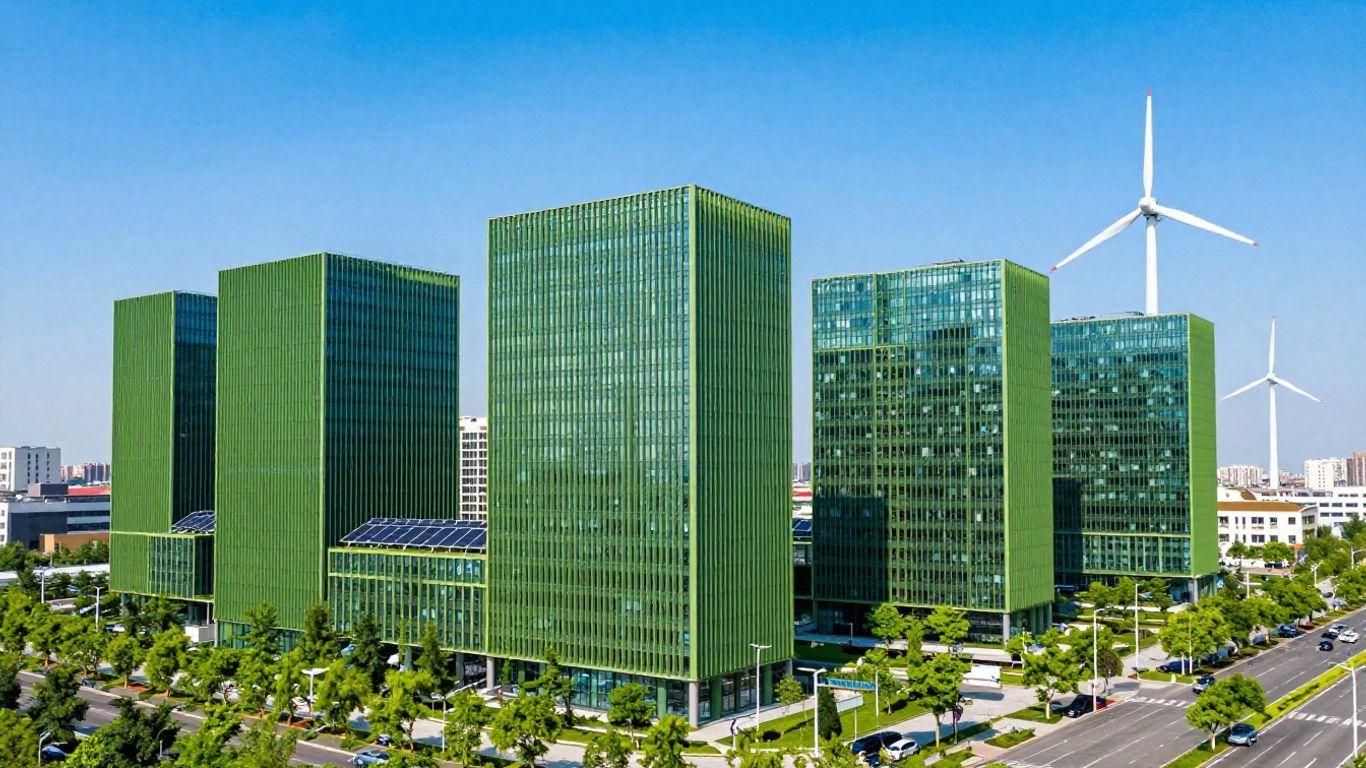
It's not just tech giants or car makers getting in on the carbon neutral action. Plenty of other industries are stepping up, showing that sustainability can fit into all sorts of business models. We're seeing some really interesting approaches across the board.
Amazon's Logistics and Reforestation Efforts
Amazon, with its massive global delivery network, faces a huge challenge in cutting emissions. They've made a big promise to be carbon neutral by 2040. A big part of their plan involves electrifying their delivery fleet – we're talking 100,000 electric vans hitting the road. They're also investing heavily in renewable energy, like building solar farms, and have put aside $100 million specifically for planting trees around the world. Plus, they've launched a "Climate Pledge Friendly" label to help shoppers spot greener products.
Coca-Cola HBC's Sustainable Beverage Manufacturing
When you think about making drinks, you might not immediately think about carbon footprints, but it's a big deal. Coca-Cola HBC is working on making their factories more sustainable. This includes using more renewable energy to power their operations and finding ways to reduce waste throughout their production process. They're also looking at how their packaging impacts the environment and trying to use more recycled materials.
Sasol's Oil and Gas Decarbonization Plan
For companies in the oil and gas sector, going carbon neutral is a particularly tough nut to crack. Sasol, for instance, is a major player in this industry and is developing plans to reduce its emissions. This involves looking at ways to make their existing operations more efficient and exploring new technologies that can capture carbon or use cleaner energy sources. It's a complex path, but they're committed to finding solutions.
Swire Properties' Real Estate Net-Zero Commitment
Even the world of property development and management is getting involved. Swire Properties is aiming for net-zero emissions in its buildings. This means focusing on energy efficiency in their designs, using sustainable materials during construction, and managing their properties in a way that minimizes their environmental impact. They're also looking at how to power their buildings with clean energy. Their commitment shows that the built environment can also be a part of the climate solution.
These examples highlight that no matter the industry, companies are finding unique ways to tackle their emissions. It's about looking at every part of the business, from the factory floor to the delivery truck, and figuring out how to do things better for the planet.
Achieving Carbon Neutrality: Benefits and Challenges
So, you're thinking about making your company carbon neutral. That's a big step, and honestly, it's not always a walk in the park. But the upsides can be pretty significant. For starters, your brand image gets a serious boost. People, especially younger folks, are really paying attention to which companies are doing their part for the planet. Plus, when you start looking at ways to cut emissions, you often find ways to be more efficient, which can actually save you money on energy bills in the long run. Investors are also starting to notice, favoring businesses that show they're thinking about the future and aren't just ignoring climate risks.
It's not all smooth sailing, though. Figuring out exactly how much carbon your company is responsible for can be a real headache, especially if you have a lot of suppliers or operate in different countries. It's like trying to track down every single ingredient in a giant, complicated recipe. And then there's the whole issue of carbon offsets. While they can be part of the solution, relying on them too much without actually cutting your own emissions is a bit like putting a band-aid on a broken bone. The real goal is to combine genuine emission reductions with smart offsetting strategies.
Here are some of the good things that come with going carbon neutral:
- Better Brand Reputation: Customers notice and appreciate companies that are environmentally responsible.
- Cost Savings: Often, reducing energy use and waste leads to lower operating expenses.
- Investor Appeal: More investors are looking for sustainable businesses to put their money into.
- Future-Proofing: Adapting to climate change now makes your business more resilient down the road.
But, you'll likely run into some hurdles:
- Measurement Complexity: Accurately calculating your total carbon footprint, especially Scope 3 emissions, is tough.
- Offset Quality Concerns: Not all carbon offsets are created equal, and some might not provide lasting benefits.
- Implementation Costs: Switching to renewable energy or redesigning processes can require upfront investment.
The path to carbon neutrality isn't just about meeting a target; it's about fundamentally rethinking how a business operates. It requires a clear-eyed view of both the opportunities and the difficulties involved, pushing for real change rather than just symbolic gestures. This commitment, when done right, can lead to a more sustainable and successful future for the company.
Becoming carbon neutral is a big goal with many rewards, but it's not always easy. Businesses face hurdles like figuring out the best ways to cut down on pollution and finding the money to make changes. However, the advantages, like a better brand image and saving money in the long run, are worth the effort. Want to learn more about how your company can start this journey? Visit our website today to discover the steps and solutions available.
Wrapping It Up
So, we've seen how companies like Microsoft, Ford, and Apple are really stepping up to cut their carbon footprint. It's not just about making big promises; it's about putting in the work, whether that's investing in electric vehicles, switching to clean energy, or rethinking how products are made and used. While tackling emissions, especially those tricky Scope 3 ones, is a huge challenge, these examples show it's definitely doable. It proves that going green isn't just good for the planet, it makes good business sense too. The journey to net-zero is ongoing, and seeing these companies lead the way gives us hope for a more sustainable future.
Frequently Asked Questions
What does it mean for a company to be carbon neutral?
When a company is carbon neutral, it means they balance out all the greenhouse gases they release into the air with actions that take those gases away or prevent them from being released in the first place. Think of it like balancing a scale: for every bit of pollution they put out, they do something to take an equal amount out.
Why are companies trying to become carbon neutral now?
Many companies are working towards being carbon neutral because people are more aware of climate change and its effects. Governments are making stricter rules, customers prefer to buy from eco-friendly businesses, and investors see climate risks as financial risks. Plus, many green solutions can actually save money in the long run.
What are Scope 1, 2, and 3 emissions?
Emissions are grouped into three scopes. Scope 1 covers gases from sources a company directly owns, like company cars or factory furnaces. Scope 2 includes emissions from the electricity, heat, or cooling a company buys. Scope 3 is the trickiest, covering all other indirect emissions, such as those from making the products a company sells or from employees traveling to work.
Are there specific rules for companies to follow to be carbon neutral?
Yes, there are frameworks like the CarbonNeutral Protocol. This is a set of guidelines that helps businesses measure their emissions accurately and make sure their efforts to reduce or offset them are of high quality and truly make a difference.
What are some real-world examples of companies going carbon neutral?
Many big companies are leading the way! Microsoft aims to be carbon negative, meaning it removes more carbon than it emits. Ford is investing heavily in electric cars and cleaner factories. Apple is working to make its entire product lifecycle carbon neutral. Amazon is using electric delivery trucks and supporting forests. Even tech companies like Cardano are finding ways to be more sustainable.
What are the main benefits and difficulties for companies aiming for carbon neutrality?
The benefits include a better public image, saving money through more efficient energy use, attracting investors, and being better prepared for future climate challenges. However, it's hard to measure all emissions accurately, especially in complex supply chains, and sometimes companies rely too much on offsets instead of making real cuts to their pollution.