
Achieving a Carbon Negative Future: Innovations and Strategies

Thinking about a future where we actually pull more carbon out of the air than we put in? It sounds like a big deal, and honestly, it is. Getting to a carbon negative state isn't just about stopping pollution; it's about actively cleaning things up. This shift means big changes for how industries work, how our cities are built, and even what we do every day. It's a massive undertaking, but it's necessary if we want to tackle climate change head-on and create a healthier planet for everyone.
Key Takeaways
- Industry has a huge part to play by switching to clean energy, making products smarter, and using land better. Companies that don't adapt will get left behind.
- New technologies like capturing carbon, using plants for energy with capture, and pulling CO2 straight from the air are vital tools for becoming carbon negative.
- Cities can help a lot by building green, using local power sources, and making transportation electric.
- Governments need to set rules, put a price on carbon, and support new green ideas to make carbon negative goals happen.
- Nature itself offers solutions, like planting trees, improving soil, and restoring wet areas, which help remove carbon from the atmosphere.
Industry's Pivotal Role in a Carbon-Negative Economy
Okay, so let's talk about industry. When we're aiming for a future where we actually pull more carbon out of the atmosphere than we put in, businesses are going to be front and center. It’s not just about following rules; it’s about staying relevant. Consumers are paying more attention, and governments are getting serious about emissions. Companies that don't get on board with cleaner ways of doing things are going to get left behind, plain and simple.
Shifting Energy Consumption Towards Renewables
This is a big one. For ages, industry has relied heavily on fossil fuels to power everything. To move towards carbon negativity, that has to change. We're talking about a major switch to sources like solar, wind, and geothermal. It's not just about installing a few solar panels; it's a fundamental shift in how factories and operations get their energy. This means rethinking energy contracts, investing in on-site renewable generation, and maybe even participating in local energy grids powered by clean sources. It’s a complex puzzle, but absolutely necessary.
Transforming Manufacturing and Supply Chains
Manufacturing processes themselves often create a lot of emissions. Think about the materials used, the energy consumed in production, and the waste generated. Companies need to look at every step. This could mean redesigning products to use less material or materials that have a lower carbon footprint. It also involves looking at the entire supply chain – how goods are transported, where they come from, and how they're packaged. Reducing waste throughout this chain is key. We're seeing a move towards more circular economy models, where materials are reused and recycled rather than thrown away.
Embracing Regenerative Land Use Practices
This might seem a bit out of left field for some industries, but it's really important, especially for those connected to agriculture or forestry. Regenerative practices focus on improving the health of the soil and ecosystems. Things like no-till farming, cover cropping, and managed grazing can actually pull carbon out of the atmosphere and store it in the ground. For companies involved in these sectors, adopting these methods isn't just good for the planet; it can lead to healthier land, better yields over time, and a more resilient supply of raw materials. It's about working with nature, not against it.
Investing in Negative Emissions Systems
Beyond just reducing emissions, we need to actively remove existing carbon dioxide from the atmosphere. This is where negative emissions technologies (NETs) come in. Industry has a role to play here, both by investing in and deploying these technologies. This could include things like direct air capture machines, or supporting projects that enhance natural carbon sinks like forests and oceans. It's a newer area, but one that will become increasingly vital as we try to reverse the damage already done. The future economy will likely involve a mix of emission reduction and active carbon removal.
The transition to a carbon-negative economy requires a deep look at how businesses operate, from the energy they consume to the materials they use and the waste they produce. It's a challenging but necessary evolution.
Technological Innovations Driving Carbon Negativity
So, we've talked about industries and cities, but what about the actual tech making this carbon-negative future possible? It's not just about using less fossil fuel; it's about actively pulling carbon out of the air. This is where some pretty cool science comes into play.
Advancements in Carbon Capture and Storage
Carbon capture and storage (CCS) is a big one. Basically, it's about grabbing CO2 emissions right where they're produced, like from a power plant or a factory, and then storing it away so it doesn't get into the atmosphere. Think of it like a filter for industrial exhaust. The tech is getting better, making it more efficient and less costly. The goal is to make sure that the captured carbon stays put, usually deep underground in geological formations. While there are still questions about long-term storage and potential leakage, studies suggest that if done right, the risk of significant leakage is pretty low.
The Potential of Bioenergy with Carbon Capture
This one sounds a bit complicated, but it's really about using plants to capture carbon and then doing something smart with them. You grow biomass (plants), which sucks up CO2. Then, you use that biomass for energy, and crucially, you capture the CO2 released during the energy production process. This captured CO2 is then stored. It's a way to create energy while actually removing carbon from the atmosphere. It's a promising area, but scaling it up and making sure the whole process is truly carbon negative is key.
Harnessing Direct Air Capture Technologies
Direct Air Capture (DAC) is different from CCS because it's not tied to a specific emission source. Instead, DAC machines literally pull CO2 directly out of the ambient air. Imagine giant fans pulling air through filters that trap the CO2. Once captured, this CO2 can be stored or even used for other purposes. It's a more complex and energy-intensive process than CCS, but it offers a way to deal with historical emissions and emissions from sources that are hard to capture at the point of origin. The technology is still developing, and costs are a major hurdle, but it's seen as a vital tool for reaching carbon negativity.
Biotechnology for Atmospheric Carbon Removal
This is where things get really interesting, using nature's own processes, sometimes with a little help from science. We're talking about things like genetically engineering microbes or plants to absorb more CO2, or developing new ways to use biological materials for carbon storage. For example, creating materials from captured carbon or enhancing natural processes like soil carbon sequestration. It's a frontier area with huge potential, but also one that requires careful research to understand all the implications and ensure it's safe and effective.
While these technologies hold immense promise, they aren't a silver bullet on their own. They require significant investment, ongoing research, and smart policies to guide their development and deployment. We also need to be realistic about their current limitations and costs. Life cycle analyses are important to make sure the entire process, from creation to operation, is genuinely beneficial for the climate.
Sustainable Urban Development for a Carbon-Negative World
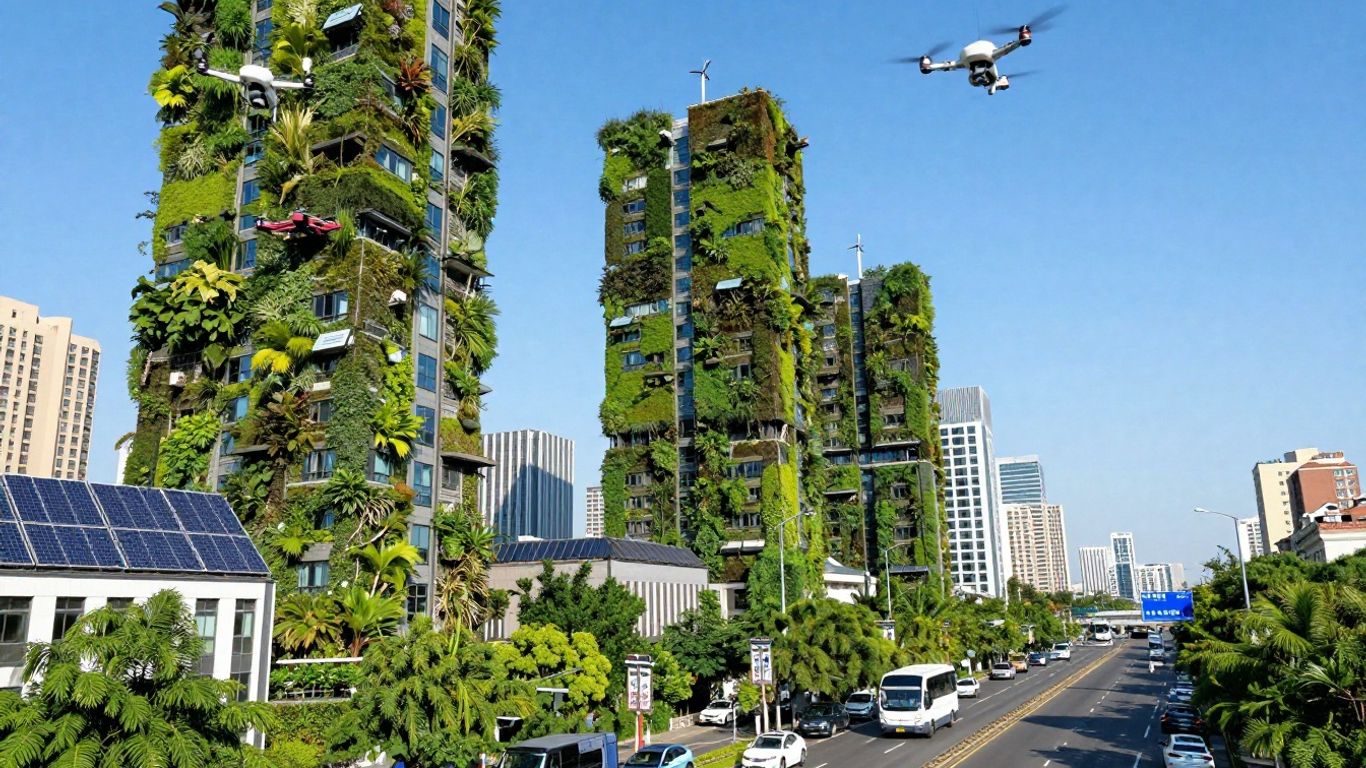
Cities are where most of us live and work, so they have a massive impact on our carbon footprint. Making them more sustainable is a big piece of the puzzle for a carbon-negative future. It's not just about building new things; it's also about rethinking how we live in the places we already have.
Designing Resilient and Eco-Conscious Buildings
Buildings are huge energy users, and they can also store carbon. Think about using wood in construction – a single cubic meter of wood can lock away half a ton of carbon. So, buildings made with timber can actually act like carbon sinks. We also need to look at how we build and renovate. Using better insulation, materials that don't have a big carbon footprint to make, and even things like 3D printing can make a difference. And don't forget about heating and cooling. Systems powered by renewable energy, along with smart tech that monitors and adjusts things like lighting, are key. Plus, having ways to store energy, both electric and thermal, helps smooth out supply and demand.
- Prioritize renewable materials like sustainably sourced timber.
- Improve building envelopes for better insulation.
- Integrate smart technology for energy management.
- Develop efficient heating and cooling systems powered by renewables.
We need to be smart about how we plan these changes. Some past "smart city" ideas didn't quite work out, so we need careful planning to make sure our goals are actually achievable and don't just end up as expensive failures.
Implementing Decentralized Energy Systems in Cities
Instead of relying on one big power plant, imagine neighborhoods or even individual buildings generating their own clean energy. This is what decentralized energy systems are all about. Think solar panels on rooftops, small wind turbines, and local energy storage. This approach makes the energy grid more reliable, especially when dealing with extreme weather, and it cuts down on the energy lost when electricity travels long distances. It also gives communities more control over their energy supply.
Electrifying Urban Transportation Networks
Cars, buses, and trucks are a major source of urban pollution. Shifting to electric vehicles (EVs) is a big step. But it's not just about the vehicles themselves. We need a solid plan for charging infrastructure – making sure there are enough charging stations, and that the electricity powering them comes from clean sources. This also includes public transport. Electrifying bus fleets and developing better electric train and tram systems can move a lot of people without burning fossil fuels. It's about making it easy and convenient for people to choose cleaner ways to get around.
Policy and Investment Strategies for Carbon Negativity

Making our world carbon negative isn't just about new gadgets or planting trees, though those are important. It really comes down to smart rules and where we put our money. Governments and big organizations have a huge part to play here. Think of it like this: we need a roadmap, and policies are the signs along the way, while investments are the fuel to keep us moving.
The Impact of Carbon Pricing and Taxation
One of the most talked-about tools is putting a price on carbon. This means making it more expensive to release greenhouse gases into the atmosphere. It's not about punishing people, but about making cleaner choices more attractive. When companies have to pay for their pollution, they're much more likely to find ways to reduce it. This could be through taxes on emissions or cap-and-trade systems, where there's a limit on total emissions, and companies can buy or sell permits to pollute.
- Carbon taxes directly charge emitters based on the amount of CO2 they release.
- Cap-and-trade systems set an overall limit and allow companies to trade emission allowances.
- This financial incentive encourages innovation in cleaner technologies and processes.
Incentivizing Renewable Energy Adoption
We also need to actively encourage the switch to clean energy. This means making it easier and cheaper for everyone to use solar, wind, and other renewable sources. Governments can do this through things like tax credits for installing solar panels, offering grants for renewable energy projects, or setting renewable portfolio standards that require utility companies to get a certain percentage of their power from clean sources. It's about leveling the playing field so renewables can compete with older, dirtier energy sources.
Supporting Research and Development in Clean Tech
Some of the most exciting solutions are still in development. We need to invest in the scientists and engineers working on things like advanced carbon capture, better battery storage, and new ways to remove CO2 directly from the air. This means funding research institutions, offering grants for startups, and creating partnerships between public and private sectors. Without this support, many promising ideas might never get off the ground.
Establishing Robust Governmental Regulations
Finally, clear rules are a must. Governments need to set standards for emissions, energy efficiency, and waste management. These regulations provide a predictable framework for businesses and individuals, letting everyone know what's expected. They can also prevent a 'race to the bottom' where companies might cut corners on environmental protection to save money. Strong regulations, combined with consistent enforcement, are the backbone of a successful transition to a carbon-negative future.
Policies and investments work best when they are predictable and long-term. Businesses need to know that the rules won't change drastically overnight, allowing them to make significant investments in cleaner infrastructure and technologies with confidence. This stability is key to driving the large-scale changes required.
Nature-Based Solutions for Carbon Sequestration
The Power of Afforestation and Reforestation
When we talk about pulling carbon out of the air, trees are usually the first thing that comes to mind, right? And for good reason! Planting new forests (afforestation) and restoring old ones (reforestation) are some of the most straightforward ways nature helps us out. Forests act like giant sponges, soaking up carbon dioxide from the atmosphere and storing it in their wood, leaves, and soil. It's a natural process that's been happening for ages, but we're now looking at it as a serious strategy to help balance out our emissions.
Think about it: a healthy, growing forest can absorb a significant amount of CO2 each year. The bigger and older the forest gets, the more carbon it can hold. It's not just about planting saplings, though. It's about creating diverse, resilient ecosystems that can thrive for a long time. This means choosing the right tree species for the local environment and making sure these new forests can withstand pests, diseases, and changing weather patterns.
Enhancing Soil Carbon Sequestration
Beyond the trees themselves, the ground beneath them – the soil – is a massive carbon reservoir. Soil carbon sequestration is all about improving farming and land management practices to store more carbon in the soil. This isn't just good for the climate; it also makes the soil healthier and more productive for growing food.
Practices like no-till farming, cover cropping, and adding compost or manure can make a big difference. These methods help build up organic matter in the soil, which is essentially carbon. The more organic matter, the more carbon is locked away underground, out of the atmosphere. It's a win-win situation for farmers and the planet.
Here are some ways we can boost soil carbon:
- Reduced Tillage: Disturbing the soil less keeps carbon from escaping into the air.
- Cover Crops: Planting non-cash crops between growing seasons protects the soil and adds organic material.
- Crop Rotation: Varying the types of crops grown helps improve soil health and structure.
- Adding Organic Amendments: Things like compost and manure increase the soil's carbon content.
Restoring Wetlands for Carbon Storage
Wetlands, like marshes, swamps, and bogs, are often overlooked but are incredibly effective at storing carbon. They're sometimes called 'blue carbon' ecosystems. These waterlogged environments slow down decomposition, meaning that organic material that falls into them doesn't break down and release its carbon as quickly. Instead, it gets buried and stored over long periods.
Restoring degraded wetlands is a powerful way to bring back this carbon-storing capacity. When wetlands are drained or damaged, all that stored carbon can be released. Bringing them back to health means they can start sequestering carbon again, and often at a faster rate than terrestrial forests, especially in the short term.
Exploring Ocean-Based Carbon Removal
The ocean covers most of our planet, so it's a huge player in the carbon cycle. While we're still figuring out the best and safest ways to do this, there's a lot of interest in ocean-based carbon removal. This could involve things like enhancing the ocean's natural ability to absorb CO2 or using marine organisms.
One idea is to encourage the growth of phytoplankton, tiny marine plants that absorb CO2 through photosynthesis. Another is to increase the ocean's alkalinity, which would allow it to absorb more CO2 from the atmosphere. These methods hold great promise, but they need careful research to avoid unintended consequences for marine life and ecosystems. We need to be really sure we're not causing more harm than good as we explore these options.
Nature-based solutions are not a silver bullet, but they are a vital part of the puzzle. They work with natural processes that have been regulating our climate for millennia. By protecting, restoring, and expanding these natural systems, we can significantly increase our capacity to draw down atmospheric carbon and move towards a healthier planet.
Individual and Societal Contributions to Carbon Negativity
Achieving a carbon-negative future isn't just up to big companies or governments; it really comes down to what we all do, every single day. Think about it: companies make what we buy, and if we start demanding different things, they'll have to change. It's a big shift, but totally doable.
Conscious Consumerism and Waste Reduction
This is where we can make a real difference. The average person tosses out a lot of trash each year, and all that waste adds up, contributing to greenhouse gases. We need to get smarter about what we buy and how we get rid of it.
- Look for products with minimal packaging. Less packaging means less waste.
- Choose items made from recycled or sustainable materials. This supports industries that are trying to do better.
- Repair and reuse items whenever possible. Before you toss something, see if it can be fixed or repurposed.
- Compost food scraps. This diverts organic waste from landfills, where it produces methane.
The choices we make at the grocery store, in our closets, and even in our kitchens have a ripple effect. By being more mindful, we can significantly cut down on the resources we use and the waste we produce.
Adopting Sustainable Transportation Habits
Getting around is a big part of our carbon footprint. Driving gas-guzzling cars adds up.
- Walk or bike for short trips. It's good for you and the planet.
- Use public transport when you can. Buses and trains move more people with less impact.
- Consider carpooling. Share rides to work or events.
- If buying a new vehicle, look into electric or hybrid options. These are much cleaner than traditional cars. Making the switch to cleaner transportation is a key step towards reducing carbon pollution.
Promoting Climate Change Education and Awareness
Knowledge is power, right? The more we understand about climate change and its effects, the more motivated we'll be to act. Talking about these issues with friends and family helps spread the word.
- Stay informed about climate science and solutions. Read articles, watch documentaries, and follow reputable sources.
- Discuss climate change openly. Share what you learn and encourage others to get involved.
- Support educational initiatives in schools and communities. Help the next generation understand the importance of sustainability.
It's easy to feel like one person can't do much, but when millions of us make small changes, it adds up to something huge. Our collective actions are what will truly drive us toward a carbon-negative world.
Both individuals and society play a big part in making our planet carbon negative. From the choices we make every day to the larger actions communities take, every bit helps. Want to learn more about how you can contribute? Visit our website to discover practical steps and join the movement for a healthier Earth.
Looking Ahead: Our Path to a Carbon-Negative World
So, getting to a carbon-negative future isn't exactly a walk in the park. It's going to take a lot of work from everyone, from big companies to just regular folks like you and me. We've talked about how industries need to clean up their act, using cleaner energy and smarter ways to make things. Cities are getting a makeover too, with greener buildings and electric cars zipping around. And yeah, we all have a part to play, whether it's recycling more, wasting less, or just being mindful of what we buy. It's a big shift, maybe even bigger than the old industrial revolution, but it's one we have to make. By working together, investing in new ideas, and maybe planting a few more trees, we can actually start pulling carbon out of the air and build a healthier planet for everyone. It’s a challenge, for sure, but it’s one we can meet if we put our minds to it.
Frequently Asked Questions
What does it mean for something to be 'carbon negative'?
Being carbon negative means we take more carbon dioxide out of the air than we put into it. Think of it like cleaning up more mess than you make. This helps to lower the total amount of carbon in the atmosphere, which is good for fighting climate change.
How can industries help make the world carbon negative?
Industries can help by using cleaner energy, like solar and wind power, instead of burning fuels that release carbon. They can also find smarter ways to make things, use less packaging, and support farming methods that pull carbon from the soil. Some companies are even investing in technologies that capture carbon directly from the air.
What are 'nature-based solutions' for removing carbon?
These are ways nature helps us clean the air. Planting lots of trees (reforestation and afforestation) is a big one because trees soak up carbon dioxide. Restoring wetlands and improving soil health also helps store carbon, keeping it out of the air.
How do technologies like 'carbon capture' work?
Carbon capture technology is like a special filter that grabs carbon dioxide before it goes into the air, or even pulls it directly from the atmosphere. This captured carbon can then be stored safely underground or sometimes used for other purposes. It's a way to prevent emissions or remove existing ones.
What can regular people do to help achieve a carbon-negative future?
Everyone can make a difference! Simple actions like reducing waste, recycling, choosing to walk or bike instead of drive when possible, and using less energy at home all add up. Being aware of the environmental impact of the products we buy and supporting businesses that are eco-friendly also plays a big part.
Why is policy and government action important for becoming carbon negative?
Governments can create rules and offer rewards that encourage cleaner practices. Things like putting a price on carbon pollution (carbon pricing) or giving money to companies that develop green technologies can speed up the change. Strong regulations also ensure that companies are doing their part to reduce emissions and remove carbon.